Sign up with Google
 Sign in with Zoho

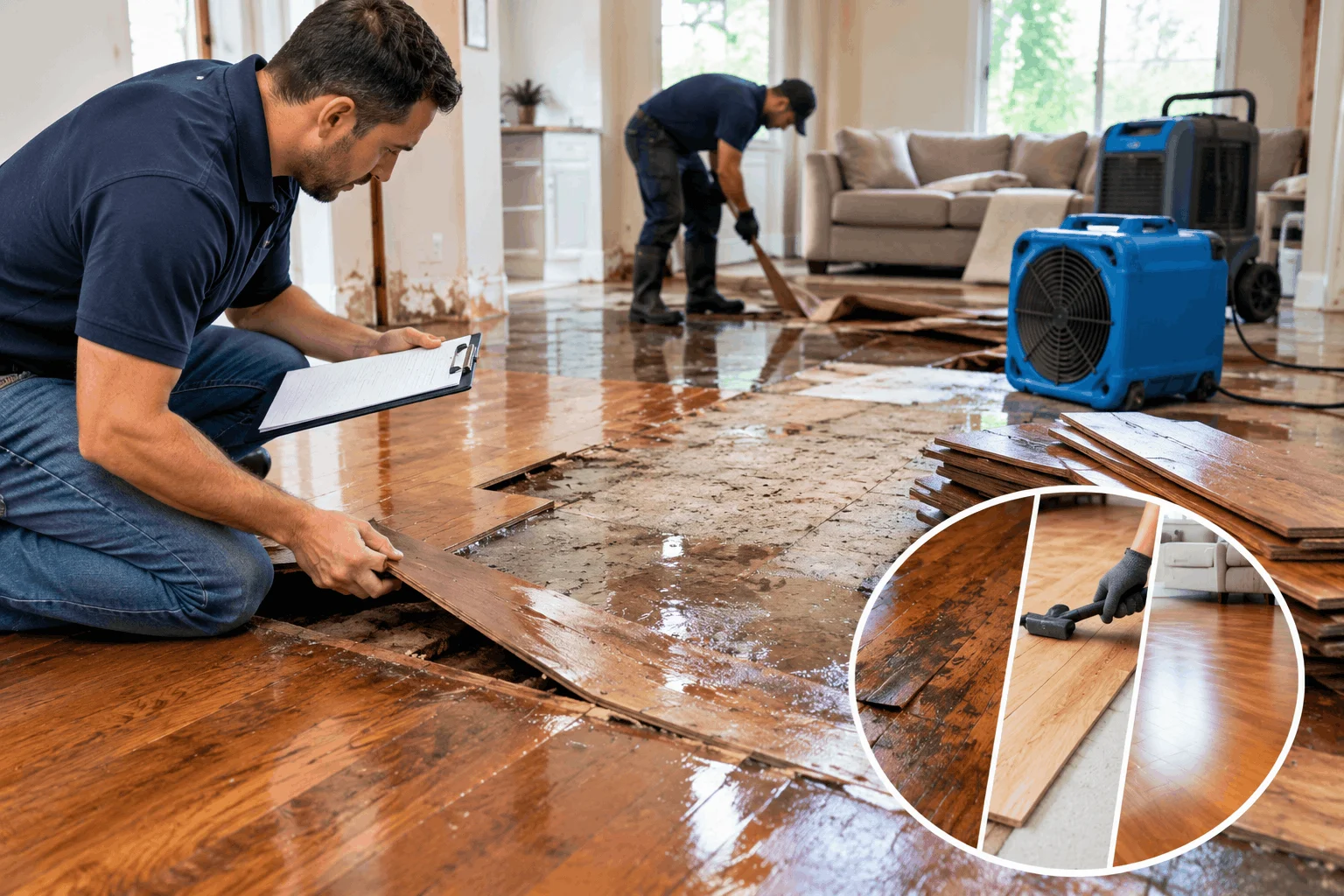
Nothing quite prepares you for walking into your home after a flood and seeing your floors sitting under water, warped, or already starting to smell musty. It's overwhelming, and honestly, most homeowners have no idea where to even start. Do you rip everything out right away? Can any of it be saved? And how on earth does insurance factor into all of this? Let's slow down and go through it piece by piece so you know exactly what you're dealing with.
How Floodwater Affects Different Flooring Types
1. Hardwood and Engineered Wood
Hardwood absorbs water like a sponge, swelling, cupping, and sometimes buckling within just a day or two of exposure. Engineered wood holds up slightly better in some cases because of its layered construction, but prolonged water exposure still causes the layers to separate and warp beyond repair.
2. Laminate, Vinyl, and Carpet
Laminate flooring is particularly vulnerable since water gets trapped underneath the surface layer and causes swelling that can't be reversed. Vinyl handles water better than most materials, but the padding and subfloor beneath it often still take damage. Carpet, unfortunately, tends to be the first thing that needs to go, since it holds onto moisture and bacteria almost immediately.
Deciding Between Repair and Full Replacement
1. When Repair Is Actually an Option
If water exposure was brief and the flooring was dried out quickly, some hardwood and engineered wood floors can be sanded, refinished, or partially replaced board by board. This works best when only a small section was affected and the subfloor underneath remained dry.
2. Signs You Need a Full Replacement
Persistent warping, a lingering musty odor, visible mold growth, or soft spongy spots in the subfloor are all signs that repair simply won't cut it. Trying to patch over these issues usually leads to bigger problems down the road, including health risks from mold that keeps growing beneath the surface.
What to Do in the First 24 to 48 Hours
1. Removing Standing Water Safely
Get water out as quickly as possible using wet vacuums, pumps, or professional water extraction services. The faster standing water is removed, the better your chances of saving at least part of your flooring.
2. Preventing Mold Before It Starts
Run fans, dehumidifiers, and open windows if the weather allows it. Mold can start forming within 24 to 48 hours in damp conditions, so this window is genuinely critical. Waiting even a few extra days can turn a repairable situation into a full teardown.
Navigating the Insurance Side of Flood Damage
1. What Flood Insurance Typically Covers
Standard homeowners insurance usually doesn't cover flood damage, that requires a separate flood insurance policy. This surprises a lot of people after the fact, so it's worth checking your policy details now rather than during a crisis.
2. Where Flooring Insurance Comes Into Play
Once you're working with contractors on repairs or replacement, having proper flooring insurance in place protects you from liability issues during the restoration process. It's not just about your flooring being covered, it's about making sure the work being done on your home is backed by proper coverage too.
3. Working With a Contractor Who Understands Claims
Flood damage claims tend to be more complicated than a simple burst pipe, since they often involve multiple layers of coverage and documentation. A contractor experienced in flooring contractor insurance and flood-related claims can help you navigate paperwork, provide accurate assessments, and communicate directly with adjusters when needed. This kind of experience genuinely saves homeowners weeks of back and forth.
Bringing in a team that regularly handles flooring insurance claims means someone is on your side who actually understands the process, not just someone installing new floors and hoping for the best. That distinction matters more than most people realize until they're in the middle of a stressful claim.
Choosing the Right Flooring After a Flood
If you're in a flood-prone area, it's worth rethinking your flooring choice entirely during replacement. Waterproof vinyl plank, tile, and certain engineered wood products with water-resistant cores hold up dramatically better than traditional solid hardwood. It's not about giving up on the look you love, plenty of these options mimic hardwood beautifully while offering real protection against future water exposure.
Working with a contractor who understands both flooring contractor insurance and flood-resistant materials means you're not just replacing what was lost, you're actually setting yourself up to avoid this exact situation happening again.
Conclusion
Flood damage to your flooring is stressful, but knowing how to respond quickly and understanding where insurance fits into the picture makes the entire process far less overwhelming. Act fast within those first critical hours, get a professional assessment before deciding between repair and replacement, and lean on contractors who genuinely understand flooring insurance and claims. Making informed choices now, both about materials and coverage, protects your home and your peace of mind well into the future.
FAQs
1. Does homeowners insurance cover flood damage to floors? Usually not, flood damage typically requires a separate flood insurance policy.
2. Can hardwood floors be saved after flooding? Sometimes, if water exposure was brief and drying happened quickly enough.
3. How soon does mold start after flood damage? Mold can begin forming within 24 to 48 hours in damp conditions.
4. What flooring is best for flood-prone homes? Waterproof vinyl plank and certain water-resistant engineered wood options work well.
5. Why does my contractor need flooring insurance for repairs? It protects you and the workers if issues arise during the restoration work.