Sign up with Google
 Sign in with Zoho

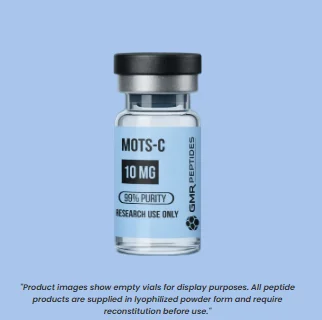
Most of us learned in school that mitochondria are the powerhouse of the cell, and left it at that. The reality is more interesting. Mitochondria also send messages, and MOTS-C is one of the clearest examples we have so far. It's a tiny peptide that researchers link to how cells handle fuel, cope with stress, and adjust when energy demand changes.
Here's the short version. Cells constantly decide what to burn, what to store, and when to switch into damage-control mode. MOTS-C looks like one of the signals feeding into those decisions. That's why it keeps showing up in studies on exercise, metabolism, and aging.
Quick summary
- MOTS-C is a peptide made from mitochondrial DNA, not nuclear DNA.
- It's tied to glucose use, fat metabolism, and the cell's stress response.
- Researchers are looking at its role in exercise adaptation and aging.
- Nearly all the evidence so far comes from cell and animal studies, so human data is still limited.
Where MOTS-C Comes From
The odd thing about MOTS-C is its origin. Almost every protein in your body is built from instructions in the nucleus. MOTS-C isn't. It's encoded in a small stretch of mitochondrial DNA, and it was first described in 2015 by a research group led by Pinchas Cohen at the University of Southern California. The discovery helped push a bigger idea: mitochondria don't just take orders from the nucleus, they talk back.
Think of it as a message from the mitochondria to the rest of the cell saying, "Energy is running low, adjust accordingly." That kind of feedback matters most in tissues with heavy metabolic workloads, like skeletal muscle, liver, and fat.
Why this kind of signaling matters
Mitochondrial signals reach further than energy output. They touch inflammation, oxidative stress, insulin sensitivity, and how quickly a cell bounces back after being pushed hard. If the signaling gets sloppy, problems tend to follow. That's the reason scientists pay attention to peptides like MOTS-C.
MOTS-C and Metabolism
Metabolism is simply how cells turn food into usable energy. When it runs poorly, cells struggle to keep up. Much of the interest in MOTS-C comes from lab work suggesting it nudges this process in a helpful direction. A key piece is AMPK, an enzyme often called the cell's energy sensor. In studies, MOTS-C has been shown to activate AMPK, and that connects it to how cells manage glucose and fat.
Glucose handling
Glucose is one of the body's main fuels, and cells need to respond properly to insulin to take it in. In mouse studies, MOTS-C treatment was associated with better insulin sensitivity and protection against the metabolic damage caused by a high-fat diet. It's a promising result, but it's a mouse result, and that distinction matters.
Fat metabolism
Cells switch between sugar and fat depending on the situation: fasting, a long run, or a stretch between meals. That ability to switch is called metabolic flexibility, and it's a hallmark of a healthy metabolism. MOTS-C has been linked to pathways that shift how cells handle fatty acids, which is part of why it's studied in the context of body composition and energy balance.
Energy balance
Energy balance isn't only about calories in versus calories out. It's also about how efficiently cells use what they get. MOTS-C seems to help cells adapt when supply drops or demand climbs, which is why it comes up in research on endurance and cellular resilience.
How Cells Handle Stress
Cells deal with plenty of pressure: limited nutrients, oxidative damage, hard physical effort. Some of the more interesting findings suggest that under stress, MOTS-C can move into the nucleus and influence which genes get switched on. In other words, the mitochondria aren't just reporting a problem, they're helping shape the response.
Oxidative stress
Reactive oxygen species are byproducts of energy production. A little is normal. Too much damages proteins, fats, and DNA. Since mitochondria both produce and suffer from this damage, researchers are curious whether MOTS-C helps cells cope with it. The evidence here is early, so it's best treated as a lead rather than an answer.
Exercise
Exercise is a controlled form of stress. Muscle cells have to ramp up energy output fast, then recover. Studies in humans have found that circulating MOTS-C levels rise after exercise, which fits the idea that it's part of the body's adaptation toolkit. That doesn't mean it replaces training. It suggests it may be one of the signals that help training work.
Aging and Cellular Health
Mitochondria tend to get less efficient as we get older. Energy production dips, and cells recover more slowly. Some studies have reported lower MOTS-C levels with age, which has led researchers to ask whether that decline contributes to age-related metabolic changes, such as reduced insulin sensitivity and muscle function.
It's worth staying grounded here. Aging is messy, and no single molecule explains it. MOTS-C is better viewed as one useful window into how mitochondrial communication might change over a lifetime.
What the Research Actually Shows
Almost everything we know comes from cell cultures and animal models. Those studies are great for mapping out mechanisms, but they don't always carry over to people. Human research on MOTS-C is still small and early. So the fair way to describe it is as an active, promising area of study, not a proven intervention.
Here's what the current findings point toward:
- A role in regulating glucose and fat metabolism
- Support for cellular adaptation under stress
- A part in how mitochondria communicate with the rest of the cell
- A connection to exercise response and metabolic flexibility
- Possible relevance to aging
Big questions remain open: what levels are biologically meaningful in humans, and how the effects differ from one tissue to another.
Why It Matters for Cell Biology
MOTS-C changed how a lot of scientists picture mitochondria. They used to be seen as simple energy factories. Now they're treated as active communicators, and MOTS-C is one of the best examples of that shift. It also matters for understanding diseases rooted in metabolic dysfunction, since cells that can't manage energy or stress well tend to drag broader health down with them.
The Takeaway
If you remember one thing, make it this: MOTS-C is a signal that helps cells adapt. It's tied to how they use fuel, deal with stress, and hold up under demanding conditions. The science is still young, and plenty of the excitement rests on animal data, but it has earned its place as a serious topic in modern biology.
FAQ
What is MOTS-C?
It's a short peptide encoded in mitochondrial DNA. Researchers study it for its role in metabolism, stress response, and mitochondrial signaling.
How does MOTS-C affect cells?
Lab studies suggest it helps cells adjust how they use glucose and fat, and how they respond to stress. One of the main pathways involved is AMPK activation.
Does the body make MOTS-C naturally?
Yes. It's produced as part of normal mitochondrial activity and is present in human tissue and blood.
Why are scientists interested in it?
Because it may help explain how cells adapt to exercise, metabolic stress, and aging, and because it shows that mitochondria actively send signals.
Has it been proven to work in humans?
No. Most evidence comes from laboratory and animal studies. Human research is limited, so firm conclusions aren't possible yet.
Is MOTS-C linked to aging?
Possibly. Some research shows levels drop with age, and scientists are exploring whether that affects metabolic health and cellular resilience.