Sign up with Google
 Sign in with Zoho
Every land deal lives or dies on diligence. Before any acquisition, development, or lending decision moves forward, someone has to confirm who owns the parcel, whether a lien or mortgage is attached, what the zoning allows, whether it sits in a flood zone, and what comparable land has sold for nearby.
Traditionally, answering these questions meant pulling records from county assessor sites, cross-referencing GIS portals, searching courthouse filings for liens, and manually building a picture from a dozen disconnected sources. It was slow, inconsistent, and left room for something important to slip through the cracks.
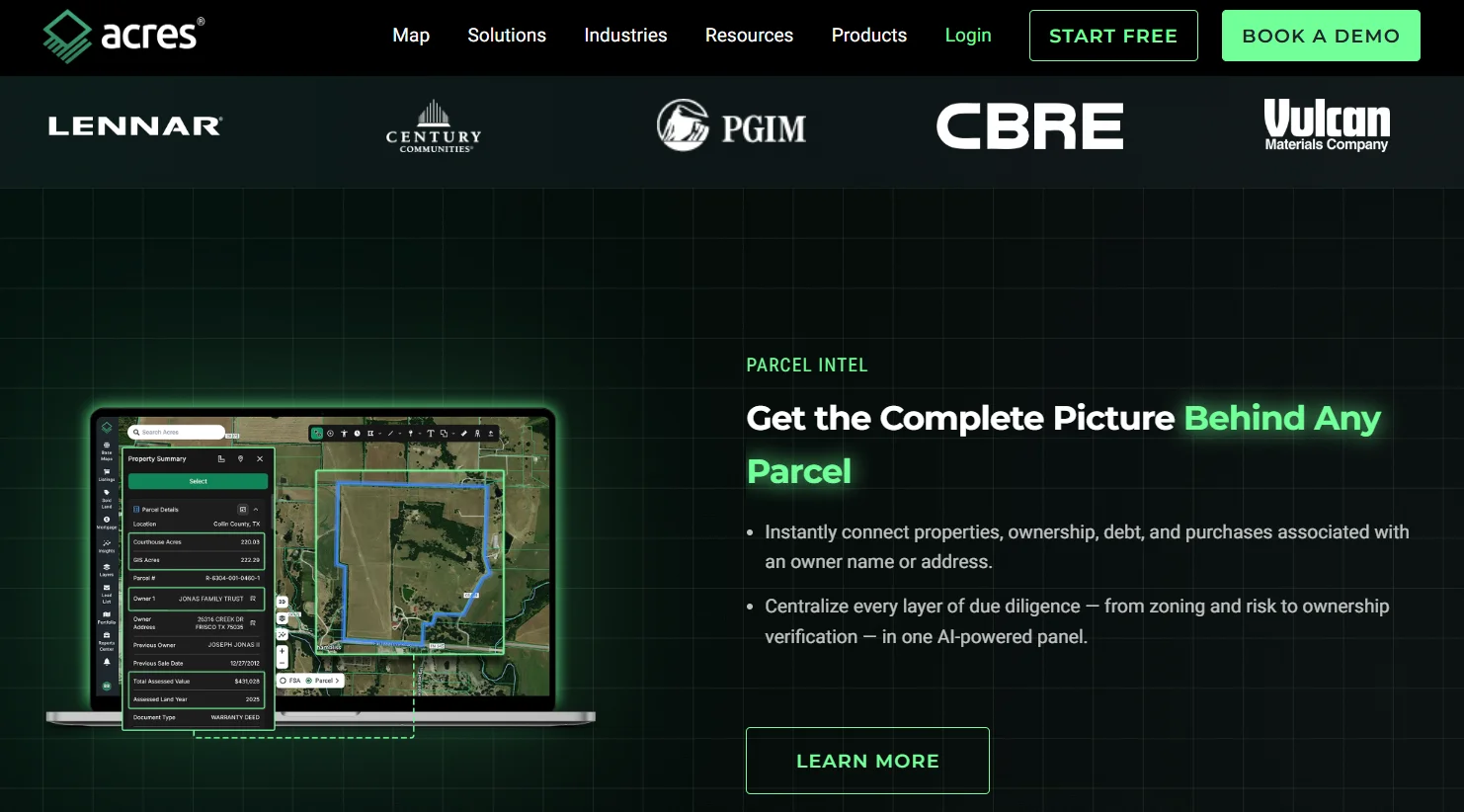
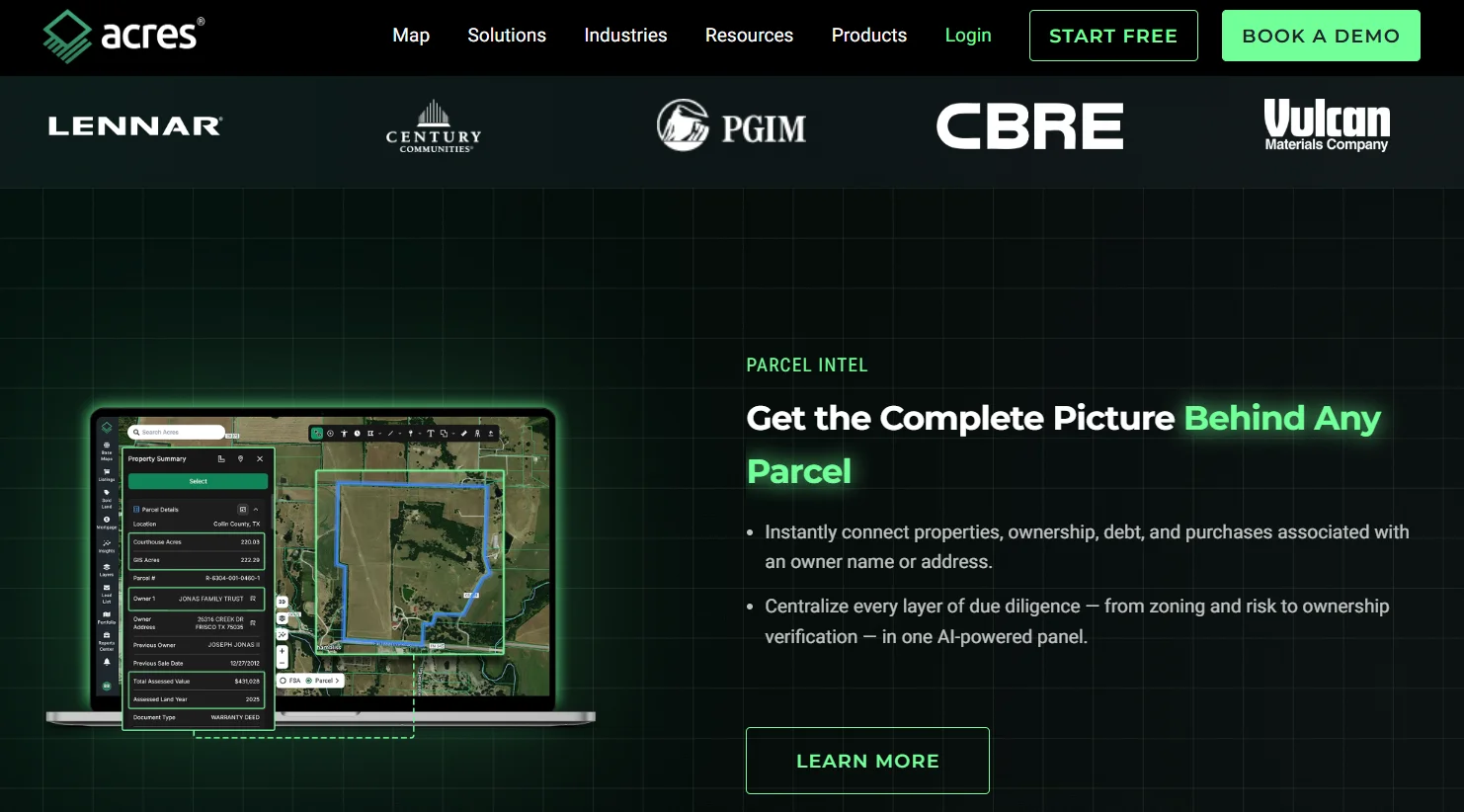
Acres was built to close that gap. As a land due diligence software platform, it brings sourcing, valuation, risk management, and diligence into a single, AI-powered system, giving land professionals nationwide parcel data, sales comps, and plat maps in one place instead of scattered across dozens of websites and offices.
Why Land Diligence Has Historically Been Difficult
Land is not like other real estate asset classes. There is no MLS for raw land in most markets, no standardized disclosure requirement across states, and no single database that tracks ownership, liens, and sales history consistently nationwide. Non-disclosure states make it worse, since actual transaction prices are never publicly recorded at all.
This fragmentation forces diligence teams into manual research: calling county offices, downloading PDFs from assessor portals, and reconciling ownership records that may be outdated. Every extra step adds time and increases the odds that something gets missed, whether an unresolved lien, an easement, or a zoning restriction.
Acres addresses this by aggregating more than 1,000 data sources into a unified platform, covering over 150 million parcel records and 45 million land transactions nationwide. Instead of researchers hunting county by county, diligence becomes a search query.
Core Capabilities That Support the Diligence Process
Ownership and mortgage verification. Every parcel record includes ownership history and mortgage data, so teams can quickly confirm who holds title and whether liens or loans are attached, without a separate title search just to get started.
Nationwide comparable sales data. Acres tracks land sales across the country, including in non-disclosure states where transaction prices are typically unavailable. This lets teams support pricing decisions with real market evidence rather than guesswork.
Plat maps and parcel boundaries. Accurate boundary and plat map data confirms exactly what is being bought, sold, or financed, reducing the risk of boundary disputes or mismatched legal descriptions later on.
Risk layers. Flood zones and other environmental overlays are built directly into the parcel view, so risk factors are visible from the start of diligence rather than surfacing after a deal is already under contract.
AI-powered relationship mapping. Acres uses AI to automatically connect an owner to their other properties, mortgages, and transaction history, work that would otherwise require manually cross-referencing multiple public records.
Together, these tools mean diligence that once took days of manual research across disconnected sources can often be completed in a fraction of the time, with a clearer picture of the parcel in question.
From Individual Diligence to Enterprise-Scale Risk Management
Individual users, such as brokers, appraisers, and independent investors, can run thorough diligence on a single parcel using the core Acres platform. Larger organizations face a different challenge: running consistent diligence across dozens or hundreds of parcels at once, often across multiple departments and regions.
This is where the land acquisition software for enterprise teams becomes essential. The enterprise version of Acres extends the same data engine with tools built for teams managing diligence and risk at scale.
Centralized portfolios. Instead of tracking diligence status in scattered spreadsheets, teams can manage parcels, leave comments, and tag risk factors in one shared dashboard visible across departments.
Mortgage and lien search at scale. With access to more than 25 million mortgage records, teams can search by borrower, lender, loan amount, or maturity date, helping identify risk exposure or refinancing opportunities across an entire portfolio.
Custom, exportable reporting. Diligence findings can be compiled into branded PDF or Excel reports, making it easier to document results for stakeholders, lenders, or investment committees.
Consistent data across the organization. When every department, from acquisitions to legal to finance, pulls from the same dataset, diligence findings stay consistent no matter who is doing the research.
White-glove onboarding. Acres backs its enterprise plan with U.S.-based support to help larger organizations implement consistent diligence workflows across teams.
Homebuilders, developers, energy companies, lenders, and real estate firms rely on this enterprise layer to standardize how risk is identified and managed before capital is committed to a land deal.
Why Reliable Diligence Data Matters
The financial stakes behind land decisions are significant. Acres reports that its platform supports more than 40 billion dollars in land decisions made annually, a figure that underscores how much is riding on getting the underlying data right. A missed lien, an outdated ownership record, or an overlooked flood zone can turn a promising acquisition into a costly liability.
By combining nationwide parcel data, sales history, and risk layers into a single AI-powered platform, Acres gives land professionals a more reliable foundation for diligence, whether evaluating one parcel or managing risk across an entire portfolio.
Final Thoughts
Land due diligence has long been one of the most manual, fragmented parts of the real estate process. Acres was built to change that by turning scattered public records into a searchable, connected system that supports every stage of a land decision, from sourcing through valuation, diligence, and ongoing risk management.
Whether the goal is verifying ownership on a single parcel or standardizing diligence across an enterprise portfolio, Acres positions itself as the data foundation that helps land teams move faster without sacrificing the thoroughness land decisions demand.