Sign up with Google
 Sign in with Zoho

Product Discovery Frameworks Used by Successful Companies
Building a successful digital product starts long before development begins. Many businesses fail because they invest significant time and resources into products that don't solve real customer problems. This is why leading organizations prioritize product discovery Services before writing a single line of code. By using proven product discovery frameworks, businesses can validate ideas, understand user needs, minimize risks, and create products with a higher chance of market success.
Related Services:
- Product Discovery Services
- Custom Software Development Services
Whether you're launching a startup, building an enterprise platform, or developing a SaaS product, understanding modern product discovery frameworks can help you make informed decisions and reduce costly development mistakes.
Why Is Product Discovery Important?
Business leaders often ask:
- How can we validate a product idea before investing in development?
- How do successful companies reduce product failure?
- What frameworks help identify customer needs?
- How can we achieve product-market fit more efficiently?
The answer lies in adopting a structured product discovery process. Instead of relying on assumptions, successful companies use research, customer feedback, experimentation, and continuous validation to ensure they are building products users genuinely need. This approach reduces uncertainty while increasing the likelihood of long-term success.
What Is Product Discovery?
Product discovery is the process of identifying customer problems, validating business ideas, researching market opportunities, and defining the right product before development begins.
Rather than focusing immediately on technical implementation, product discovery emphasizes understanding user behavior, testing assumptions, evaluating market demand, and prioritizing features that deliver real value.
A well-executed discovery phase provides a clear roadmap that aligns business goals, user expectations, and technical feasibility.
Benefits of Using Product Discovery Frameworks
Businesses adopt structured product discovery frameworks because they improve decision-making and reduce development risks.
- Validate product ideas before development
- Better understand customer pain points
- Reduce development costs
- Minimize business risks
- Improve product-market fit
- Prioritize high-value features
- Accelerate product launches
- Increase stakeholder alignment
These benefits help organizations make smarter investments while delivering products customers actually want.
1. Design Thinking Framework
Design Thinking is one of the most widely used product discovery frameworks.
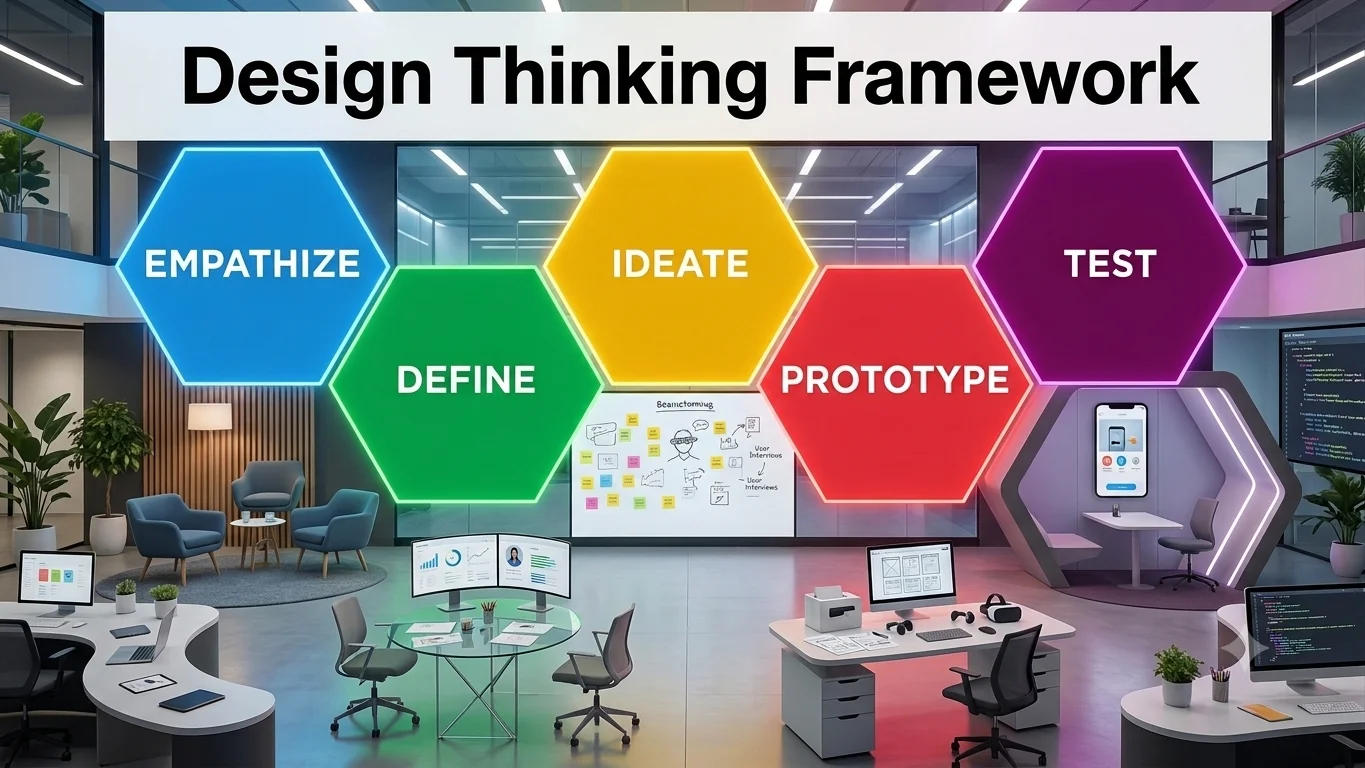
It encourages businesses to understand customer problems through empathy, define challenges, generate innovative ideas, prototype solutions, and test them with real users. This iterative process helps teams build products centered around genuine customer needs instead of assumptions.
Many successful organizations use Design Thinking to improve user experiences and encourage continuous innovation.
2. Double Diamond Framework
The Double Diamond framework divides product discovery into four stages:Discover, Define, Develop, and Deliver.
Teams first explore customer challenges broadly before narrowing down the most valuable opportunities. Once the problem is clearly defined, solutions are created, tested, and refined before implementation.
This structured approach reduces uncertainty while encouraging collaboration between business, design, and engineering teams.
3. Lean Startup Framework
The Lean Startup methodology focuses on rapid experimentation and continuous learning.
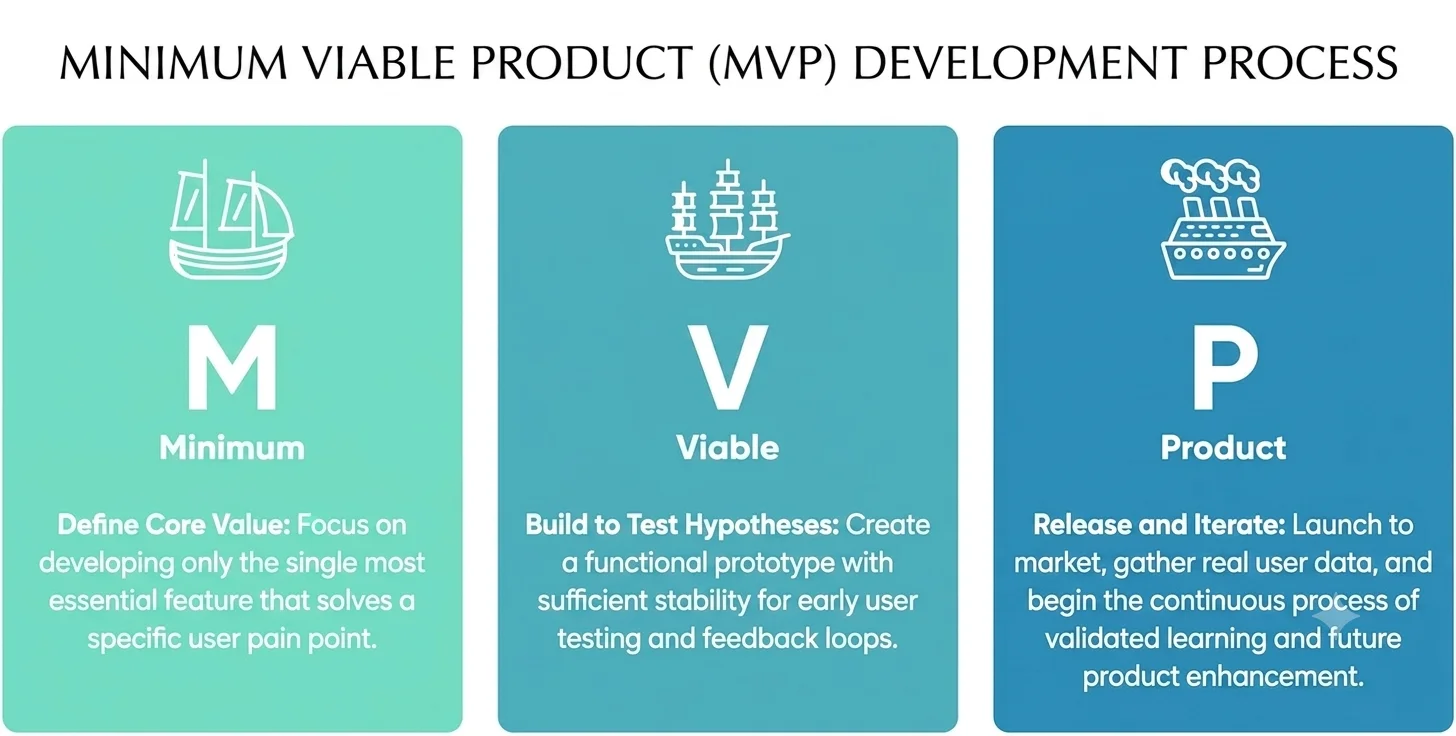
Rather than investing heavily in complete products, businesses develop Minimum Viable Products (MVPs), collect user feedback, measure results, and improve continuously.
The Build-Measure-Learn cycle enables organizations to validate assumptions quickly while minimizing financial and technical risks.
This framework remains especially popular among startups and SaaS businesses.
4. Jobs-to-Be-Done (JTBD) Framework
The Jobs-to-Be-Done framework shifts the focus from demographics to customer motivations.
Instead of asking who the customer is, businesses ask what job the customer is trying to accomplish.
Understanding the underlying goals behind customer decisions allows teams to design products that solve meaningful problems rather than simply adding features.
JTBD often leads to stronger product differentiation and improved customer satisfaction.
5. Opportunity Solution Tree
The Opportunity Solution Tree helps product teams organize opportunities, assumptions, experiments, and solutions visually.
Teams begin with a desired business outcome, identify customer opportunities, brainstorm possible solutions, and validate ideas through testing.
This framework supports evidence-based decision-making while helping teams prioritize the most impactful opportunities.
6. Product Discovery Sprint
Many successful companies conduct short product discovery sprints before starting development.
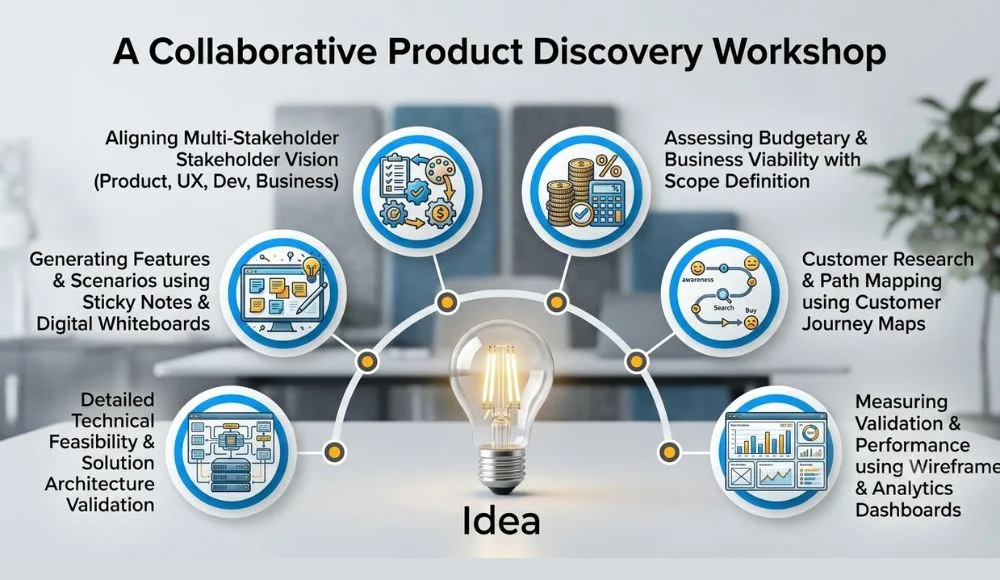
These focused workshops typically include stakeholder interviews, user research, competitor analysis, feature prioritization, prototyping, and usability testing.
Discovery sprints allow teams to align on business goals while reducing uncertainty early in the product lifecycle.
Product Discovery Framework Comparison

How Successful Companies Approach Product Discovery
Successful organizations rarely rely on a single framework.
Instead, they combine customer interviews, market research, usability testing, competitive analysis, rapid prototyping, analytics, and continuous experimentation to validate ideas before development begins.
Partnering with an experienced custom software development company ensures businesses follow a structured discovery process that aligns customer needs, technical feasibility, and business objectives. Investing time in product discovery often reduces long-term development costs while significantly improving project outcomes.
Common Product Discovery Mistakes
Many businesses overlook discovery because they are eager to launch quickly.
Common mistakes include skipping customer research, assuming user needs, building unnecessary features, ignoring competitor insights, failing to validate ideas, and treating discovery as a one-time activity.
Successful companies understand that product discovery continues throughout the product lifecycle, enabling ongoing innovation and continuous improvement.
The Future of Product Discovery
Artificial intelligence, predictive analytics, behavioral research, customer journey mapping, and data-driven experimentation are reshaping product discovery.
Modern product teams increasingly use AI to analyze customer feedback, identify market opportunities, generate product ideas, and prioritize features more efficiently.
As technology evolves, product discovery will become even more collaborative, evidence-driven, and customer-focused, helping businesses launch products with greater confidence.
Conclusion
Product discovery is one of the most valuable investments businesses can make before software development begins. Frameworks such as Design Thinking, Double Diamond, Lean Startup, Jobs-to-Be-Done, Opportunity Solution Tree, and Discovery Sprints help organizations reduce uncertainty while building products customers truly value.
Rather than relying on assumptions, successful companies use structured discovery processes to validate ideas, prioritize features, and improve product-market fit. By working with an experienced custom software development company and investing in professional product discovery, businesses can minimize risk, accelerate innovation, and increase the likelihood of long-term product success.
Frequently Asked Questions
What is a product discovery framework? A product discovery framework is a structured methodology used to understand customer needs, validate product ideas, reduce risks, and prioritize features before development begins.
Why is product discovery important? It helps businesses validate ideas, avoid unnecessary development costs, improve product-market fit, and build products based on real customer needs instead of assumptions.
Which product discovery framework is best for startups? The Lean Startup framework is one of the most effective approaches for startups because it focuses on rapid experimentation, MVP development, and continuous customer feedback.
Can businesses combine multiple product discovery frameworks? Yes. Many successful companies combine frameworks such as Design Thinking, Jobs-to-Be-Done, and Discovery Sprints to create a comprehensive product discovery process.
Should businesses work with a custom software development company during product discovery? Yes. An experienced custom software development company can facilitate research, validate ideas, prioritize features, and create a clear product roadmap that supports successful software development.