Sign up with Google
 Sign in with Zoho

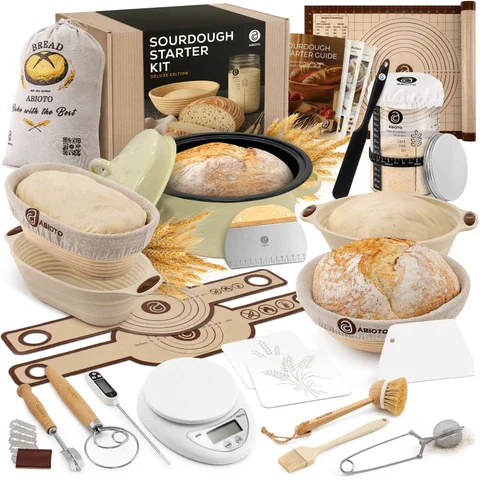
Most sourdough failures have less to do with skill and more to do with inconsistent tools and setup. Low-quality bread baking supplies can make the process unnecessarily frustrating — dough sticks when it shouldn’t, measurements become unreliable, and fermentation turns unpredictable. A lot of people blame themselves when a loaf comes out flat or dense, but often the real issue is weak dough structure, inconsistent starter activity, or inaccurate measuring. Sourdough already requires patience and attention, so poor equipment only adds more variables to manage.
The Foundation: What Bread Baking Supplies Really Matter
You don’t need a warehouse of gear, you need reliable essentials that hold up under pressure. A sturdy mixing bowl, a firm dough scraper, a dependable digital scale, and a proper proofing basket form the backbone of effective bread baking supplies. These tools create control, and control builds consistency. When your bench knife doesn’t bend and your scale doesn’t fluctuate, shaping feels intentional instead of chaotic. Quality tools remove small daily irritations that quietly sabotage confidence, and over time that difference shows up in crumb texture, crust strength, and overall loaf structure.
The Sourdough Starter Kit: Don’t Cheap Out Here
A dependable sourdough starter kit sets the tone for everything that follows. If the jar traps too much air or the thermometer reads inaccurately, fermentation becomes guesswork. A strong kit supports airflow, stable feeding ratios, and temperature awareness so your starter develops predictable strength. Weak starters produce weak rise, no matter how good your flour is. Investing in a reliable sourdough starter kit prevents constant restarts and confusion, and it builds rhythm early, which is what new bakers actually need more than complicated techniques.
Flour Isn’t Just Flour (And It Shows)
Not all flour performs the same, and that reality changes everything. Bread flour with higher protein builds stronger gluten networks, giving dough elasticity and structure, while low-protein flour often produces flat or dense loaves. When people say their dough tears easily, it’s frequently a protein issue rather than a shaping mistake. Good bread baking supplies include strong ingredients, not just tools, because flour determines how well your dough traps gas and rises in the oven. Read labels, check protein percentages, and stop assuming all white flour behaves identically.
Why a Digital Scale Changes Everything
Measuring by cups introduces quiet inconsistencies that sabotage hydration balance. Flour compacts differently depending on humidity and scooping method, so what looks like one cup today may weigh differently tomorrow. A digital scale removes that variable and gives you precise gram measurements, which makes hydration levels stable and predictable. Serious bread baking supplies always include a scale because sourdough depends on ratio accuracy; once measurements stabilize, dough behavior starts making sense and troubleshooting becomes logical instead of frustrating.
Proofing Baskets and Structure: The Shape Factor
A proper banneton or proofing basket supports vertical rise and maintains tension during final proofing. Without structure, dough spreads outward instead of upward, leading to flat loaves with weak crumb. Quality bread baking supplies include baskets that breathe, hold shape, and release cleanly when dusted correctly with rice flour. The support encourages organized fermentation, and the spiral ridges aren’t just decorative, they reflect maintained tension. Shape control during proofing translates directly into oven spring and final loaf height.
Temperature Control Is the Quiet Game-Changer
Fermentation speed depends heavily on temperature, and ignoring that fact leads to unpredictable results. A thermometer, often included in a thoughtful sourdough starter kit, allows you to adjust water temperature and monitor room conditions so bulk fermentation doesn’t drag or race ahead. Dough that ferments too quickly loses strength, while cold dough struggles to develop properly. When temperature awareness becomes part of your routine, sourdough feels less mysterious and more manageable, and your bread baking supplies begin working as a system rather than separate pieces.
The Role of Dutch Ovens in Crust Development
Steam during the first phase of baking determines crust expansion and oven spring. A heavy Dutch oven traps moisture released from the dough itself, creating the humid environment necessary for maximum rise before crust hardens. Without that trapped steam, loaves often burst unpredictably or remain pale. Adding a Dutch oven to your bread baking supplies creates repeatable crust quality without complex steam setups. It simplifies the process and gives home bakers professional-level results with minimal adjustment.
Tools That Save Your Hands (And Sanity)
Bench scrapers, lames, and sturdy spatulas may seem minor, but they streamline workflow significantly. A metal bench scraper builds surface tension during shaping, while a sharp lame produces controlled expansion instead of random tearing. These pieces of bread baking supplies protect dough integrity and reduce handling mistakes that weaken structure. When shaping becomes smoother and scoring cleaner, frustration decreases and consistency improves. Over time, smoother workflow builds skill faster than any video tutorial.
Understanding Hydration Without Getting Technical
Hydration simply reflects the ratio of water to flour, yet it determines dough feel, elasticity, and crumb openness. Higher hydration yields airy crumb but increases stickiness, while moderate hydration offers easier handling and dependable structure. A well-designed sourdough starter kit typically provides ratio guidance that simplifies this concept for beginners. Starting around 65–70% hydration builds confidence before experimenting with wetter doughs. Master feel first, then push boundaries; chasing dramatic crumb too early often leads to discouragement.

Storage and Longevity of Your Baking Supplies
Taking care of bread baking supplies extends their usefulness and preserves performance. Proofing baskets should dry completely to prevent mold, cast iron requires light oiling to prevent rust, and scales need protection from flour dust buildup. A sourdough starter kit should also include storage instructions for maintaining starter health, whether refrigerated or kept at room temperature. When tools last, the baking habit lasts too, and consistency becomes easier because your environment stays stable.
Building Confidence Through Consistency
Confidence in sourdough comes from repeatable results, not sudden breakthroughs. Reliable bread baking supplies, accurate measurements, stable fermentation temperatures, and a strong sourdough starter kit form the backbone of that consistency. When inputs remain steady, you stop second-guessing every crack in the crust and start adjusting calmly. Skill builds gradually, almost quietly, through repetition supported by dependable tools. If you’re ready to bake smarter instead of harder, visit Abioto Baking to start and build your setup with purpose.
FAQs About Bread Baking Supplies and Sourdough Starter Kit
What essential bread baking supplies should beginners buy first?
Start with a digital scale, mixing bowl, dough scraper, proofing basket, Dutch oven, and strong bread flour for structure and accuracy.
Is a sourdough starter kit necessary for beginners?
A structured sourdough starter kit simplifies feeding, temperature control, and starter stability, making early success more likely.
Why does my sourdough loaf turn out dense?
Dense bread often results from weak starter activity, inaccurate measurements, low-protein flour, or underproofing during fermentation.
How do bread baking supplies improve consistency?
Quality tools provide stable measurements, controlled fermentation, and better structure, reducing unpredictable results in each bake.
How long can a sourdough starter last?
With regular feeding and proper storage, a sourdough starter can last indefinitely and even improve in strength over time.