Sign up with Google
 Sign in with Zoho

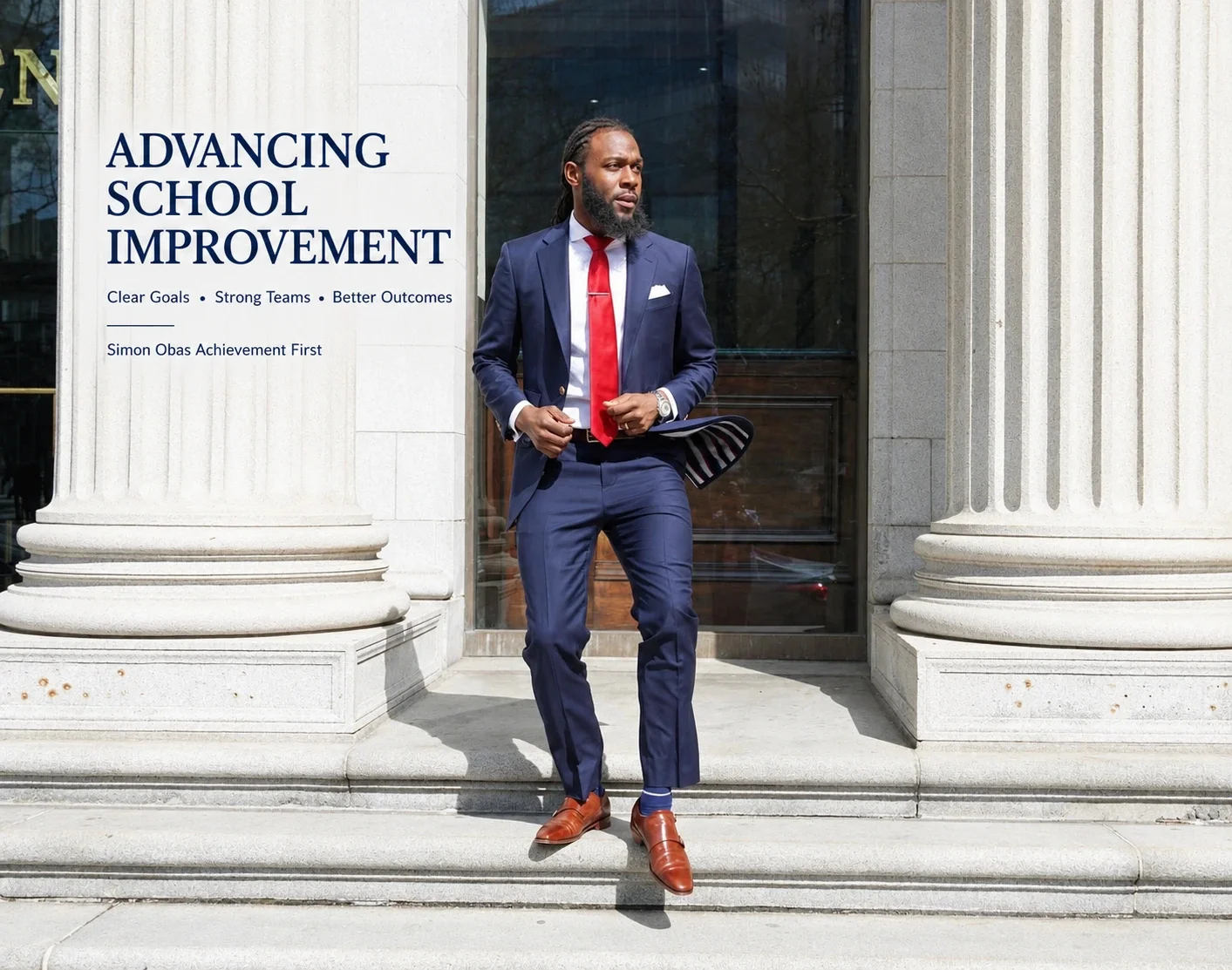
Successful educational leadership involves more than setting ambitious academic targets. It requires the ability to understand school communities, strengthen teaching practices, and establish systems that help educators turn shared goals into measurable progress. The phrase Simon Obas Achievement First connects the discussion of leadership and school improvement with an educational context in which institutional performance and the development of people deserve equal attention.
Schools operate within complex environments shaped by student needs, teacher expectations, family involvement, and administrative responsibilities. Leaders must balance these competing demands while maintaining a consistent focus on learning. A thoughtful approach combines strategic planning with professional support, helping schools make decisions that respond to immediate challenges without losing sight of long-term development.
Practical Approaches to Sustainable School Improvement
School improvement is most effective when it becomes an ongoing process rather than a short-term response to disappointing results. Educational leaders need to identify priorities, involve the people responsible for implementation, and review progress regularly. This approach encourages accountability while allowing schools to adapt their strategies as circumstances change.
Establishing Clear Goals for Academic Progress
Every improvement initiative benefits from specific objectives. Schools may focus on literacy development, mathematics achievement, student attendance, classroom engagement, or more consistent instructional practices.
Clear goals help staff members understand what the school is trying to accomplish and how their responsibilities contribute to that outcome. Administrators can support this process by setting realistic milestones, communicating expectations, and ensuring that teachers have access to appropriate resources.
Progress reviews should examine both achievements and obstacles. If assessment results remain below expectations, leadership teams can investigate whether students need additional instruction, teachers require further professional development, or existing interventions need adjustment.
The connection between Simon Obas Achievement First and educational leadership provides an opportunity to examine how clearly defined priorities can support institutional development. Meaningful progress depends on translating broad ambitions into practical actions that educators can apply in their daily work.
Developing Leadership Capacity Across School Teams
School improvement becomes more sustainable when responsibility is distributed across a capable team. Principals and senior administrators cannot independently manage every instructional challenge, operational decision, or professional development requirement.
Developing leadership capacity means giving teachers and other staff members opportunities to contribute to planning, lead initiatives, mentor colleagues, and participate in problem-solving. These responsibilities help build confidence while preparing more people to support the school's future needs.
Effective delegation requires clarity. Team members should understand their authority, available resources, expected outcomes, and the support they can access when challenges arise. Regular communication helps ensure that shared leadership remains coordinated rather than fragmented.
The professional perspective associated with Simon Obas Achievement First also invites consideration of how leadership development can strengthen the wider school environment. When people are trusted to contribute and supported in their responsibilities, improvement becomes a collective effort instead of a task assigned to a single administrator.
Improving School Culture Through Communication
Communication influences how teachers interpret decisions, respond to change, and engage with school priorities. When expectations are unclear or feedback is inconsistent, even well-designed initiatives can encounter unnecessary resistance.
School leaders can improve communication by establishing regular team meetings, inviting constructive feedback, and explaining the reasoning behind important decisions. Listening is equally important because educators often recognize operational problems before they appear in formal performance reports.
A culture of open communication also helps leaders identify concerns early. Teachers may need additional classroom resources, more practical training, or clarification about a new policy. Addressing these issues promptly can prevent minor difficulties from becoming larger organizational problems.
Respectful communication does not mean avoiding difficult conversations. Instead, it means addressing concerns directly while maintaining professional relationships and focusing on solutions.
Using Evidence to Guide Better Decisions
Educational decisions should reflect reliable information about student learning, instructional effectiveness, and school operations. Assessment results, attendance records, classroom observations, and staff feedback can help leaders identify areas requiring attention.
However, collecting information is only the first step. Leadership teams must interpret findings carefully, consider possible causes, and determine which actions are most likely to address identified needs.
For example, declining mathematics performance may indicate gaps in foundational knowledge, inconsistent instructional approaches, or insufficient opportunities for guided practice. Understanding the underlying issue helps schools choose more relevant interventions.
Leaders should also review the effects of their decisions over time. If an initiative does not produce the intended improvement, adjusting the approach is often more useful than continuing with the same strategy simply because it was part of the original plan.
Turning Educational Vision Into Meaningful Progress
Sustainable school improvement requires a combination of clear objectives, capable teams, constructive communication, and evidence-based decisions. These elements help educational institutions respond to challenges while maintaining a supportive environment for teachers and students.
The leadership themes associated with Simon Obas Achievement First reinforce the value of connecting organizational goals with the people responsible for achieving them. Effective leadership is not simply about introducing new policies or setting higher expectations. It also involves creating the conditions in which educators can implement change with confidence.
For school administrators, teachers, and emerging education leaders, the most useful lesson is to treat improvement as a shared responsibility. By setting achievable priorities, encouraging professional growth, and reviewing results consistently, schools can develop stronger practices and build a more resilient foundation for future academic success.