Sign up with Google
 Sign in with Zoho
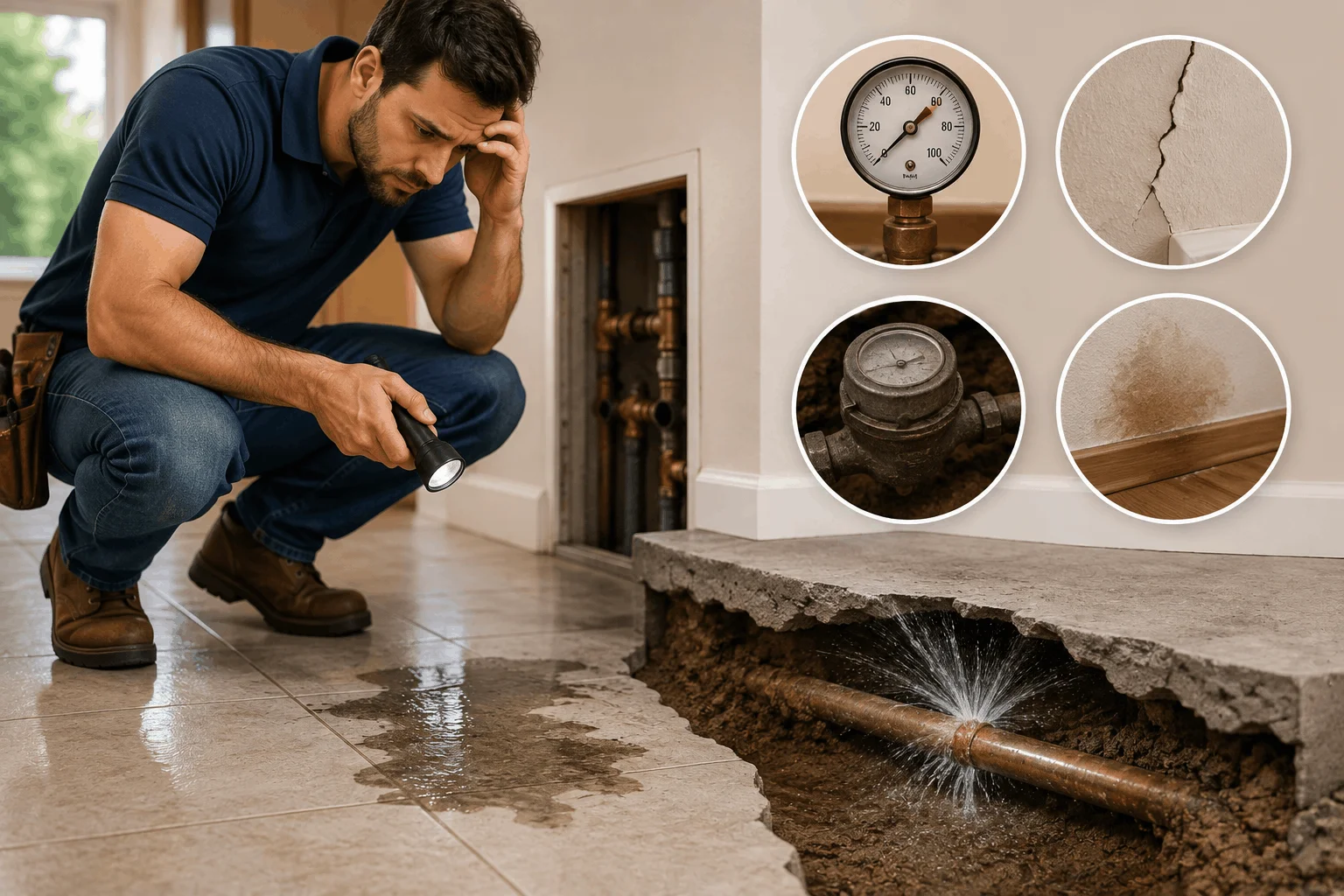
Picture this: you're paying your water bill like normal, nothing seems off, and then one month the number jumps for no obvious reason. No new appliances, no extra houseguests, nothing. That unexplained spike is one of the sneakiest ways a slab leak announces itself, and by the time most people notice, the leak's already been running for a while.
A slab leak happens when a pipe running underneath your home's concrete foundation starts leaking. Since it's hidden beneath the slab, you can't just glance over and spot it the way you would a dripping faucet. It stays out of sight, quietly causing damage, until the signs eventually surface. Let's talk about what those signs actually look like so you can catch a problem early instead of discovering it the hard way.
What Exactly Is a Slab Leak, Anyway?
Most homes built on concrete foundations have water and sewer lines running directly beneath that slab. Over time, those pipes can corrode, shift slightly with soil movement, or develop small cracks from pressure. Once a pipe under the foundation starts leaking, water doesn't just disappear. It seeps into the ground, into the concrete itself, and sometimes even up into your home through cracks or expansion joints.
Because the leak is essentially invisible at first, slab leak detection often depends on noticing the secondary signs rather than the leak itself. Think of it like a bruise; you don't see the internal damage directly, but you sure see the discoloration on the surface.
The Water Bill Is Often the First Clue
This is usually the very first hint most homeowners get. If your water usage hasn't changed but your bill suddenly climbs, and you've ruled out the obvious culprits like a running toilet or a forgotten sprinkler, a hidden leak is worth considering. Water under a slab can leak continuously, day and night, whether you're using your plumbing or not. That steady, unnoticed loss adds up fast on a bill, even while everything on the surface looks completely normal.
Sounds and Sensations Under Your Feet
Your ears and your feet can actually pick up clues before your eyes do.
Hearing Water When Everything's Off
Here's a simple test: turn off every faucet, appliance, and water-using fixture in your home, then just stand quietly for a minute. Do you hear a faint hissing or trickling sound coming from the floor? That's not your imagination. Water moving through a cracked pipe under pressure can create a subtle sound that's noticeable in a quiet house, especially at night when everything else is still.
Warm Spots on the Floor
If the leaking pipe happens to be part of your hot water line, you might actually feel it. Walk barefoot across your flooring and pay attention to any spot that feels warmer than the rest, particularly on tile or concrete. That unexplained warmth is a strong indicator that hot water is escaping somewhere below and heating the slab from underneath.
Visible Damage Around Your Home
Sometimes the clues aren't subtle at all; they're right there in front of you.
Cracks in Walls or Flooring
As water seeps into the foundation, it can cause the slab to shift ever so slightly. That movement often shows up as new cracks in walls, especially near the base, or cracks appearing in tile and flooring that weren't there before. A single hairline crack isn't automatically a slab leak, but new cracks combined with any of the other signs on this list should get your attention.
Damp Carpet or Mysterious Puddles
Noticed a damp patch on your carpet that has no clear cause? Or a small puddle forming near a wall with no nearby fixture to explain it? Water traveling up from beneath the slab often surfaces in unexpected spots, not necessarily right above where the leak actually is. This is exactly why professional leak detection matters, since the visible symptom and the actual source aren't always in the same place.
Mold, Musty Smells, and Low Water Pressure
A slab leak creates the perfect environment for mold: constant moisture, warmth, and darkness under your flooring. If you're noticing a musty smell that won't go away no matter how much you clean, or you spot mold growing along baseboards with no obvious water source nearby, that persistent dampness underneath could be the reason.
Low water pressure throughout the house is another sign worth paying attention to. When water is escaping through a break in the line before it even reaches your fixtures, you'll feel that loss as weaker flow at your faucets and shower.
Why Leak Detection Matters So Much Here
Here's the honest truth: none of these signs alone confirm a slab leak with total certainty. A crack could just be normal settling. A warm spot could be nothing. But when you start noticing two or three of these signs together, that's when proper leak detection becomes essential rather than optional. Waiting it out and hoping the problem goes away almost never works in your favor with slab leaks, because the water keeps causing damage the entire time it goes unaddressed.
The earlier a leak gets identified, the less damage it does to your foundation, flooring, and framing. Think of it like catching a small illness before it becomes something serious; early leak detection genuinely changes the outcome.
How Professionals Handle Slab Leak Detection
You can't exactly dig up your entire foundation to go pipe-hunting, and thankfully, you don't need to. Professional slab leak detection typically involves specialized listening equipment that can pinpoint the exact sound of escaping water underground, along with thermal imaging that spots temperature differences in the flooring caused by a hot water leak. Some technicians also use pressure testing to isolate which line is actually the problem before anyone even thinks about cutting into concrete.
This targeted approach means repairs stay focused and minimally invasive instead of tearing up your entire slab just to find one small crack in a pipe.
Conclusion
A slab leak rarely announces itself with a dramatic flood. It shows up quietly, through a higher water bill, a warm patch on the floor, a faint hissing sound, or a crack that wasn't there last month. Paying attention to these small signals and acting on them early can save your home from serious foundation and flooring damage down the line. If you notice even a couple of these signs together, don't just brush them off. Getting proper leak detection done sooner rather than later is genuinely one of the smartest calls you can make as a homeowner.
FAQs
1. Can a slab leak fix itself over time?No, it only gets worse and continues causing damage the longer it goes unaddressed.
2. How urgent is a suspected slab leak?Very urgent. Even a slow leak can damage your foundation and flooring over time.
3. Does homeowners insurance cover slab leaks?Sometimes, depending on your policy and whether the damage is sudden versus gradual.
4. Can I do slab leak detection myself?You can spot warning signs yourself, but pinpointing the exact leak needs professional equipment.
5. How long does a slab leak usually go unnoticed?It varies, but many go unnoticed for weeks or months until a clear sign appears.