Sign up with Google
 Sign in with Zoho

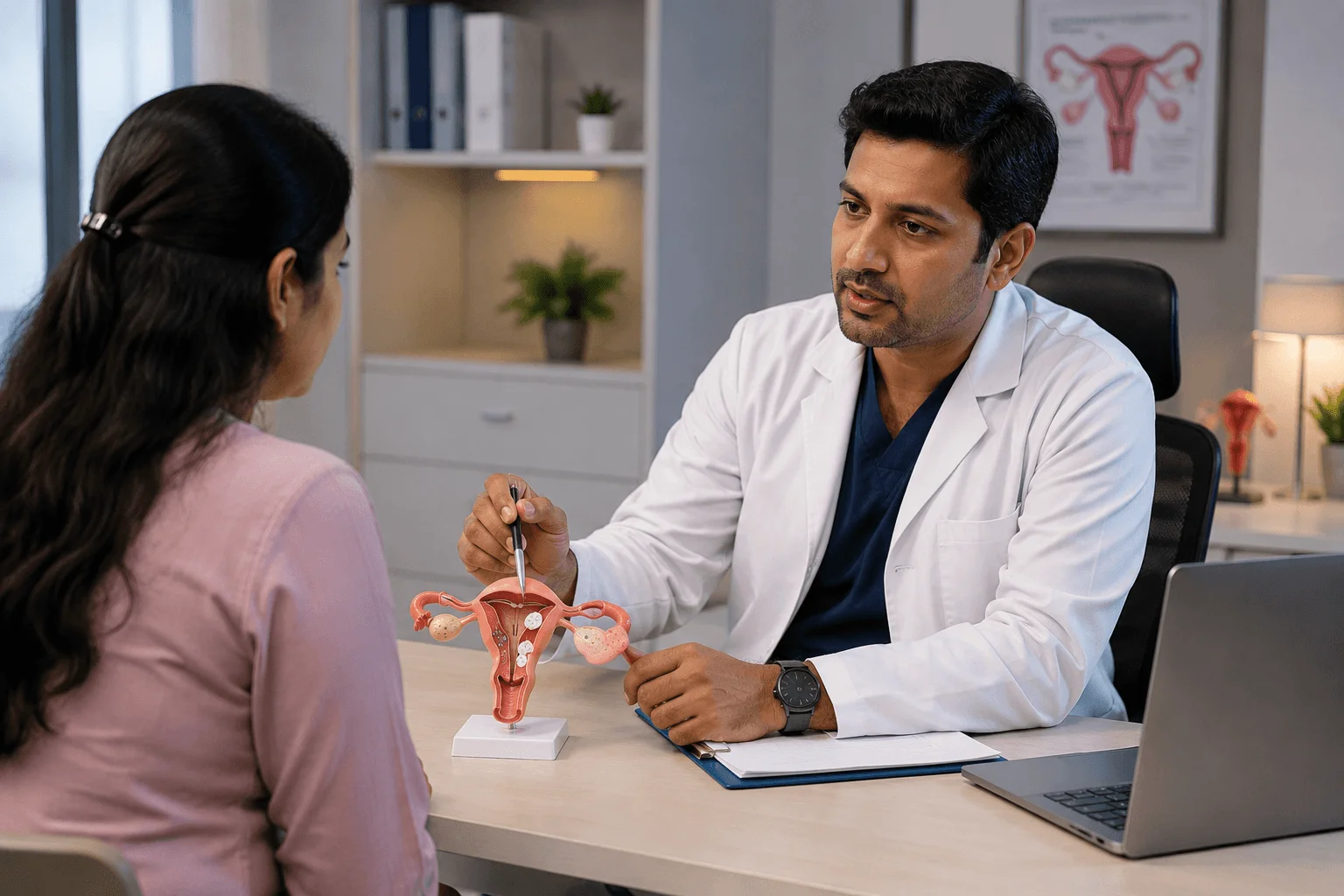
Heavier periods lately? A dull, low ache that just won't lift? Or perhaps a routine scan flagged a fibroid, and nobody quite explained what that means for you. It happens more often than most women expect. Uterine fibroids are among the most common gynecological findings, yet the information around them is often confusing or outdated. This guide breaks down what fibroids actually are, why they form, and what your real treatment choices look like — so your next consultation is a conversation, not a guessing game.
Understanding Uterine Fibroids
Fibroids are non-cancerous growths that develop in or around the muscular wall of the uterus. They're common enough that many women carry one without ever knowing — symptoms simply never show up in a lot of cases.
Doctors typically classify fibroids by location:
- Intramural – embedded within the uterine muscle wall
- Submucosal – growing inward, into the uterine cavity
- Subserosal – developing outward, on the uterus's outer surface
- Pedunculated – attached by a narrow stalk, inside or outside the uterus
They're most frequently diagnosed in women in their 30s and 40s. Estrogen and progesterone appear to fuel their growth, which is likely why fibroids tend to shrink once menopause sets in.
Symptoms Women Shouldn't Ignore
Fibroids don't always announce themselves. When symptoms do appear, they usually include:
- Heavy or unusually prolonged periods
- Pelvic pain or a persistent sense of pressure
- Frequent urination caused by bladder pressure
- Constipation or bowel discomfort
- Pain during intercourse
- Visible abdominal bloating or swelling
- Lower back pain
- Trouble conceiving, or difficulty sustaining a pregnancy
- Fatigue or anemia from chronic blood loss
Many women adjust to these symptoms quietly, sometimes for years, before finally getting checked. If your cycle is dictating your schedule, that's reason enough to see a specialist.
What Causes Fibroids to Develop?
No single cause explains every case, but a few contributing factors show up consistently:
- Hormonal activity – estrogen and progesterone are strongly linked to fibroid growth
- Family history – fibroids often run in families, raising individual risk
- Body weight – higher body weight has been associated with increased likelihood
- Age – risk climbs through the 30s and 40s, then declines post-menopause
- Early onset of periods – starting menstruation younger may raise long-term risk
- Diet and lifestyle – thought to play a smaller, supporting role
None of these factors guarantee a diagnosis on their own. Some women with no risk factors at all still develop fibroids, which is exactly why imaging and individual evaluation matter more than any checklist.
Getting an Accurate Diagnosis
A precise diagnosis shapes everything that follows, so this stage deserves real attention rather than a rushed five-minute scan. A thorough workup typically includes:
- Clinical examination – a physical checkup paired with medical history review
- Pelvic ultrasound – mapping fibroid size, number, and location
- MRI – used for complex cases or multiple fibroids requiring detailed mapping
- Blood tests – checking for anemia linked to heavy menstrual bleeding
- A detailed consultation – covering symptoms, lifestyle, and fertility plans
Women comparing the Best Doctor for Fibroid Treatment in Chennai should pay close attention to how carefully this stage is handled. A hurried diagnosis often leads to a treatment plan that doesn't actually fit the patient.
Treatment Options: Surgery Isn't Always the Answer
One persistent myth is that a fibroid diagnosis automatically leads to surgery. It doesn't. Plenty of small, symptom-free fibroids simply get monitored over time rather than treated immediately.
When treatment is needed, the options generally include:
- Medication – to control bleeding or shrink fibroids temporarily
- Uterine Fibroid Embolization (UFE) – an image-guided procedure that blocks blood flow to the fibroid through a thin catheter, causing it to shrink while the uterus stays intact
- Myomectomy – surgical removal of the fibroid while preserving the uterus
- Hysterectomy – complete removal of the uterus, usually reserved for severe or complex cases
UFE has gained ground with many patients because it skips the major incision, involves a shorter hospital stay, and typically allows recovery in one to two weeks rather than the four to six weeks common after open surgery. Surgery still has a place for very large fibroids or specific fertility situations — but it deserves a real conversation before it's assumed to be the only route.
Why the Right Specialist Changes the Outcome
Choosing the right specialist is arguably the biggest decision in this entire process. Among those regularly named as the best doctor for fibroid treatment in Chennai, Dr. Arjunlokesh Netaji takes an Interventional Radiology-first approach — building each treatment plan around a patient's specific fibroid size, number, and location rather than defaulting to a standard protocol.
Expert Tips Before Your Consultation
- Don't wait for symptoms to become severe before booking a scan
- Ask directly whether non-surgical options apply to your specific case
- Seek a second opinion if fertility preservation is a priority for you
- Track bleeding patterns and pain across two or three cycles before your appointment
- Ask how much hands-on experience the team has with image-guided procedures, not just open surgery
- Clarify recovery timelines upfront, rather than assuming they'll match a friend's experience
Recent Developments in Fibroid Care
Interventional techniques like Uterine Fibroid Embolization have gained wider clinical acceptance over the past decade, backed by growing long-term outcome data. A few notable shifts worth knowing:
- Imaging precision has improved, reducing complications during embolization
- Recovery windows have shortened as techniques have refined
- More patients are exploring non-surgical routes earlier, rather than as a last resort
- Long-term studies continue to support sustained symptom improvement for many patients
That said, general trends shouldn't replace an individual evaluation. Treatment decisions still need to rest on your own scans and symptoms, not on what worked for someone else.
It's also worth noting that interventional radiology extends well beyond fibroid care. Women researching Varicose Veins Treatment Without Surgery Chennai will find similar image-guided principles at play — minimally invasive procedures that target affected veins directly, without the recovery time that comes with open surgery. Anyone comparing Varicose Veins Treatment Without Surgery Chennai providers should ask the same questions about technology and experience that apply to fibroid care.
Making the Right Decision for You
Every fibroid case looks a little different, and the right plan depends on your symptoms, your scans, and your personal goals, fertility included. Surgery isn't the automatic next step — it's worth exploring every reasonable alternative first. If you're evaluating the Best Doctor for Fibroid Treatment in Chennai, ask about diagnostic thoroughness and real recovery timelines, not just outcomes on a brochure. A consultation with a specialist like Dr. Arjunlokesh Netaji can help map out which path genuinely fits your case. Don't sit with the symptoms in silence — book the consultation and get a clear answer.