Sign up with Google
 Sign in with Zoho

If you are a novice investor, this is the perfect beginners' guide to understanding ETFs, their advantages and the steps to take to invest in one.
At this point, if you have ever considered investing, you have likely seen the term Exchange Traded Funds or ETFs, for short. However, what exactly are they and why do numerous financial advisors suggest that they be used by novices? Let's go through all the details of this investment in simple terms so you can determine if it's right for you.
What is an ETF?
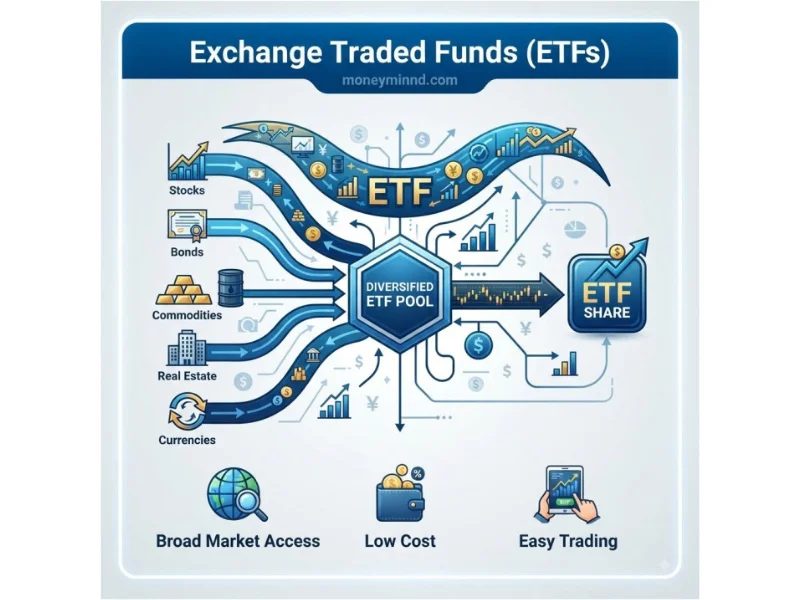
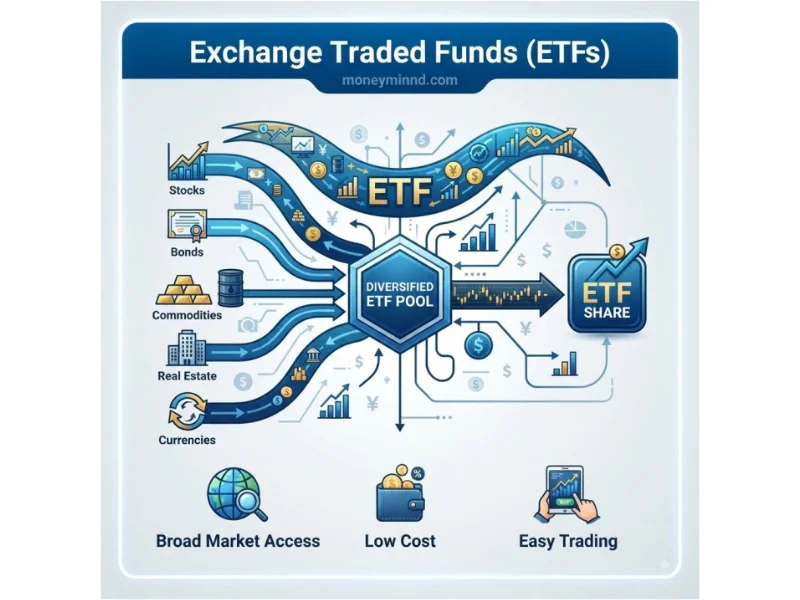
An ETF is an exchange-traded fund that includes a portfolio of assets, like shares, bonds or even commodities like gold. When you buy a share of the fund, you are buying a small piece of the fund's total holdings. Imagine it's a fruit basket. You purchase one basket containing one apple, one banana and one orange rather than purchasing each of the fruit separately. That basket is the ownership of many things, and it's a mechanism of spreading out investment automatically.
A new feature of this kind of fund is that it is traded on a stock exchange, similar to company shares. Unlike mutual funds, which are priced once at the end of the day, the price of the stock fluctuates continuously during the trading day depending on the market demand and supply.
A historical Perspective on This Investment Tool
Since the early 1990's, Exchange Traded Funds (ETFs) have been created to offer a cost-effective alternative to active funds, allowing everyday investors to gain access to a diversified portfolio. Since then, the market for these products has grown in leaps and bounds and it encompasses nearly every sector, region and asset class you can imagine. Today, these funds are holding trillions of dollars of investment trust all over the world, and that's just the amount of trust that investors have in this simple investment structure.
The following are the major advantages that every investor will find useful:
Built-In Diversification
The greatest advantage is that there is no need to "guesses" which winners and losers will come out. If the price of one of the companies drops, it's offset by the price of the other companies within the fund. This cuts the total risk when buying one or two stocks.
Cost-Effective Investing
Many of these funds simply track a market index, which is much less expensive than some actively managed funds due to their lower fees. Reducing fees over the years can mean a significant amount of money in your pocket.
Trading Flexibility
Shares can be traded all day long, allowing investors to more readily influence the price they receive or pay. This is particularly helpful during the time of market instability when prices can change rapidly.
Gain access to niche markets.
In addition to the broad market Exchange Traded Funds, there are those that target certain sectors, like renewable energy, robotics, emerging markets and more. This enables investors to invest in the economy they think will perform well, without needing to conduct research and invest in individual companies.
Common categories you will encounter:
Equity funds are invested in public companies that are listed on the stock exchange, either in a wide range of companies or within a particular industry.
Fixed income funds are those that invest in bonds and usually appeal to investors that require regular, predictable income.
Commodity based funds are used to follow the raw materials like oil, natural gas or precious metals.
The value of foreign currency against the dollar is followed by currency funds.
Real estate funds offer exposure to the real estate market without actually being the owner of real estate.
There are many different types of Exchange Traded Funds, so investors can use a variety of different funds in a single portfolio as per their financial objectives and risk profile.
Things to Watch Out For
There are no such things as negative side effects with any investment and most certainly not with Exchange Traded Funds. But prices can drop precipitously in a market slowdown and industrial and country-specific funds are riskier than diversified funds. Other factors to consider are the expense ratio—the annual fee that the fund charges to manage its assets—and the degree to which the fund matches the performance of the index it tries to track. Poor tracking or low trading volume in a fund can lead to a subpar performance.
Steps to Get Started
There is no need to invest a substantial amount of money or knowledge in opening the door to Exchange Traded Funds. This is one easy route to go:
1. Create a brokerage account from a reputable broker.
2. Determine your investment objective, whether it's long-term growth or income or a combination of both.
3. Match funds to research objectives, looking at fees and history.
4. Order like any other stock, using the fund's ticker symbol.
5. Periodically check your portfolio to ensure that it is still in line with your objectives.
It might be wise to take a step-by-step approach, particularly for new investors, to start with a small investment and then build up as time goes on.
This investment is suitable for certain investors.
For nearly all investors, ETFs can be a good investment. The reason why beginners find it easy to use and the fact that it can diversify their investment portfolio makes it appealing to them, while seasoned investors find it convenient for getting instant exposure to a specific sector even though it may be a little more complex in use. Retirees may be more inclined to invest in funds that generate income and stability, while younger investors with a longer time horizon may be more inclined to invest in funds that offer greater growth potential.
Final Thoughts
Exchange Traded Funds provide an alternative for those who want to invest but don't have the time for stock picking. It is easy to purchase a single share and offers the security of wide diversification, while costs remain relatively low. Before you make any investment decision, it's important to consider your own objectives and risk tolerance then decide which funds will fit into your portfolio. This simple and easy investment option can be a great addition to financial planning, if managed properly and with some patience.