Sign up with Google
 Sign in with Zoho

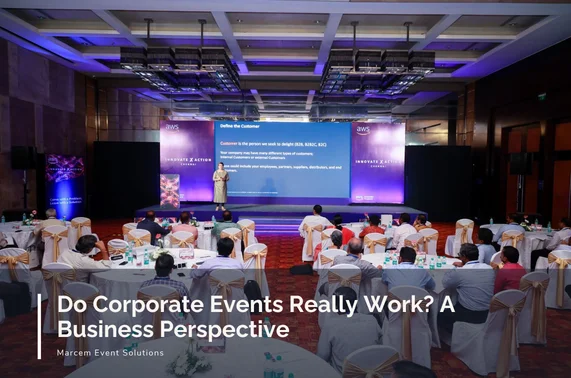
Corporate events carry a kind of pressure that social ones don't. A product launch, dealer conference, or investor briefing reflects directly on how a brand is perceived, which means the margin for error is smaller and the cost of getting it wrong is measured in reputation, not just budget. Finding the best corporate event planner in Pakistan for that kind of brief takes more scrutiny than most companies apply, especially when the pitch decks all start to look the same.
Most companies end up choosing based on portfolio polish and price. Neither actually predicts how the event will go.
Corporate Events Need a Different Skill Set Than Social Ones
A planner who's excellent at weddings isn’t automatically equipped for a brief. Corporate events demand alignment with business objectives, brand guidelines, and often a more formal, protocol-conscious execution style, especially for investor relations, government-linked functions, or multi-city product rollouts. Ask a planner directly how much of their work is corporate versus social and ask for examples for your event type.
Strategy Should Come Before Concept
A mistake among less experienced planners is proposing decor and stage concepts before understanding what the event is meant to achieve. A strong corporate planner starts with questions: what’s the objective, who’s the audience, and what’s worked or failed in events? The concept should follow from those answers, not precede them.
In-House Capability Matters at Corporate Scale
Corporate events often involve custom branding, stage builds, and technical production that get significantly harder to manage well through multiple subcontractors. Planners with in-house fabrication and a dedicated staffing pool tend to meet quality and timeline targets more reliably, since fewer parties are involved in execution and accountability doesn’t get diluted.
Budget Transparency Is Non-Negotiable at This Level
For clients, an event is a line item that must be justified internally. A planner should be able to provide an itemized budget covering venue, catering, AV, staffing, branding, and contingency without resistance. Vague all-inclusive quotes are a common way markup gets hidden. They make it far harder to defend spend to leadership afterward.
Reporting Should Be Built In, Not an Afterthought
Corporate clients increasingly expect outcomes: attendance against invitations, lead capture, media coverage, or engagement data, depending on the objective. A planner who can’t describe how they’ll measure and report on results signals that they see the event as a one-time production rather than as part of a broader business function.
Multi-City Consistency Is Worth Checking
If your organization runs corporate events across more than one city, working with a planner that already operates consistently in each removes a real operational burden. It means one point of contact, one quality standard, and no re-vetting a vendor every time an event moves. This is worth confirming rather than assuming from a website's list of service areas.
What to Ask Before You Sign
Before committing budget to a corporate event planner, ask how much of their work is corporate-specific, request an itemized budget, and ask how they measure and report on outcomes. Those three questions filter out some planners who look strong on paper but haven’t actually managed corporate-scale execution.
Final Thought
Choosing a corporate event planner in Pakistan isn’t about who has the polished sample reel. It’s about who treats your event as a business outcome, who can answer operational questions clearly, and who has a track record specific to corporate work, not just events in general. Take the time to ask before you sign.