
 Sign up with Google
 Sign in with Zoho

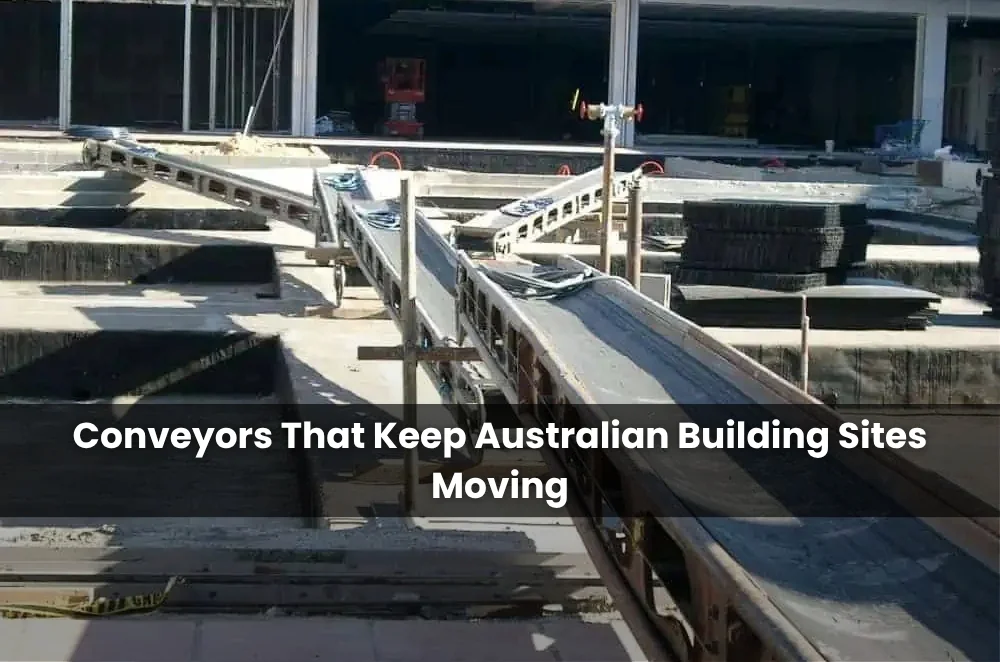
Moving bricks, sand, demolition waste, and palletised goods by hand or with a wheelbarrow slows a project down. Every extra minute spent hauling material is a minute the crew isn’t framing, wiring, or finishing. On a tightly scheduled build, that drag shows up in labour overruns and deadline pressure. A well-matched conveyor turns that slow shuffle into a steady flow, freeing trades to focus on skilled work and trimming the risk of musculoskeletal injuries.
Early in a project, contractors often lean on word-of-mouth or whichever hire yard is closest. That can leave money on the table. Talking through site slopes, load volumes, and power access with respected materials handling experts sharpens the choice and avoids the common trap of under-specifying capacity.
Why Fast Material Flow Matters
A mid-rise apartment build in Brisbane recently swapped hand-barrowing spoil for a lightweight belt conveyor. The change trimmed two carpenters from the clean-up crew and pulled the daily site knock-off forward by half an hour. Multiply that gain across a 20-week program and the savings in wages alone run into five figures.
Speed is only half the equation. Efficient flow also:
- Reduces congestion around access points, lowering collision risk with forklifts and site vehicles.
- Cuts repetitive lifting, which Safe Work Australia cites as a leading cause of soft-tissue injury on construction sites.
- Keeps wet trades working without pause because pallets of blocks or mortar arrive right when they’re needed.
The margin between profit and a cost blow-out often lives in those small time wins scattered through the day.
Matching Conveyor Types to Site Conditions
No single conveyor layout works everywhere. Site managers juggle gradients, weather exposure, and the ever-changing footprint as slabs cure and scaffolds come down. Choosing gear that flexes with those shifts means one hire can serve multiple stages instead of sitting idle.
Portable Belt Units
Light aluminium frames, integrated wheels, and cleated belts handle everything from wet screed to demolition rubble. They’re the go-to when access is tight because two workers can reposition the run in minutes. Belt speed is moderate, but the continuous feed evens out productivity spikes caused by skip bins filling too quickly.
Trough-Style Modular Lines
Where the material is dry and granular—think grain on regional silo works or landscaping bark on civil jobs—modular trough sections shine. Their side walls stop spill, allowing steeper angles without material roll-back. Clip-together sections let crews stretch or shorten the line as the stockpile shrinks.
Vertical Hoist-Assisted Systems
For refurbishment jobs inside existing buildings, a conveyor married to a hoist moves waste from basement to street without tying up the goods lift. The setup keeps neighbours happier by reducing truck idle time and lets trades carry tools instead of debris when they use internal stairs.
A deeper dive into set-up planning, including hopper sizing and safe loading zones, sits in a piece on streamlining materials handling. It breaks down real-world belt speed figures and power-draw considerations for remote sites running off gensets.
Safety and Regulation Touchpoints
Conveyors look straightforward—plug in, drop material, watch it travel. Yet every moving part is a potential pinch point. National model WHS Regulations spell out guarding requirements, emergency stop spacing, and isolation procedures. The key compliance factors boil down to three areas.
Guarding and Signage
Open rollers grab loose clothing fast. Removable mesh guards rated to withstand the expected impact load close the hazard without slowing maintenance. Clear “keep clear” zones painted on the deck deter shortcut stepping over the belt.
Electrical Safety
Wet weather and portable 240-volt motors mix poorly. Residual current devices (RCDs) rated for outdoor use and regular test tagging sit high on any safety officer’s checklist. Contractors should confirm cable routing keeps leads above puddles and away from mechanical damage.
Staff Induction
Even seasoned labourers may not have loaded a steep conveyor before. A quick induction covering material size limits, proper shovelling technique, and shutdown steps helps avoid jam-ups that can tear belts. Including conveyor use in the project’s overall SWMS keeps paperwork neat and inspectors satisfied.
FAQs
Are conveyors worth the extra hire cost on small residential jobs?
Often, yes. Even on a narrow townhouse block, a portable unit can cut hours of shovelling during demolition or landscaping. Labour saved usually offsets the daily rate within a couple of days.
How steep can I run a belt before material slides back?
Angle depends on what you’re moving. Damp sand handles steeper inclines than dry aggregate. As a ballpark, 18–20 degrees is safe for general construction spoil with a cleated belt.
Do I need a licensed electrician to connect site conveyors?
If the unit plugs into standard 15-amp outlets through an RCD, most jurisdictions allow a competent person to set up. Hard-wired or higher voltage systems require a licensed sparky. Check local regulations.
Can conveyors be used for food-grade projects?
Specialised stainless-steel belts with food-safe lubricants exist but are rare on standard hire yards. For packaging or agricultural tasks, ask suppliers about dedicated food-grade lines rather than modifying construction belts.









.webp)

.webp)