Sign up with Google
 Sign in with Zoho
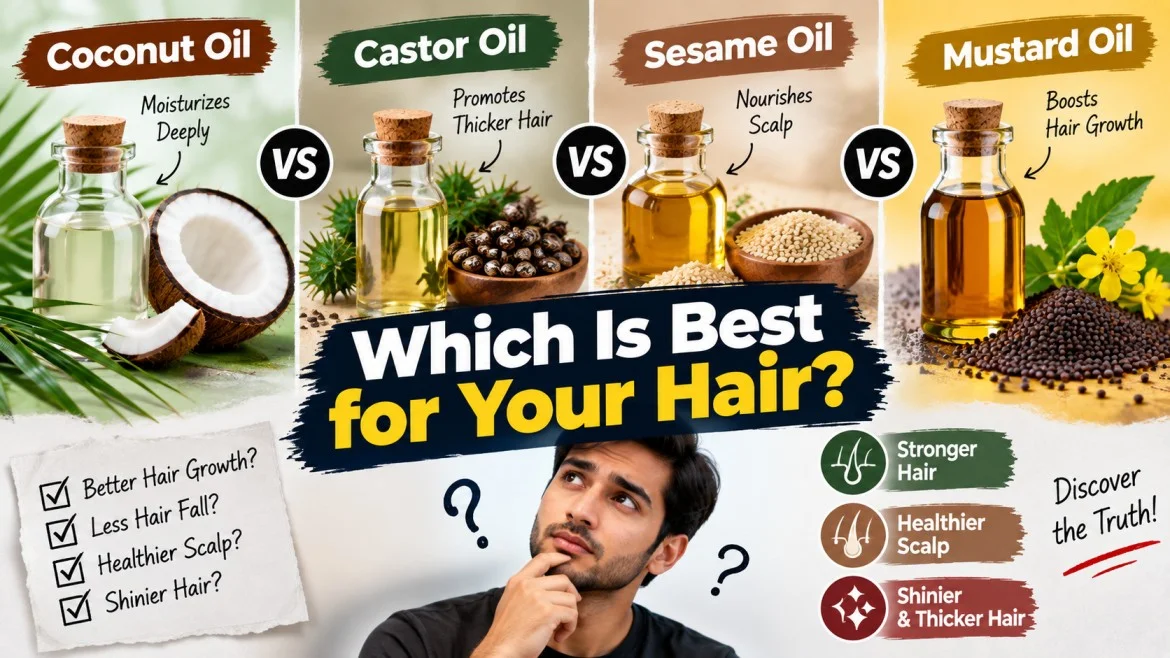
When it comes to taking care of hair oiling is one of the most popular routines.. With so many options a common question is: Which oil is actually best for your hair and scalp?
Coconut oil, castor oil, sesame oil and mustard oil all have different properties. The best choice depends on whether your main concern's dry hair frizz dry scalp or simply adding shine.
Lets look at each one.
1. Castor Oil – Great for Dry, Frizzy Hair
Castor oil is known for its rich texture. It contains ricinoleic acid. Forms a coating over the hair shaft.
Because of its consistency castor oil is not generally the easiest oil to spread across the scalp or hair. However this same coating effect can make hair feel smoother and help reduce the appearance of dryness and frizz.
If you have dry hair or rough-looking ends using a small amount of castor oil—particularly on the ends—may help make your hair look more conditioned.
Best suited for:
Dry and frizzy hair
Rough hair ends
Improving the appearance of split ends
Adding shine and softness
Remember that oil cannot permanently repair an end. Once a hair strand has split trimming is the way to remove the damaged portion.
2. Mustard Oil – A Traditional Hair Oil
Mustard oil has been used traditionally in South Asian households for generations.
It contains acids and other plant compounds but it can be quite strong for some peoples scalps. If you have skin mustard oil may cause irritation, burning or itching.
That's why it is better to use an amount first and stop if your scalp becomes irritated.
Best suited for:
Traditional scalp-oiling routines
People who tolerate mustard oil well
Conditioning the hair before washing
If you have a scalp or an existing scalp condition speak with a dermatologist before regularly applying strong oils.
3. Coconut Oil – A Popular Choice for the Hair Shaft
Coconut oil is one of the widely studied natural oils for hair care.
Its fatty acid lauric acid, has an affinity for hair proteins and can penetrate the hair shaft more effectively than many other oils. Research has found that coconut oil can help reduce protein loss from hair particularly when used as a -wash treatment.
This makes coconut oil a useful option for people who regularly experience dryness, roughness or damage from washing and styling.
Best suited for:
hair
Chemically or mechanically damaged hair
Reducing protein loss during washing
Improving hair softness and manageability
However coconut oil is not a proven treatment for genetic hair loss or baldness.
4. Black Sesame Oil – For Dry Scalp and Conditioning
Black sesame oil is another option for hair and scalp care.
Sesame oil contains fatty acids, including oleic and linoleic acids, well as vitamin E and other antioxidant compounds.
It can provide an emollient effect helping the scalp and hair feel less dry. However claims that sesame oil can specifically protect the scalp from UV damage or improve the scalp microbiome should not be treated as established treatments.
Best suited for:
Dry-feeling scalp
Hair conditioning
Traditional oiling routines
People looking for an alternative to castor oil
So Which Hair Oil Is Best?
There isn't one oil that's universally the best. Your choice should depend on your hair and scalp.
Add row above
Add row below
Delete row
Add column to left
Add column to
Delete column
Your Main Concern
Oil You May Consider
Dry or frizzy hair
Castor Oil
Hair conditioning and reducing protein loss
Coconut Oil
Dry-feeling scalp
Sesame Oil
Traditional oiling routine
Mustard Oil
For most people looking specifically to condition the hair shaft coconut oil is a practical choice because it has relatively strong evidence for reducing protein loss.
For dry-looking hair ends a tiny amount of castor oil can provide a heavier coating and shine.
If your scalp feels dry sesame oil may be worth trying if your skin tolerates it.
Mustard oil can be part of a hair-care routine but it may irritate sensitive scalps.
How Should You Apply Hair Oil?
You don't need to soak your hair in oil.
Try applying an amount to the lengths and ends of your hair. If you're applying oil to your scalp gently massage it without scratching or aggressively rubbing the skin.
Leave it on for a period and then wash your hair with a suitable shampoo.
If you notice itching, redness, burning, dandruff worsening or increased hair shedding stop using the oil. Consider consulting a dermatologist.
What If Your Hair Is Actually Falling Out?
Hair oil can make hair feel softer and more conditioned. Oiling alone cannot treat every type of hair loss.
Hair fall can be caused by genetics, hormonal changes, nutritional deficiencies, stress, scalp conditions, medications or other factors.
If you have a receding hairline, thinning crown widening part or persistent shedding getting a diagnosis is more useful than simply switching between different oils.
If you're looking for the Best Hair Doctor in Ludhiana choose a specialist who can assess your scalp and determine the actual cause of your hair loss before recommending treatment.
For people in Tehran if you are searching for The Hair doctor on Fereshteh Street Iran look for a qualified hair specialist who provides a proper diagnosis and clearly explains the available treatment options rather than promising guaranteed results.
Coconut oil, castor oil, sesame oil and mustard oil can all have a place in a hair-care routine—. They serve different purposes.
Coconut oil is an option for conditioning the hair and helping reduce protein loss. Castor oil is better suited to conditioning and adding a coating to dry frizzy ends. Sesame oil can be useful for people, with a dry-feeling scalp while mustard oil is mainly an option that may not suit sensitive skin.
Importantly remember this: healthy-looking hair and treating hair loss are two different things.
If you're experiencing hair loss find the cause first. The right treatment depends on the diagnosis not simply on which oil you choose.