Sign up with Google
 Sign in with Zoho
.webp)
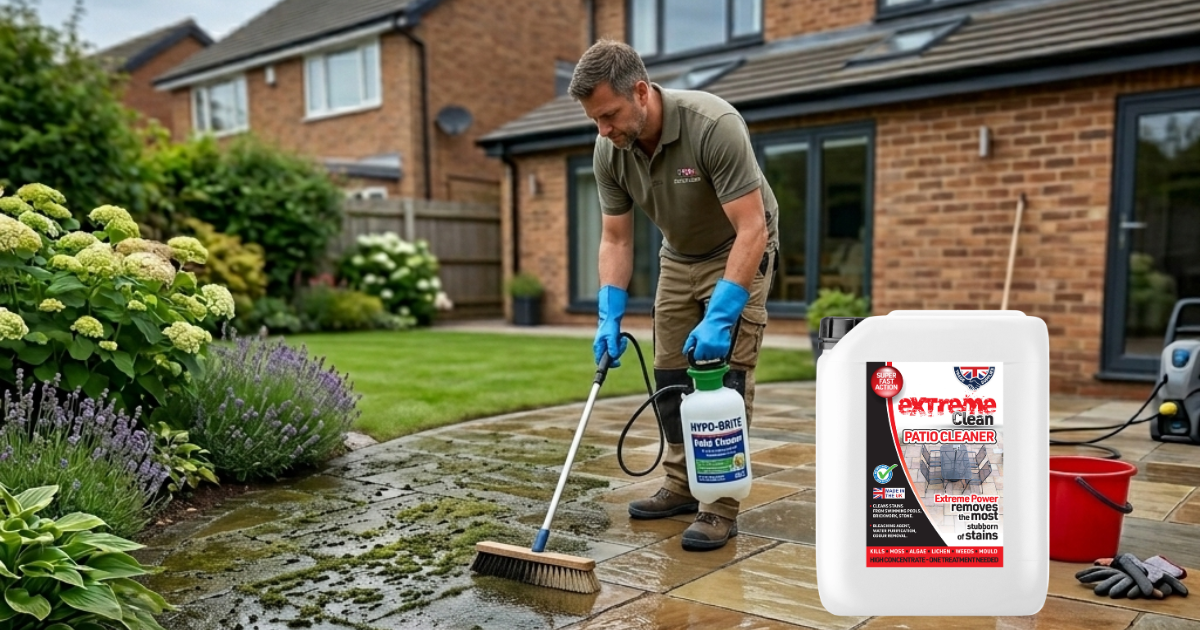
You spent a good chunk of money on that patio. You picked the stone carefully, arranged the furniture just so, maybe even planted a few pots around the edges. And then Britain happened.
Within a season or two, the green crept in. Then the black spots. Then that general grey, grimy film that makes the whole thing look like it belongs to someone who's given up on life. It's not a reflection of how much you care — it's simply what happens to outdoor surfaces in a climate as damp and grey as ours.
The culprits are almost always biological: algae, moss, lichen, and mould. These organisms love the kind of wet, cool, shaded conditions that the UK delivers in abundance. They root into the pores of your paving, feed off moisture and organic debris, and spread steadily from one slab to the next. Standard hosing down moves them temporarily. A pressure washer might blast the surface clean, but without actually killing the spores, regrowth is almost guaranteed within weeks.
This is where a hypochlorite patio cleaner earns its place in the garden shed.
What Is a Hypochlorite Patio Cleaner?
Sodium hypochlorite — chemical formula NaClO — is the active compound behind one of the most powerful and widely used outdoor cleaning solutions available. You may know it in its diluted domestic form as household bleach, but the sodium hypochlorite used for professional and trade patio cleaning is a far more concentrated product, typically formulated at 10–15% strength.
When applied to a patio surface, sodium hypochlorite works through a process of oxidation. It doesn't just shift biological growth — it kills it at a cellular level. Algae, moss, lichen, mould, and mildew are broken down rapidly on contact, which is why results can often be seen within minutes of application. It also has a residual effect, meaning surfaces remain hostile to regrowth for a prolonged period after treatment.
This is why sodium hypochlorite patio cleaner has become the go-to solution not just for homeowners, but for professional driveway and patio cleaning companies across the UK. Diluted correctly, it is cost-effective, fast-acting, and long-lasting in a way that most supermarket patio cleaners simply cannot match.
What Can It Clean? Surfaces and Stains
One of the great strengths of a hypochlorite-based patio cleaner is its versatility. It performs well across a wide range of outdoor hard surfaces, including:
- Natural stone patios — sandstone, limestone, slate, and granite flags
- Concrete and cement paving slabs
- Block paving and tarmac driveways
- Wooden and composite decking
- Brick walls and rendered surfaces
- UPVC fencing and cladding
- Roof tiles and paths
- Gravelled areas
In terms of what it removes, sodium hypochlorite is particularly effective against:
- Green algae and slime — usually the first thing to appear on shaded or north-facing surfaces
- Moss — including the root-like rhizoids that attach to stone and grout
- Black spot and lichen — notoriously stubborn growths that resist most surface cleaners
- Mould and mildew
- General organic staining — the browning and greying caused by leaf debris, soil, and environmental pollution
It is worth noting that sodium hypochlorite works best on organic staining and biological growth. For mineral deposits, rust marks, or oil-based stains, a specialist cleaner formulated for those specific problems will typically be more effective. Always assess the type of soiling you're dealing with before choosing a product.
How to Use a Sodium Hypochlorite Patio Cleaner: Step by Step
Getting good results from a sodium hypochlorite patio cleaner isn't complicated, but the sequence of steps matters. Here's how to do it properly.
Step 1: Prepare the Area
Clear the patio of furniture, plant pots, and any loose debris. Sweep away leaves, dirt, and loose material with a stiff broom. The cleaner works on the surface, not through a layer of fallen leaves.
Wet any grass borders, flower beds, or plant beds adjacent to the patio thoroughly with plain water. This dilutes any accidental overspray that drifts onto vegetation and reduces the risk of damage.
Step 2: Mix Your Solution
Always dilute sodium hypochlorite before applying it to a patio surface — never apply it neat. A standard starting dilution is 1 part hypochlorite to 5 parts water. For more stubborn or heavily affected areas, this can be adjusted to 1:3. Pour the diluted solution into a garden pump sprayer or watering can.
Step 3: Lightly Wet the Surface
Pre-wet the patio with plain water using a hose. This helps the hypochlorite solution spread more evenly and prevents it from drying too quickly before it has had time to work.
Step 4: Apply the Solution
Apply the diluted hypochlorite solution evenly across the surface using your sprayer. Work methodically across the area, ensuring even coverage. Pay particular attention to grout lines and joints, where biological growth tends to be most persistent.
Step 5: Allow Dwell Time
Leave the solution on the surface for 10 to 30 minutes, depending on the severity of the soiling. You'll often see results developing quite quickly — the green and black growth will begin to fade, turn white, and die off visibly. Do not allow the solution to dry completely on the surface; if it starts to dry in warm or sunny conditions, lightly re-wet with a sprayer.
Step 6: Agitate If Needed
For particularly stubborn deposits or deeply embedded lichen, use a stiff-bristled broom or brush to agitate the treated area. This helps the solution penetrate more deeply into the growth.
Step 7: Rinse Thoroughly
Rinse the entire area thoroughly with a garden hose or pressure washer, starting from the furthest point and working back towards a drain. Ensure all the solution is fully washed away before allowing children or pets back onto the surface.
Dilution Ratios: Getting It Right
The concentration of sodium hypochlorite products varies, so it's essential to read the specific product's instructions. As a general guide for a 14–15% strength solution:
When in doubt, start with the weaker dilution and assess results before increasing concentration. Always do a patch test on a small, inconspicuous area first, particularly with natural stone or any surface you haven't used hypochlorite on before.
Safety First: What You Need to Know Before You Start
Sodium hypochlorite is a powerful chemical, and treating it with respect makes the difference between a straightforward cleaning job and an unpleasant incident. Before you start:
Personal protective equipment (PPE):
- Chemical-resistant gloves — nitrile or rubber, not thin latex
- Safety goggles or glasses
- Long sleeves and long trousers
- Old footwear you don't mind getting splashed
Handling precautions:
- Always add the hypochlorite to water, not the other way round
- Never mix sodium hypochlorite with other cleaning chemicals — particularly anything acidic, as this can release toxic chlorine gas
- Work in a well-ventilated area and avoid prolonged inhalation of fumes
- Store away from children and pets in a cool, dark place, securely sealed
Environmental precautions:
- Keep the solution away from lawns, flower beds, vegetable patches, and ornamental plants — sodium hypochlorite will damage or kill plant life on contact
- Avoid allowing large quantities to drain directly into natural watercourses
- Do not use near aquatic features such as ponds
None of this should put you off using the product — it simply requires the same common sense you'd apply to any trade-grade cleaning chemical.
What to Avoid: Common Mistakes and Limitations
Even a product as effective as sodium hypochlorite can disappoint if it's used incorrectly. Here are the most common pitfalls.
Applying it neat. Undiluted sodium hypochlorite at 14–15% is highly concentrated and can discolour or damage surfaces, corrode metals, and cause skin burns. Always dilute.
Not rinsing adequately. Leaving residue on the surface — especially near metal furniture legs, drain covers, or fixings — can cause corrosion and staining. Rinse thoroughly every time.
Forgetting about plants. Even a small amount of overspray on nearby plants or grass can cause yellowing and die-back. Pre-wet adjacent vegetation and rinse it off at the same time as the patio.
Expecting it to work on non-organic staining. Sodium hypochlorite excels at killing biological growth. It will not dissolve cement residue, rust stains, oil marks, or mineral efflorescence. Use a purpose-formulated product for those.
Treating in direct, strong sunlight. The solution dries more quickly in direct sun, reducing its dwell time and effectiveness. Treat on an overcast day or in the morning for best results.
How Does It Compare to Pressure Washing?
This is a question that comes up constantly among UK homeowners — and the answer is that they're best used together, not instead of one another.
Pressure washing physically blasts organic growth and dirt off the surface. It's immediate and satisfying, but it doesn't kill what it removes. Spores and root structures left behind in the joints and pores of the paving will regrow within weeks, often faster than before because the high-pressure water has opened up the surface slightly.
A sodium hypochlorite patio cleaner kills the biological matter at source — but on a heavily fouled surface, the dead residue may still need physical removal afterwards.
The most effective approach is often to apply hypochlorite, allow full dwell time, and then pressure wash once the growth is dead. This kills the organisms and removes them, and because the regrowth cycle has been interrupted at root level, surfaces stay cleaner for significantly longer.
How Often Should You Treat Your Patio?
For most UK patios in average conditions, once a year — typically in spring or early autumn — is sufficient to keep biological growth under control. A single thorough treatment with a quality hypochlorite solution can inhibit regrowth for several months.
Patios in deeply shaded or north-facing positions, or those surrounded by trees, may benefit from twice-yearly treatment given the higher moisture levels and leaf debris that encourage faster regrowth.
If you're treating a surface for the first time and there's heavy, long-established growth, you may need two applications — once to kill the growth, and a second pass a week or two later to deal with any residual matter.
For homeowners who want to make the process as straightforward as possible, Trade Supplies UK stocks a well-curated range of professional-grade sodium hypochlorite cleaning solutions alongside the application equipment — sprayers, brushes, and PPE — to get the job done safely and efficiently.
Frequently Asked Questions
Is sodium hypochlorite safe to use on Indian sandstone? Yes, with care. Indian sandstone is porous but generally handles sodium hypochlorite well when the solution is properly diluted. Always do a patch test on a hidden area first and rinse thoroughly. Avoid using undiluted product and ensure the surface is pre-wetted before application.
Will a hypochlorite patio cleaner damage my grout or pointing? Standard jointing sand and mortar are generally tolerant of properly diluted sodium hypochlorite. However, heavily diluting your solution and rinsing promptly reduces any risk. If your grouting is already deteriorating or very old, exercise extra caution.
Can I use hypochlorite patio cleaner on decking? Yes — wooden and composite decking can be cleaned with diluted sodium hypochlorite. Use a weaker dilution (around 1:6 to 1:8) and rinse thoroughly. Avoid repeated high-concentration applications on untreated wood, as it can over time affect the fibres.
Is it safe to let pets onto the patio after treatment? Once the surface has been thoroughly rinsed and allowed to dry, it is generally safe for pets. Do not allow pets (or children) onto a treated, wet surface before rinsing is complete.
Does sodium hypochlorite work on black spot? Black spot — caused by a specific type of algae — is one of the more stubborn problems on paved surfaces. Sodium hypochlorite is one of the most effective treatments available, but a stronger dilution (1:3) and a longer dwell time may be needed. In very established cases, a second application after a week may be required.
Final Thoughts
A properly maintained patio is one of those things that quietly improves the quality of your whole outdoor life — and one of the fastest ways to lose that is to let moss, algae, and biological growth take hold unchecked. The British climate all but guarantees they'll try.
A good hypochlorite patio cleaner is one of the most cost-effective, efficient, and long-lasting tools you have to fight back. Used correctly — diluted properly, applied safely, and rinsed thoroughly — sodium hypochlorite can transform a green, grimy surface back to something you're actually pleased to sit out on, and keep it that way for months at a time.
The key takeaway is simple: treat annually, treat properly, and treat safely. Get those three things right and your patio will look after itself far more than you might expect.
Need professional-grade sodium hypochlorite and cleaning supplies delivered to your door? Trade Supplies UK offers a comprehensive range of outdoor cleaning chemicals and equipment, with clear product guidance to help you choose the right solution for your specific surface and situation.