Sign up with Google
 Sign in with Zoho

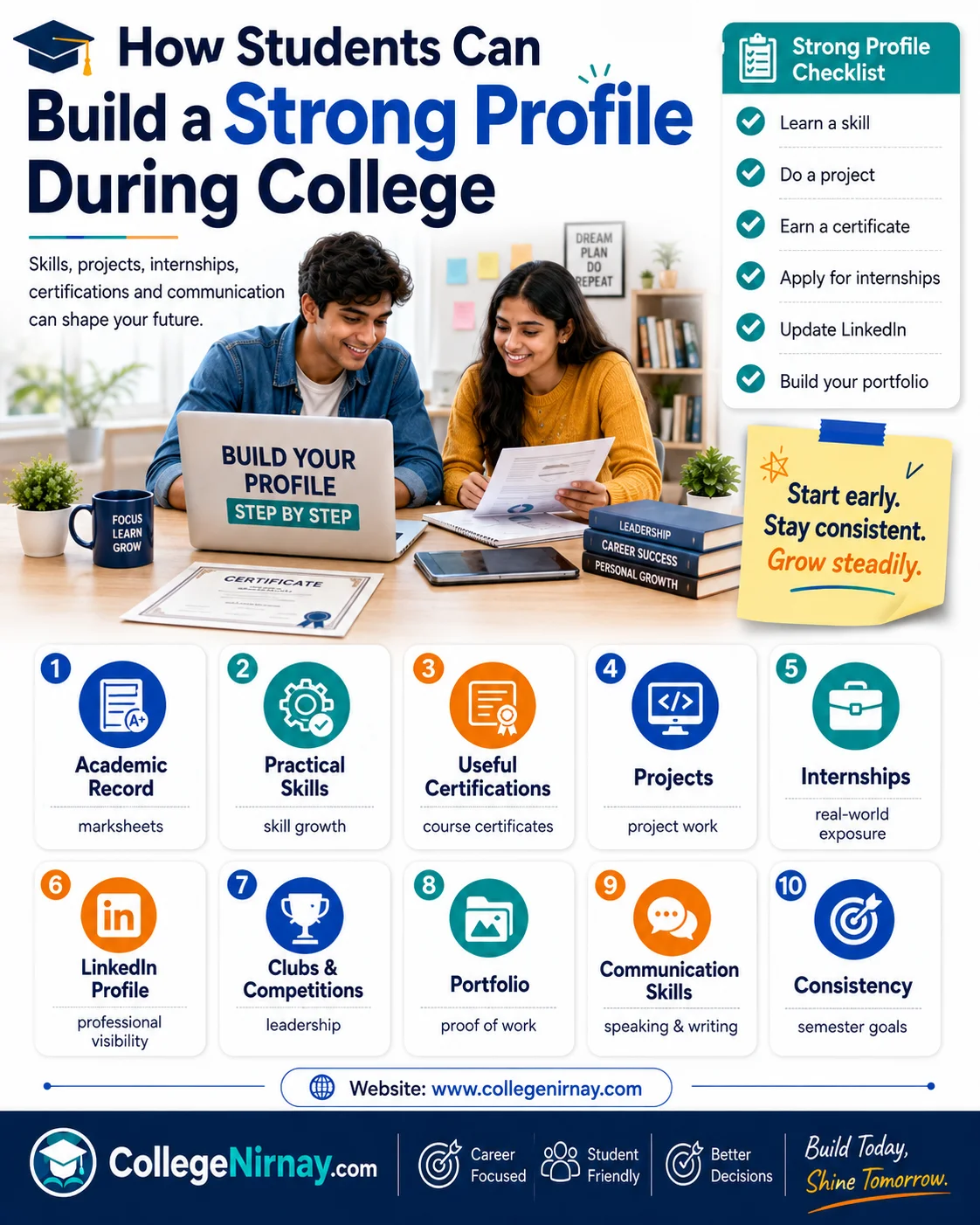
How Students Can Build a Strong Profile During College
College is not only about attending classes and passing exams. It is also the time when students should start building a strong academic and career profile.
A strong student profile helps during internships, placements, higher education admissions, scholarships, competitions, and even freelancing opportunities. It shows that a student has done more than just complete a degree.
In 2026, employers and universities are looking for students who have practical skills, communication ability, projects, internships, certifications, leadership experience, and a willingness to learn.
The good news is that students do not need to do everything at once. A strong profile can be built step by step during college.
Why a Strong Student Profile Matters
Many students wait until the final year to think about resumes, internships, and career opportunities. By that time, they often realise that they do not have enough projects, certificates, or experience to show.
A strong profile helps students stand out.
It can support:
- Internship applications
- Job interviews
- Campus placements
- Higher education applications
- Scholarship applications
- LinkedIn visibility
- Freelance opportunities
- Competitive career fields
Marks are important, but marks alone may not be enough. Students should also show what they can do in practical situations.
1. Maintain a Good Academic Record
A strong profile begins with academic consistency.
Students do not always need to be toppers, but they should try to maintain a decent academic record. Regular attendance, timely assignments, exam preparation, and subject understanding all matter.
A good academic foundation shows discipline and seriousness.
Students should keep their marksheets, certificates, achievements, and academic documents organised from the first year itself.
2. Build Practical Skills
Skills make a student profile stronger.
Students should identify skills related to their course and career goals. For example:
- Management students can learn communication, Excel, presentation, marketing, and business analysis.
- Computer students can learn coding, data analysis, web development, and software tools.
- Commerce students can learn accounting tools, taxation basics, finance, and Excel.
- Arts students can learn writing, research, public speaking, design, or digital media.
- Science students can learn lab skills, research methods, data handling, and technical writing.
Students should also build common skills such as communication, time management, teamwork, problem-solving, and digital literacy.
3. Complete Useful Certifications
Certifications can add value when they are relevant.
Students should not collect random certificates only to fill a resume. Instead, they should choose certifications that match their course, interest, or career plan.
Useful certification areas include:
- Digital marketing
- Data analytics
- Excel
- Python
- Artificial intelligence basics
- Finance
- Accounting tools
- Graphic design
- Content writing
- Communication skills
- Project management
- Cybersecurity basics
A certificate is more valuable when students can also show a project or practical work related to it.
4. Work on Projects
Projects are one of the best ways to show practical learning.
A project proves that a student can apply knowledge, solve problems, and complete real work.
Project examples include:
- Research report
- Business case study
- Website or app
- Data analysis dashboard
- Marketing campaign
- Finance report
- Social media strategy
- Design portfolio
- Presentation deck
- Survey-based study
- Community project
Students should save their best projects in a portfolio, Google Drive folder, LinkedIn profile, or personal website.
5. Apply for Internships Early
Internships give students real-world exposure.
Even a short internship can teach communication, deadlines, reporting, teamwork, and workplace behaviour.
Students should not wait until the final year. They can start with small internships, virtual internships, local business internships, NGO work, or project-based internships.
Internships help students understand what kind of work they enjoy and what career path they may want to follow.
They also make resumes stronger.
6. Create a Professional LinkedIn Profile
LinkedIn is useful for students because it helps them create a professional online presence.
A basic LinkedIn profile should include:
- Professional photo
- Clear headline
- Education details
- Skills
- Projects
- Certifications
- Internship experience
- Volunteer work
- Achievements
- Career interests
Students can also connect with seniors, alumni, faculty members, recruiters, and professionals from their field.
A good LinkedIn profile can create visibility and help students discover internships and career opportunities.
7. Join Clubs and Competitions
College clubs help students build confidence and leadership skills.
Students can join clubs related to debate, coding, entrepreneurship, culture, photography, writing, environment, management, or social service.
Club participation helps students improve:
- Public speaking
- Teamwork
- Event management
- Leadership
- Planning
- Networking
- Confidence
- Creativity
Competitions, hackathons, quizzes, case study challenges, and cultural events also add value to a student profile.
8. Build a Simple Portfolio
A portfolio is not only for designers or developers. Almost every student can create a basic portfolio.
A portfolio may include:
- Projects
- Certificates
- Internship work
- Writing samples
- Presentations
- Case studies
- Research work
- Design work
- Reports
- Achievements
Students can create a portfolio using Google Drive, Notion, LinkedIn, a PDF document, or a simple website.
A portfolio helps students show proof of work.
9. Improve Communication Skills
Communication is one of the most important career skills.
Students should practice speaking clearly, writing emails, preparing presentations, and explaining ideas confidently.
Good communication helps during:
- Interviews
- Group discussions
- Internships
- Class presentations
- Networking
- Workplace meetings
- Client interactions
Students can improve communication by reading regularly, speaking in class, joining clubs, writing short articles, and practicing presentations.
10. Stay Consistent
A strong profile is not built in one week. It is built slowly through consistent effort.
Students should set small goals every semester.
For example:
- Complete one certification
- Build one project
- Update LinkedIn profile
- Apply for internships
- Join one club
- Improve one skill
- Attend one workshop
- Add one portfolio item
Small efforts repeated over time create a strong profile.
Final Thoughts
Building a strong student profile during college is one of the smartest things students can do for their future.
A degree gives academic qualification, but skills, projects, internships, certifications, communication, and practical experience make the degree stronger.
Students should start early, stay consistent, and keep improving their profile step by step.
For students who want guidance on colleges, courses, admissions, career options, and education planning, CollegeNirnay can help them explore better academic decisions.
Website: https://www.collegenirnay.com