Sign up with Google
 Sign in with Zoho
Ask most people what luxury travel looks like and they’ll describe a beach, a spa and a very good breakfast. Ask what adventure travel looks like and you’ll hear about sore feet, bad coffee and bragging rights.
Put the two together and things get interesting. The best luxury adventure tours don’t water down either side. The place stays wild and the challenge stays real, but the support behind it is good enough that you can actually enjoy it. Here’s how that works in practice, from the savannas of East Africa to the high Himalaya.
Luxury Isn’t Where You Think It Is
Marble bathrooms are easy to buy. What’s much harder to find is access, expertise and trust.
Access means getting somewhere most people can’t: a night inside an Everest expedition camp, a forest where lowland gorillas still outnumber visitors, a stretch of coast reachable only by yacht. Expertise means being led by people who’ve spent decades in those places. Trust means knowing that when something goes wrong at 5,000 metres or 500 kilometres from a hospital, someone has already planned for it.
That’s the idea behind the way True Summit Adventures describes itself. The company calls its approach “beyond travel specialists,” and its pitch is handcrafted journeys with rare access, deep immersion and refinement. The homepage opens with a line from Thoreau: “Our truest life is in dreams awake.” It’s a good summary of what people are after when they book something like this.
Africa: Where Comfort Meets Wilderness
Start with the continent most people picture first.
Kilimanjaro. At 5,895 metres, it’s the highest free-standing mountain in the world, and it’s non-technical, which makes it one of the most reachable big peaks on Earth. A luxury version changes the experience entirely. On the Original Kilimanjaro Luxury Trek, the camp is the company’s own: standing-height tents, camp beds, sleeping bags rated for 6,000 metres, a private toilet and shower tent, and a chef who bakes a celebration cake on the final night. The 7-day Machame Route builds in acclimatisation, and the in-house team leading it includes guides with more than two hundred ascents each. Price starts around $8,000 per person.
Gorillas in Rwanda and Gabon. Spending time near a gorilla family in Volcanoes National Park is one of those experiences people describe as quietly overwhelming. Gabon goes a step further. In Loango National Park you can see lowland gorillas and, in season, humpback whales along a wild Atlantic coast, a combination few places can offer.
Safari in Kenya. Ol Jogi, in Laikipia, sits in the high-end conservancy tradition: private, small-scale and deeply tied to conservation.
None of these trips is about ticking off animals. They’re about slowing down enough to notice where you are.
The Himalaya: Big Mountains, Better Nights
If Africa is about wildlife and space, the Himalaya is about scale and culture.
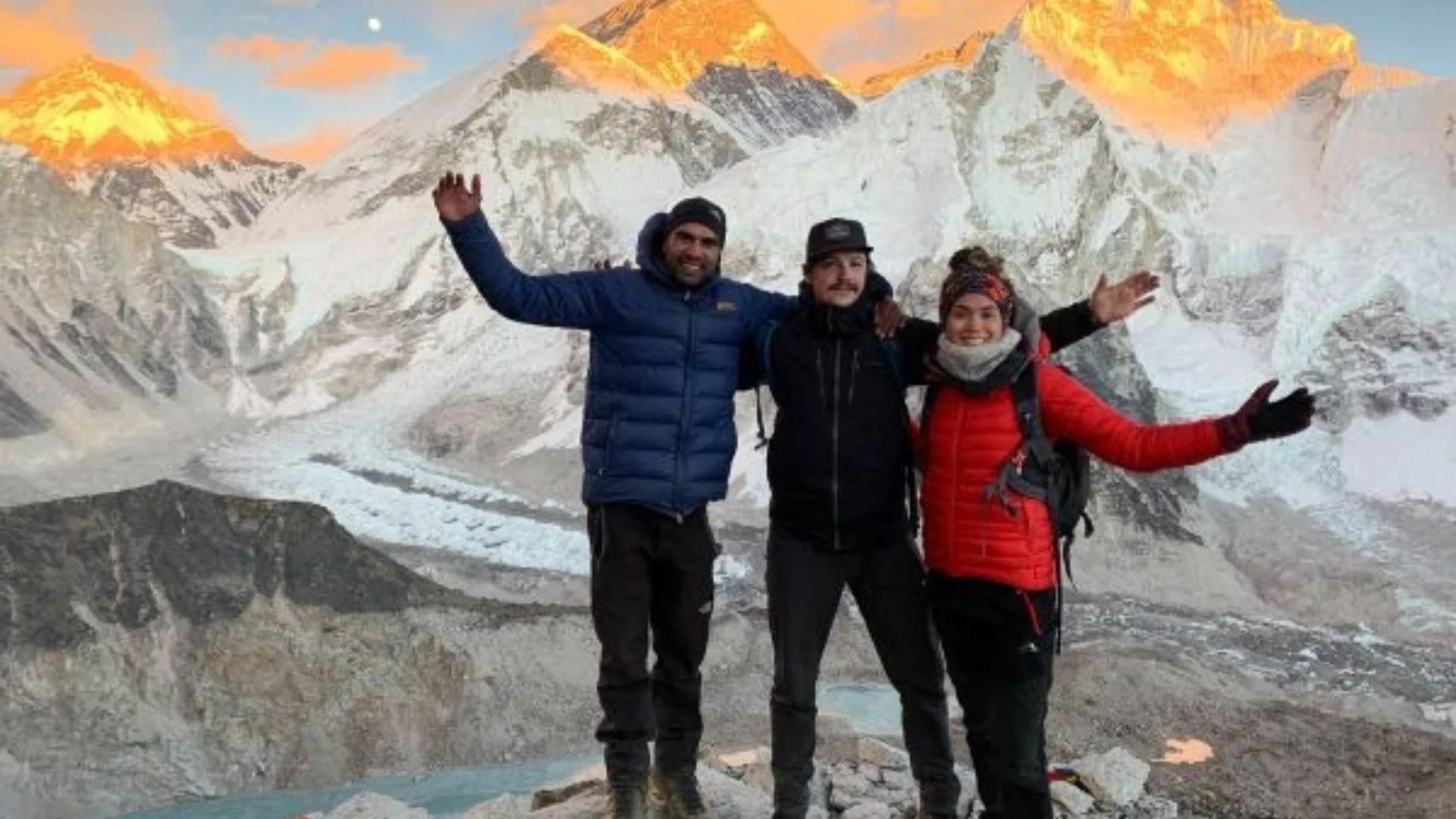
The luxury Everest Base Camp trek turns a famously rough journey into something far more civilised without making it any less meaningful. You stay in Kathmandu’s heritage hotels, trek through Sherpa villages and monasteries, sleep in lodges with heated blankets and en suite bathrooms, and finish with a helicopter flight back over the Khumbu. In spring, you can even spend a night at Everest Base Camp inside a professional expedition camp.
Then there’s the guiding. One version of the trek is led by Kami Rita Sherpa, the record holder for Everest ascents. Walking beside someone with that depth of knowledge changes the trail from scenery into story.
For something quieter, Bhutan’s Khamsa Journey and Mongolia’s Altai Mountains offer cultural immersion with a lot less foot traffic. Mera Peak and Lobuche East serve those who want a proper summit.
More Than Mountains
A good luxury adventure travel company doesn’t stop at peaks. The range matters, because the best trip for you might not involve altitude at all.
- Ocean: Private yacht charters through Raja Ampat, the Galápagos, Alaska or Svalbard, plus island trips like Socotra and Islas Secas.
- Snow: Heli-skiing in Albania, across roughly 1,500 square kilometres of terrain only reachable by helicopter, where first descents are still possible.
- Culture: Journeys through Colombia, Sri Lanka, New Zealand, Patagonia and Scotland, built around place and people rather than a single physical goal.
The common thread is purpose. Every journey starts from an intention: a challenge, a milestone, or a connection you want to deepen.
The People Make It
Ask anyone who’s done a trip like this what they remember and they rarely start with the hotel. They start with a person: the guide who read the weather perfectly, the cook who turned a tent into a dining room, the host who made a stranger’s village feel like a welcome.
True Summit Adventures leans into this. Its guide roster includes Ed Viesturs, the first American to climb all fourteen 8,000-metre peaks, and Karl Egloff, who holds the fastest known time on Kilimanjaro at 6 hours 45 minutes for the ascent and descent. David Goettler, with multiple 8,000-metre ascents without supplemental oxygen, leads climbs in Italy. The point isn’t name-dropping. It’s that expertise at this level makes everything else safer and richer.
Look at how the team is built too. On Kilimanjaro, the company says it uses no subcontractors, with all guides, chefs and hosts coming from an in-house crew named in advance. That consistency matters more than almost any amenity.
Doing It Responsibly
Remote places are fragile, and luxury shouldn’t mean taking more than you give back. When you’re comparing operators, ask where the money goes.
True Summit Adventures says it supports social, conservation and community projects in the places it visits, including Neema Village in Arusha, Tanzania, and The Juniper Fund and Maiti Nepal in Nepal. It also highlights fair wages, training and a high proportion of female guides and porters on its Kilimanjaro team. Whichever company you choose, those are the right questions.
Individual or Group?
Not everyone wants a private itinerary. For travellers who prefer company, True Summit Adventures also runs small-group departures, such as timed Kilimanjaro climbs around the Great Migration, calving season, a full moon and New Year’s Eve, plus Aconcagua with Karl Egloff and a spring Everest Base Camp trek. Group sizes stay small, with a focus on comfort, safety and camaraderie.
If you’d rather build something from scratch, the bespoke route lets you set dates, pace and companions.
How to Pick
A few honest questions help narrow it down:
- What’s the real goal? A summit, a celebration, a family milestone, or simply somewhere astonishing.
- How much effort do you want? Be realistic. A trek and a yacht week are different holidays.
- When can you travel? Seasons matter, especially on big mountains.
- Who’s leading? Named, experienced, in-house teams beat anonymous subcontractors.
- What’s the safety plan? Satellite phones, helicopter partners and acclimatisation schedules should be standard answers.
Conclusion
Rethinking luxury adventure tours really means rethinking what you’re paying for. Comfort is part of it, but the bigger part is the freedom to focus on the place instead of the logistics. Whether that’s an African summit at sunrise or a Himalayan ridge at dusk, the best trips leave you with something that’s hard to describe afterwards.
To explore the full range, from safaris to summits and everything between, browse the collection at True Summit Adventures.