Sign up with Google
 Sign in with Zoho

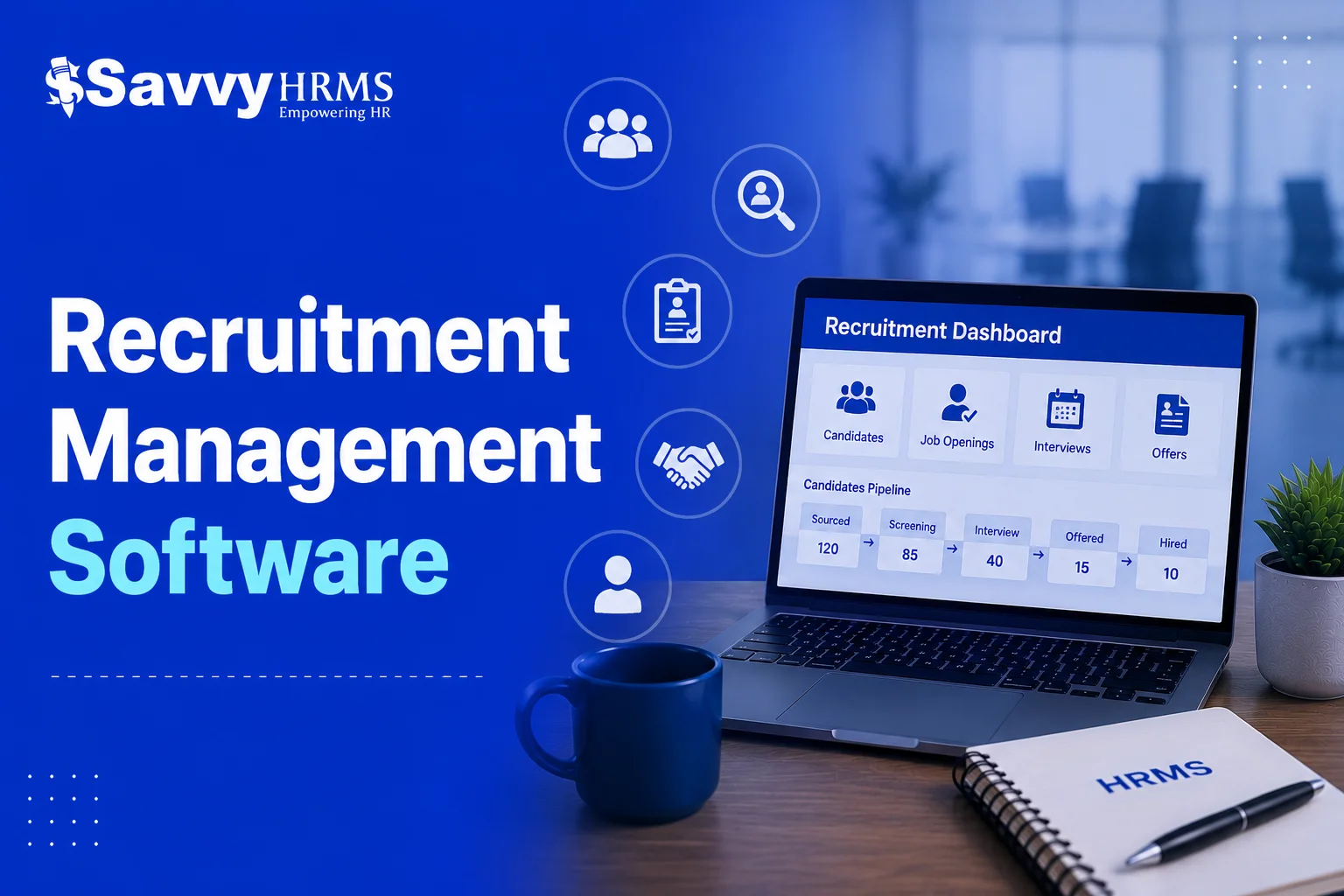
Most conversations about Recruitment Management Software focus on features — resume parsing, interview scheduling, candidate portals. Useful, but it's the wrong starting point if you're the person who has to justify the budget.
The real question isn't "what does this software do?" It's "what is manual, disconnected recruiting actually costing us right now?" Once you frame it that way, the case for recruitment management software stops being a nice-to-have and starts looking like a straightforward financial decision.
Let's walk through the hidden costs of doing recruitment the old way, and what the numbers look like once you fix it.
The Hidden Price Tag of "Good Enough" Recruiting
Most companies don't have a recruiting technology budget line labeled "inefficiency." But it exists — it's just spread across a dozen smaller costs that never get added up.
- Recruiter time spent on admin, not people. Studies across the HR industry consistently show recruiters spend the majority of their week on scheduling, data entry, and status updates rather than actually evaluating or engaging candidates. That's a fully loaded salary being spent largely on tasks software could handle in seconds.
- Slipped candidates. Every day a strong applicant sits unreviewed in an inbox is a day closer to them accepting a competing offer. In competitive fields, top candidates are often off the market within ten days of applying.
- Rework and miscommunication. When candidate information lives across email, spreadsheets, and sticky notes, something inevitably gets missed — a scheduling conflict, a duplicate outreach, a forgotten follow-up. Each mistake costs recruiter time to untangle, and sometimes costs a candidate relationship entirely.
- Bad hires from rushed decisions. Without structured screening, hiring can lean too heavily on gut feel. A bad hire is commonly estimated to cost anywhere from half to several times that person's annual salary once you account for training, lost productivity, and re-hiring.
None of these costs show up as a single line item. But together, they represent the real price of staying manual.
Building the ROI Case: A Simple Framework
When you're presenting this to finance or leadership, the strongest argument isn't "this software has great features." It's a before-and-after comparison across four levers:
1. Time-to-Fill Reduction
Faster hiring means less time with a seat empty — and an empty seat has a real cost in lost output, overtime for existing staff, or delayed projects. If recruitment management software shaves even one to two weeks off your average time-to-fill, multiply that across your annual hiring volume to see the impact.
2. Recruiter Capacity Gained Back
If automation frees up even 30% of a recruiter's time from admin work, that's effectively additional hiring capacity without adding headcount. For a team hiring at scale, this alone can offset the software's cost.
3. Reduced Cost-per-Hire
Cost-per-hire includes job board spend, agency fees, and internal labor cost. Centralizing sourcing and reducing reliance on paid channels (thanks to better organic pipeline management) typically brings this number down measurably.
4. Improved Quality of Hire and Retention
This is harder to quantify but arguably the most valuable. Structured screening and better candidate matching lead to hires who are a better fit — which shows up later as lower turnover and higher performance.
Put together, most organizations find that recruitment management software pays for itself well within the first year, particularly once hiring volume exceeds even a modest scale.
What the Alternative Actually Looks Like
It's worth being specific about what "not investing" really means day to day, because it rarely feels like a single dramatic failure — it's death by a thousand small frictions:
- A hiring manager who stops trusting the process because they never know where candidates stand
- A candidate who ghosts the final interview because no one confirmed the meeting details
- A great applicant who never gets seen because they were buried under 200 others
- A recruiter who spends Friday afternoon manually copying interview feedback into an email instead of sourcing new candidates
- A leadership team that can't answer "why is hiring taking so long?" with anything more specific than a shrug
Individually, none of these feel like emergencies. Collectively, they're the reason hiring cycles stretch longer than they should and strong candidates end up working for competitors instead.
Making the Internal Case: What to Bring to the Conversation
If you're the one pitching this internally, a few things make the case land better:
- Bring your own numbers first. Before comparing vendors, pull your current time-to-fill, cost-per-hire, and offer-acceptance rate if you have them. Even rough estimates give you a baseline to show improvement against.
- Frame it as risk reduction, not just efficiency. Losing strong candidates to slow processes is a competitive risk, not just an inconvenience. Framing it that way tends to resonate more with leadership than "it'll save some time."
- Anchor to a specific pain point leadership already feels. If there's a role that's been open for months, or a hiring manager who's been vocal about frustration, use that as your concrete example rather than speaking in generalities.
- Propose a pilot, not a full rollout. Suggesting you start with the highest-volume department or a specific hiring season lowers the perceived risk and gives you real internal data to expand from.
Choosing a Platform Through a Financial Lens
Once the business case is made, evaluating vendors gets easier if you keep the ROI framing in mind rather than getting distracted by feature checklists:
- Does the pricing model match your hiring volume? Per-seat pricing can get expensive fast for larger teams; usage-based models may fit fluctuating hiring needs better.
- What's the realistic implementation timeline? A platform that takes six months to deploy delays your ROI by six months.
- Does it integrate with tools you're already paying for (HRIS, payroll, communication platforms)? Redundant systems quietly erode the savings you're trying to capture.
- What reporting comes standard versus what requires expensive add-ons or custom development?
A Realistic Expectation, Not a Silver Bullet
It's worth being honest: recruitment management software won't fix a broken hiring culture on its own. If interviewers routinely ghost their feedback deadlines or hiring managers can't agree on requirements before a role opens, software will surface those problems faster — but it won't solve them by itself.
What it will do is remove the structural friction that makes good practices harder than they need to be. Teams that pair the software with clear process ownership see the biggest gains; teams that install it and change nothing else see more modest ones.
Final Thought
The conversation about recruitment management software often starts with features, but the conversation that actually gets budget approved starts with cost. Every unfilled role, every candidate lost to a slow process, and every hour spent on manual admin has a real number attached to it — even if no one's calculated it yet.
Once you do the math, the question usually isn't "can we afford this software?" It's "how much longer can we afford not to have it?"