Sign up with Google
 Sign in with Zoho

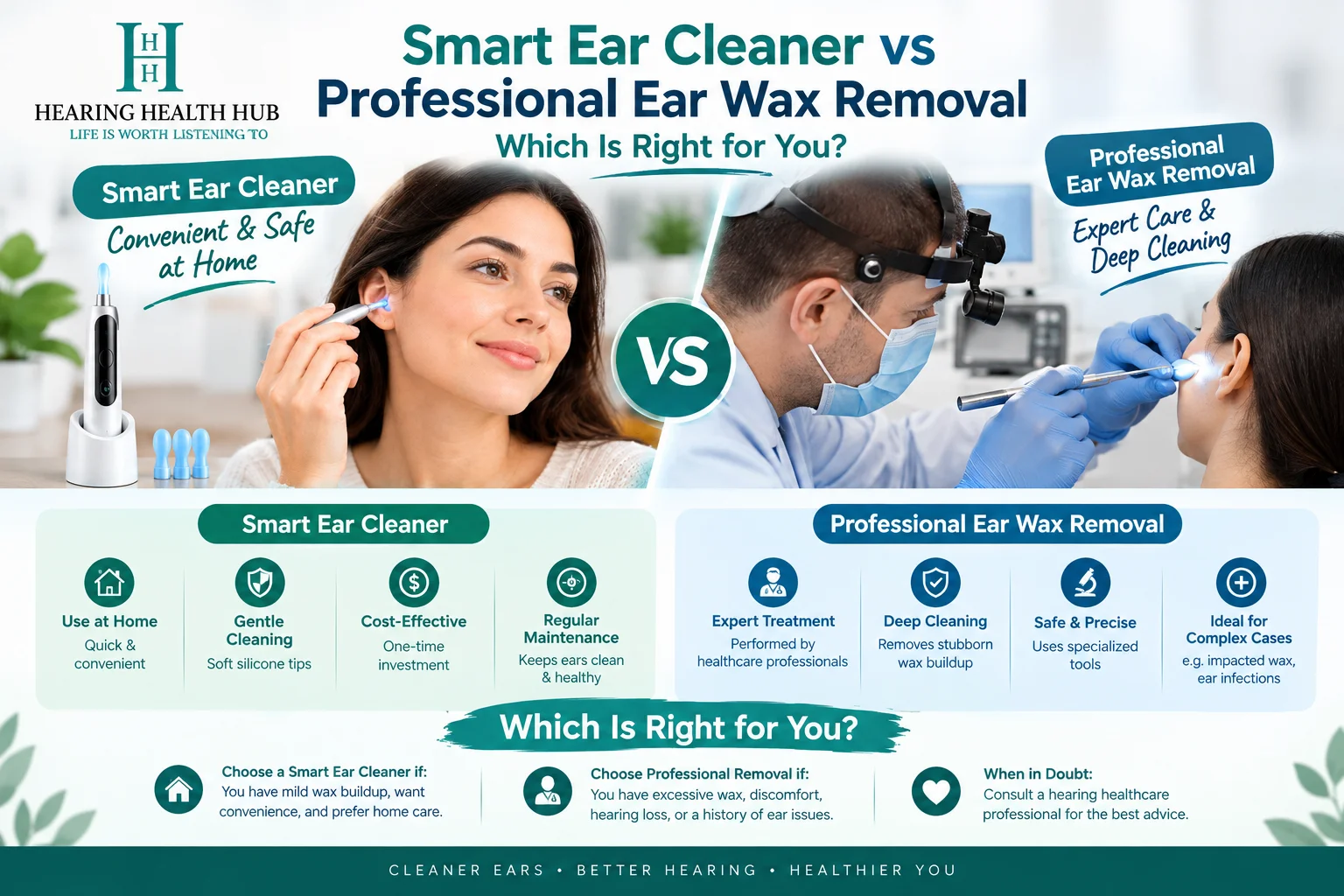
Ear wax build-up is common, and more people are now trying at-home devices such as SmartBud before booking an appointment. A smart ear cleaner offers convenience, while professional ear wax removal offers an examination and treatment by a trained clinician.
Both have their place, but they are not interchangeable. This guide compares the two so you can choose the safest option for your ears, based on your symptoms and how much wax you have.
What Is a Smart Ear Cleaner?
A smart ear cleaner is an ear wax removal tool with a small camera and light in the tip. The camera sends a live image to your phone, so you can see the outer part of your ear canal as you clean.
SmartBud is one example. Instead of using a cotton bud blind, you can see where the wax is and where the tip is going. That visibility is the main reason people choose a device like this over cotton buds.
A smart ear cleaner is designed for gentle cleaning of visible wax near the entrance of the ear. It is not designed to clear wax that is packed deep inside the canal.
How to Use SmartBud Safely
The key principles of how to use SmartBud are simple:
- read the manufacturer’s instructions before first use
- use the device only as intended, with the correct tips
- never insert it deeply into the ear canal
- stop if you feel pain, see bleeding or feel dizzy
- clean the device as the manufacturer recommends
- do not share it with other people
Our step-by-step guide to using a smart ear cleaner safely at home covers each stage in more detail.
Is SmartBud Safe?
There is no single answer to “is SmartBud safe?”, because safety depends on the person and how the device is used. It depends on:
- using it correctly and gently
- following the manufacturer’s instructions
- the health of your ears
- whether you have impacted wax or another ear problem
Home cleaning is not appropriate if you have ear pain, discharge, a perforated eardrum, recent ear surgery or sudden hearing loss. In these situations, seek professional advice instead.
What Is Professional Ear Wax Removal?
Professional ear wax removal is carried out by a trained clinician, such as an audiologist, ear care nurse or ear specialist. It starts with an examination of the ear canal and eardrum, which a home device cannot provide.
The two main methods are:
- Microsuction ear wax removal, where wax is removed with a gentle suction device while the clinician views the ear under magnification
- Ear irrigation, where warm water is used to flush wax out with an electronic irrigator, when it is suitable for the patient
NICE guidance recommends either method for adults with wax build-up, and advises against manual syringing. The clinician decides which method suits your ears and can advise on future ear care. You can book with a private ear wax removal clinic, and some NHS services offer ear wax removal, although availability varies by area.
Smart Ear Cleaner vs Professional Ear Wax Removal
When Is a Smart Ear Cleaner a Suitable Option?
A smart ear cleaner may suit adults who have healthy ears, no warning symptoms and a small amount of visible wax near the entrance of the ear canal. It can form part of a gentle ear hygiene routine when used occasionally and exactly as instructed.
Bear in mind that most ears clean themselves. Wax normally moves out of the ear on its own, so many people do not need to clean inside their ears at all. If you have symptoms, a device is not the right starting point.
When Should You Choose Professional Ear Wax Removal?
Book a professional assessment if you have:
- a noticeable drop in hearing
- persistent ear pain or earache
- bleeding or discharge from the ear
- severe dizziness
- blocked ears or suspected impacted ear wax
- a history of ear surgery, a perforated eardrum or other ear problems
- symptoms that have not improved despite home ear care
Sudden hearing loss needs urgent medical advice, for example from NHS 111.
Is Professional Ear Wax Removal Better Than Using a Smart Ear Cleaner?
Neither is automatically better for everyone. The right choice depends on how much wax you have, whether it is impacted, any existing ear conditions and your symptoms.
For a small amount of visible wax in a healthy ear, careful home cleaning may be all you need. For impacted wax, blocked ears or any warning signs, professional removal is the safer choice because the clinician can see the whole ear canal and choose a suitable method. The aim is to choose the safest appropriate option, not the most convenient one.
Common Mistakes to Avoid When Cleaning Your Ears
Ear cleaning safety mostly comes down to avoiding these mistakes:
- pushing cotton buds deep into the ear, which can compact wax
- using objects not designed for ear cleaning, such as hairgrips or ear candles
- cleaning your ears too often
- ignoring pain or bleeding
- trying to remove severely impacted wax yourself
- using a device incorrectly or with the wrong tips
- carrying on with ear wax removal at home when symptoms are getting worse
Safe ear wax removal is about knowing when to stop as much as knowing how to clean.
Frequently Asked Questions
Is SmartBud safe to use?
For most adults with healthy ears, SmartBud can be used safely if you follow the instructions and stay near the entrance of the ear canal. It is not risk-free, so stop if you feel pain or notice bleeding.
How do you use SmartBud?
Read the instructions, fit a clean tip and use the camera to find visible wax near the entrance of your ear. Lift it away gently, never push deep into the canal and stop once the visible wax has gone.
Can a smart ear cleaner remove impacted ear wax?
It is not designed to. Impacted wax sits deeper in the canal, and trying to remove it at home can push it further in. A professional can assess and remove it safely.
Is professional ear wax removal safer?
For impacted wax or ears with symptoms, yes, because a clinician examines the ear first and removes wax under direct view. For small amounts of visible wax in healthy ears, careful home cleaning may be enough.
Can I remove ear wax at home?
Often, yes, if the wax is near the entrance and you have no symptoms. A pharmacist can also advise on softening drops. Get professional help if your ears feel blocked or the wax keeps returning.
What is the safest way to clean ear wax?
For most people, the safest approach is to leave the ear canal alone and wipe the outer ear with a cloth. If wax causes symptoms, softening drops or professional removal are safer than digging at it.
When should I see a professional for ear wax removal?
See a professional if you have blocked ears, reduced hearing, pain, discharge or dizziness, or if home care has not helped. Seek urgent advice for sudden hearing loss.
Is microsuction better than home ear cleaning?
For impacted or troublesome wax, microsuction is usually the better option because it is carried out under magnification by a trained clinician. Home cleaning suits only small amounts of visible wax in healthy ears.
Can ear wax cause blocked ears or hearing loss?
Yes. A build-up of ear wax can make your ears feel blocked and your hearing muffled, and may cause ringing or discomfort. These symptoms can have other causes, so get them checked.
How often should you clean your ears?
Most people do not need to clean inside their ears regularly, as ears clean themselves. Clean only when there is visible wax near the entrance, and avoid cleaning just because the ear looks slightly waxy.
Choosing the Right Option for Your Ears
A smart ear cleaner can be a convenient way to manage small amounts of visible wax in healthy ears, provided you use it carefully. If your ears feel blocked, painful or simply not right, professional ear wax removal is the safer route.
If you are unsure which option suits you, book an ear wax removal appointment and have your ears checked by a professional.A smart ear cleaner is an tool with a small camera and light in the tip. The camera sends a live image to your phone, so you can see the outer part of your ear canal as you clean.