Sign up with Google
 Sign in with Zoho

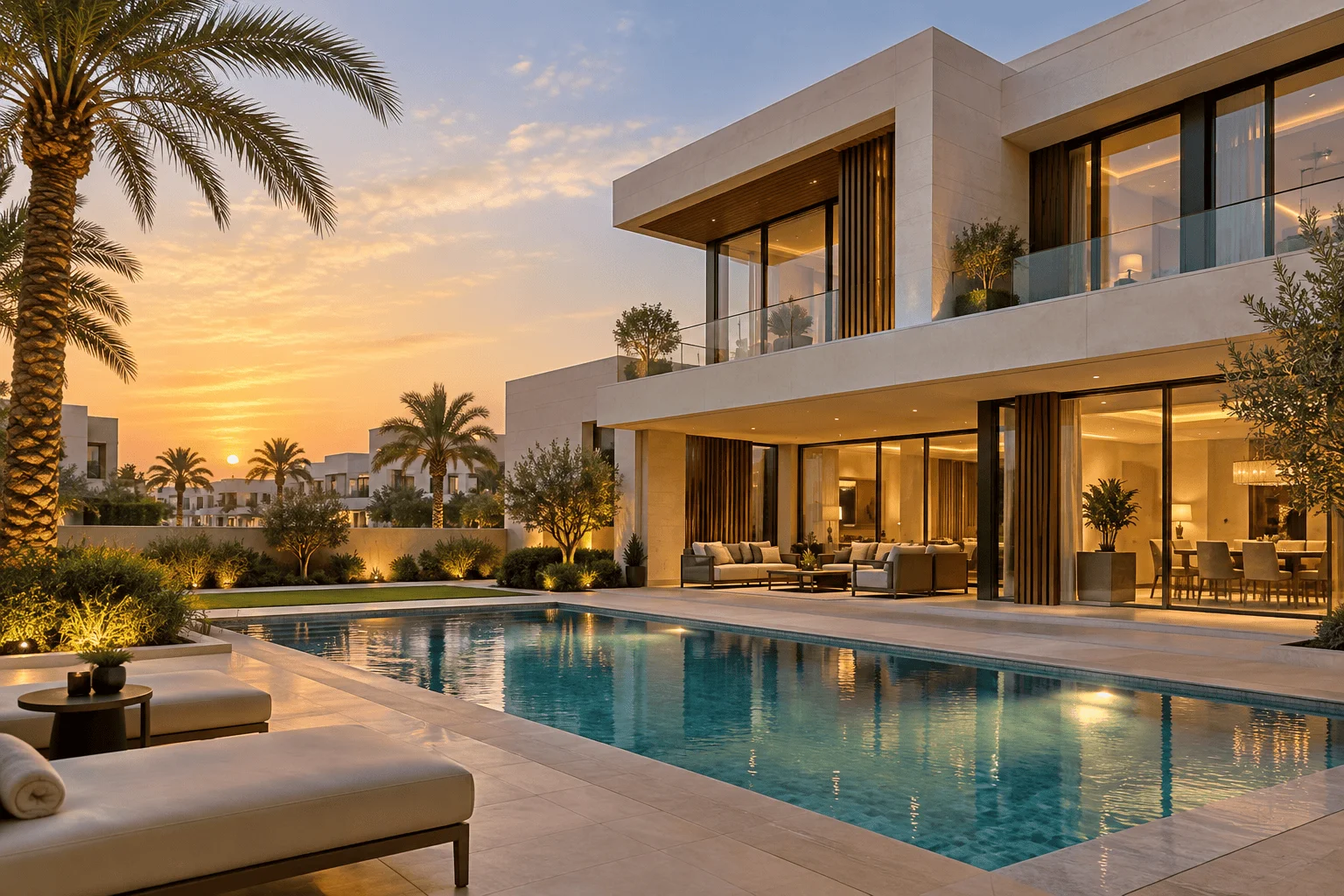
From our experience watching Saudi Arabia's residential market evolve, "luxury" has become one of the most overused — and least understood — words in real estate marketing. Every second listing claims the label, but the actual definition has shifted quite a bit in recent years. In this article, we share our perspective on what genuinely separates a luxury villa from an ordinary one in today's Saudi market, and why that distinction matters more than ever for buyers comparing options.
Why the Definition of "Luxury" Has Changed
A decade ago, luxury in Saudi residential real estate was largely about size — bigger plots, bigger floor areas, more bedrooms. That's no longer the full picture. As the market has matured and buyers have become more design-literate, luxury villas in Saudi Arabia are increasingly judged on architectural intent, material quality, and how well a home is integrated into its surrounding community, not just square footage.
This shift mirrors what's happening across the country's residential real estate market more broadly, where buyer expectations have risen alongside supply. With more developers competing for the same pool of premium buyers, the word "luxury" only holds meaning when it's backed by something tangible — which is exactly where a lot of listings fall short.
The Design Standards That Actually Define Luxury
When we break down what separates a genuinely luxury home from one simply marketed that way, a few consistent factors come up:
Architectural intent, not just decoration. A luxury villa is designed around how a family actually lives — natural light reaching main living spaces, clear separation between private and shared areas, and proportions that feel considered rather than maximized for floor count.
Material quality over material quantity. Premium finishes matter, but so does consistency — a home with a marble entrance and standard-grade fittings everywhere else isn't luxury, it's decoration. Genuine luxury shows up in the details buyers don't immediately notice: door hardware, insulation quality, and the finishing of spaces that aren't "showcase" rooms.
Privacy as a design principle, not an afterthought. Thoughtful boundary walls, garden layouts that shield outdoor living spaces from neighboring plots, and entrances designed to separate guest and family access are far more indicative of luxury than a large façade.
Community context. Increasingly, buyers evaluating luxury villas in Saudi Arabia are looking beyond the plot itself to the surrounding community — shared green spaces, security infrastructure, and whether the neighborhood is planned as a cohesive whole rather than built plot by plot.
Luxury Apartments Are Following the Same Shift
It's not just villas. Luxury apartments in Saudi Arabia are going through a similar redefinition, with buyers increasingly comparing developments on shared amenities, building management quality, and interior finish consistency rather than unit size alone. As more apartments for sale in Saudi Arabia enter the market at a genuinely premium tier, the gap between a "nice apartment" and a true luxury unit is starting to come down to the same details that separate luxury villas from ordinary ones — intentional design, material consistency, and a community that reinforces the lifestyle being sold.
This is a meaningful shift for buyers to understand before comparing listings, since price alone is no longer a reliable indicator of which properties actually deliver on the luxury label.
What to Actually Check Before Believing the "Luxury" Label
A few practical checks we'd recommend before taking any listing's luxury claim at face value:
- Ask for the finishing schedule, not just the marketing renders — the actual specification list tells you far more than a photo of one showcase room.
- Visit at different times of day to see how natural light actually moves through the home, not just how it looks in a professionally lit photograph.
- Look at the surrounding plots and community plan, not just the unit itself — a luxury home surrounded by inconsistent, unplanned development won't hold its value the way one inside a cohesively planned community will.
- Compare the developer's delivered projects, not just their current marketing — a track record of finished, maintained communities says more than any brochure.
Where This Leaves Buyers Today
The practical takeaway is this: luxury in Saudi Arabia's villa and apartment market has become a design and planning standard, not a price bracket. A property priced at a premium isn't automatically luxury, and a well-designed home in a well-planned community can justify the label even without the biggest floor plan on the street. For buyers, that means shifting the evaluation criteria — from "how big" to "how considered" — when comparing options across the market.
Frequently Asked Questions
Is a bigger villa automatically a more luxurious one? Not necessarily. Size alone doesn't define luxury — architectural intent, material consistency, and privacy design matter more than floor area on their own.
What's the biggest difference between a "premium" listing and a genuinely luxury one? Consistency. A premium listing often looks impressive in showcase areas but cuts corners elsewhere, while a genuinely luxury property maintains the same design and material standard throughout.
Does the surrounding community affect whether a villa counts as luxury? Yes. A well-planned, cohesive community with shared green spaces and consistent security infrastructure is now considered part of the luxury standard, not a separate consideration.
Are luxury apartments held to the same standards as luxury villas? Largely, yes — the same principles of intentional design, material consistency, and community context apply, just expressed through shared amenities and building management rather than private outdoor space.
Curious what a genuinely luxury standard looks like in practice? Learn more about villas and apartments in Khobar built around these same design principles.