Sign up with Google
 Sign in with Zoho

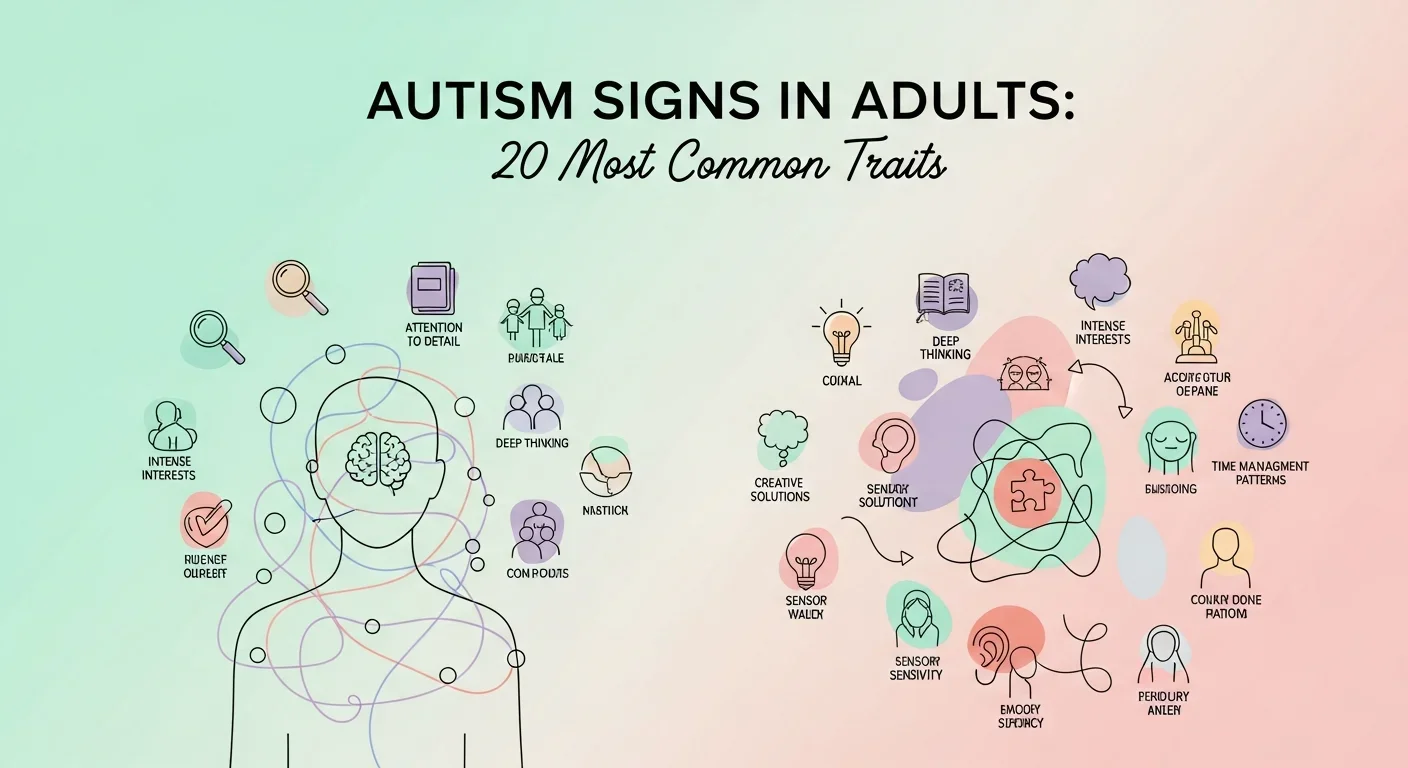
You've probably spent years feeling slightly out of step with everyone around you. Small talk drains you. Bright lights or loud restaurants make your skin crawl. Friends say you're "intense," and you've learned to mask it well enough that nobody suspects a thing. An adult autism evaluation can explain why, and for many people it's the first time their life finally makes sense. Grace Mental Wellness LLC offers autism spectrum disorder support for adults in San Antonio, and this guide walks through what the process actually looks like.
Autism isn't only a childhood diagnosis. Plenty of adults grew up before screening was common, or they were quiet, bright, and good at copying social behavior, so nobody looked twice. Others were told they had anxiety or depression, and the deeper pattern never got named. Getting evaluated later in life isn't too late. It's often just the right moment.
Maybe a coworker mentioned it. Maybe your child was diagnosed and the checklist read like your own biography. Or maybe you stumbled on a description online at midnight and felt oddly seen. Whatever brought you here, the question deserves a real answer from a trained clinician, not a guess from a stranger's post.
Curious what you'd be signing up for? Here's the full picture, minus the jargon.
Why So Many Adults Go Undiagnosed
Old diagnostic ideas leaned heavily on boys who struggled visibly in school. Women, and plenty of men too, slipped past that picture. They learned to rehearse conversations, mimic expressions, and hide their overwhelm until they got home. It works, right up until it doesn't.
Burnout is often the trigger. A demanding job, a new baby, or a move can wear the mask thin. Then the questions start.
How Autism Can Look Different From Person to Person
Two autistic adults can seem almost nothing alike. One speaks very little and avoids eye contact. Another talks fluently, holds a management job, and hosts dinner parties, then needs two days alone to recover. Both can be autistic. The spectrum is wide, and nobody fits a single mold.
Many women describe a pattern of quiet observation. They study how others behave, build a repertoire of scripts, and get praised for being "so easy to get along with." Underneath, they're working overtime. Men sometimes get labeled as blunt or aloof for years. Either way, the effort behind the scenes tends to stay invisible.
Signs That May Point to Autism in Adults
No single sign proves anything. A clinician looks at patterns across your whole life. Common ones include:
- Exhaustion after social events, even ones you enjoyed
- Strong reactions to sound, light, textures, or smells
- Intense focus on specific interests, sometimes for years
- Difficulty reading unspoken social rules or sarcasm
- A need for routine, and real distress when plans change abruptly
Recognize several of these? That's worth a conversation with a professional, not a self-diagnosis from an online quiz.
What Happens During an Adult Autism Evaluation
Expect more than one conversation. Your clinician will gather your developmental history first, including what you remember from childhood and anything family members can share. Old school reports sometimes help. Then comes a structured interview about communication, sensory experiences, relationships, and daily routines.
The process builds on a thorough psychiatric assessment, because the goal is accuracy. Your provider looks at your medical history, mood, sleep, and any past diagnoses too. Sessions can run long. That's intentional.
Nobody's trying to catch you out. You're not being graded. The clinician just needs to understand how your mind works day to day, and honest answers, awkward ones included, make the result better.
Questions may feel oddly specific. How do you handle a change in plans? What happens when several people talk at once? Do certain fabrics or sounds bother you more than they seem to bother others? Answers to small questions like these paint a surprisingly clear picture over time, so take your time and be as candid as you can.
Conditions That Look Like Autism, or Travel With It
Autism rarely shows up alone. Anxiety is extremely common, and constant worry can mimic or amplify social difficulties. If that sounds familiar, your provider may also look at anxiety disorder symptoms, since treating them can make everyday life noticeably easier.
ADHD, depression, and sleep problems overlap often as well. So can emotional regulation struggles, which is where questions about behavioral disorders sometimes come in. Sorting out which piece is which takes skill, and it's exactly why a rushed screening usually misses something.
Common Myths About Adult Autism
- "You'd have known as a kid." Not necessarily, especially if you compensated well
- "You make eye contact, so you can't be autistic." Eye contact alone tells a clinician very little
- "You have friends and a job." Plenty of autistic adults do, often at a high personal cost
- "A diagnosis will just be a label." For many people it's access to understanding and support
Myths like these keep capable adults from asking. A good evaluation looks past them.
How Long Does the Process Take?
It varies. Some people finish in a few visits, while others need more time, particularly when the history is complicated or several conditions overlap. Your clinician can give you a realistic timeline at the start. Rushing rarely helps, and a careful answer is worth the wait.
What Happens After a Diagnosis
Some people feel relief. Others feel grief for the years spent wondering. Many feel both in the same afternoon, and that's normal.
A diagnosis isn't a verdict. It's a map. Your provider can help you build supports that fit your life, such as workplace adjustments, sensory strategies, and therapy focused on burnout or anxiety. If a co-occurring condition needs it, medication management can be part of the plan, though autism itself isn't something medication "fixes."
Practical changes often matter most. Some adults ask for quieter workspaces or written instructions. Others plan recovery time after social events without guilt. Small adjustments add up quickly, and they're far easier to request once you can name what you need.
How to Prepare for Your Appointment
- Write down examples of social or sensory difficulties from different life stages
- Gather old report cards, therapy notes, or medical records if you have them
- Ask a parent or sibling about your early childhood, if possible
- List every medication and supplement you take
Don't stress about being perfectly organized. Rough notes beat nothing.
What Research Says About Autism in Adulthood
The National Institute of Mental Health describes autism as a developmental condition that continues across the lifespan, and notes that recognizing it can open the door to better support. That's the core idea behind evaluating adults at all.
Research keeps shifting toward recognizing autism in people who were missed earlier. Clinicians now pay closer attention to subtle presentations, which means an adult who was overlooked twenty years ago has a much better chance of being understood today.
Final Thoughts
You've carried the question long enough. An adult autism evaluation won't change who you are, but it can change how kindly you understand yourself. Contact Grace Mental Wellness LLC today to schedule your evaluation with our San Antonio team and take the first step toward answers that fit.