Sign up with Google
 Sign in with Zoho

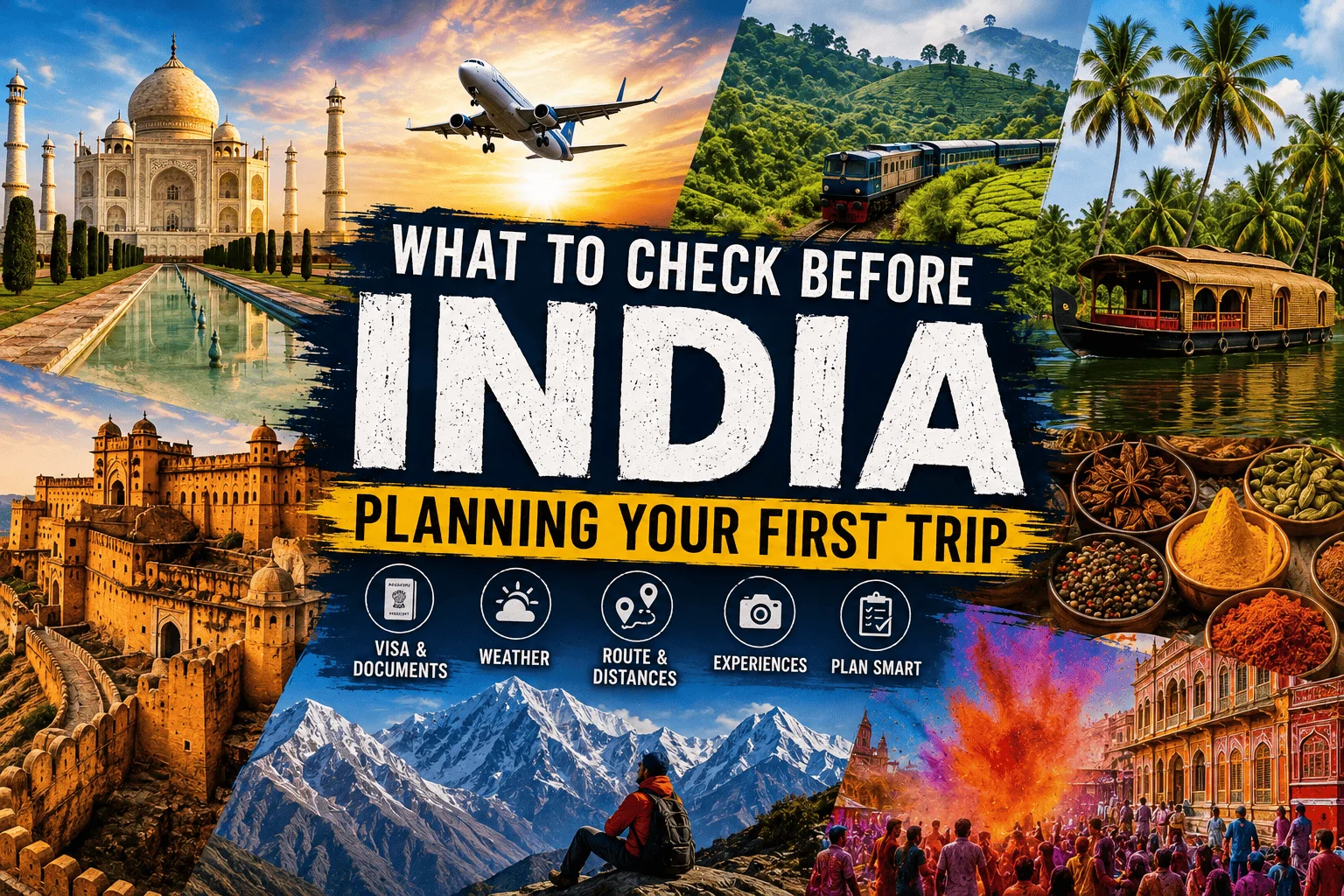
Planning a trip to India can feel both exciting and a little overwhelming. The distances are huge, the weather changes with every region and the culture shifts dramatically a few hundred kilometres apart. Every state has a spot worth more than a quick visit. The best way to handle all of this is not to try to plan the country, at once. Instead start small.
Decide What Kind of India You Actually Want to See
Forts, old cities, and centuries of royal history point toward Delhi, Agra, and Rajasthan. Beaches and tropical scenery point south, toward Goa or Kerala. A preference for mountains shifts the focus toward the Himalayan states or the Northeast. Food alone could shape an entire trip, depending on which regional cuisine feels most interesting. The one thing worth avoiding is trying to squeeze every famous name into a single itinerary — India rarely rewards that approach.
Sort Out Entry Requirements Early
International travellers must check visa requirements depending on their nationality. For travellers who need to check the available options before planning the rest of the trip, India e-Visa information can be reviewed alongside the current entry requirements.Why are they visiting? According to India's visa portal most foreign nationals need a valid passport and either a valid visa or an eligible eVisa unless they are exempt. Those applying through the eVisa system should carefully review every detail before submitting the application. The official guidance clearly states that once submitted the information entered online cannot be changed. It is important to double-check passport numbers, names and dates, before finalizing the application.
Understand the e-Arrival Card
There's a second requirement that trips up a fair number of first-time travellers. India's official portal notes that foreign nationals and OCI cardholders can submit the e-Arrival Card within 72 hours of arriving in the country, and it specifically clarifies that this is arrival information, not a visa. The eVisa and the e-Arrival Card serve two different purposes and shouldn't be confused with each other during planning.
Check the Weather State by State
India's weather resists any single, tidy description. Delhi's conditions at a given time of year can look nothing like what's happening in Kerala, Rajasthan, or a Himalayan town during that same window. Each destination needs its own weather check rather than a single assumption applied across the whole trip.
Keep the Route Honest
A map can make it look like several states fit comfortably into one short holiday. The actual distances usually say otherwise. A smaller, more focused route tends to leave more time for actually experiencing a place, rather than spending most of the trip in transit between one destination and the next.
Leave Room for the Unplanned
Some of the moments on a trip rarely show up on the itinerary. A local market can end up more interesting than the landmark it sits beside. A long train journey can become one of the memorable stretches of the whole trip. An ordinary meal can introduce a cuisine that never made it into any guidebook. A quiet street, with no name recognition, can outlast the memory of a famous monument. Planning matters. So does leaving enough space for something unplanned to happen.