
 Sign up with Google
 Sign in with Zoho
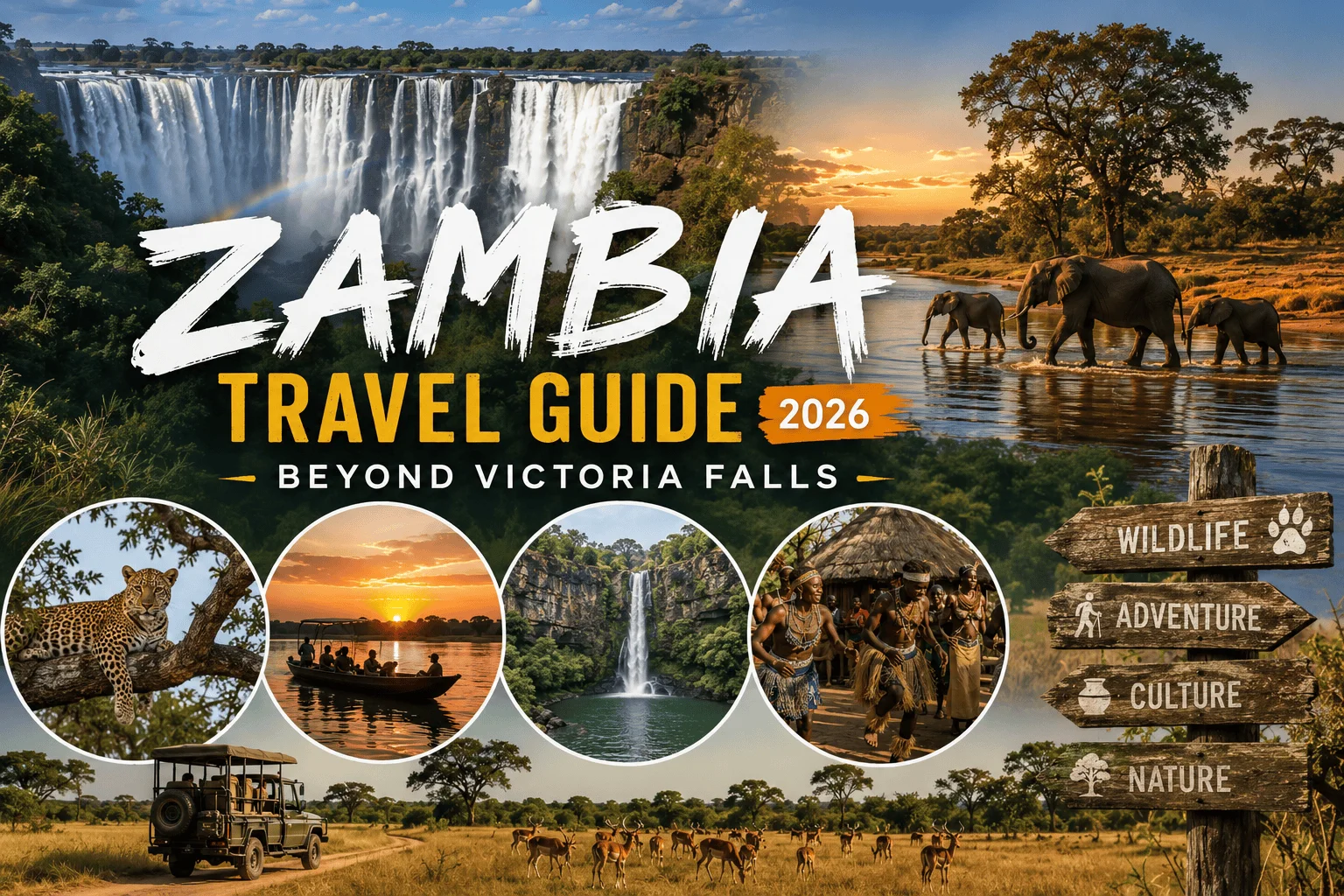
Most people plan a Zambia trip backwards. They book a safari, tack Victoria Falls onto the start or end of it, and only later realise the country has several genuinely different travel regions — each one suited to a different kind of trip. Picking the right one first makes everything else, dates included, much easier to sort out.
Here's how to think about it.
If you're going for the waterfall: Livingstone
Livingstone is the place to start when visiting Victoria Falls and there's really no good reason to choose anywhere else. The Zambezi River arrives at the falls before it goes down into the deep valley below and what you see depends a lot on the time of your visit.In the months when the water's highest the mist is thick enough to be seen from far away and the noise alone makes you understand how much water is moving.During the dry season the mist becomes lighter and the rocks and the valley are much easier to actually look at.Livingstone also has enough river-based activity — rafting, boat trips, other adventure options — to justify staying a few days rather than treating the falls as a single stop on the way to somewhere else.
If you want a walking safari: South Luangwa
South Luangwa is one of the strongest picks for a trip built around wildlife. The Luangwa River and its surrounding lagoons support a dense concentration of animals — elephants, hippos, crocodiles, and a long list of species that depend on that water system, especially as it becomes scarcer elsewhere during the dry months.What sets the park apart, though, is the walking safari format it's known for. It's a slower, more deliberate way of experiencing wildlife territory — tracks, plant life, birdsong and smaller details all become part of the experience in a way a vehicle-based safari doesn't allow for. Anyone with an interest in photography or birdwatching tends to get a lot out of it.
If the river is the point: Lower Zambezi
Lower Zambezi makes sense when you want the river itself woven into the itinerary, not just visible from it. Canoeing, boating and fishing all sit comfortably alongside game drives here, so the trip doesn't have to revolve entirely around a vehicle. Elephants and hippos are a near-constant presence along the water, and the birdlife is one of the park's quieter but more rewarding draws.
If you want real wilderness: Kafue
Kafue is the pick for travellers who want distance from the more developed safari circuit. It's a huge park, with stretches that feel genuinely remote compared to what most visitors expect from a major wildlife destination. The Busanga Plains, in the north, are the best-known section — a seasonal wetland that reshapes itself with the water levels and pulls wildlife into wide, open ground.Kafue asks for time, though. It's not built for a rushed overnight stop, and trying to compress it into one defeats a lot of the reason for visiting in the first place.
What about the places most people skip?
Zambia has a long list of destinations outside the usual four-park circuit. Kalambo, Kundalila, Lumangwe and Ngonye Falls are all worth knowing about, along with hiking areas, lakes, fishing spots and cultural sites scattered across different regions. Some of these aren't especially convenient — a waterfall that looks close on a map can still mean several hours of driving to actually reach.That inconvenience tends to be part of the appeal, not a reason to skip it. Fewer visitors, less infrastructure, and a closer look at how the surrounding area actually functions day to day.
Choosing the right season
Dry-season travel is usually the choice for a safari because animals gather more regularly near rivers and other water sources. The green season brings beautiful green areas, weather that is harder to predict and some very good birdwatching opportunities. Victoria Falls is not part of either of these situations. Needs to be thought about separately because the water level changes a lot throughout the year. In other words there isn't one best month for the entire country. The best time depends on which areas you're actually visiting.
Don't leave the visa for the last minute
Entry requirements come down to nationality, so it's worth checking the Zambia e-visa early rather than assuming.
Zambia's Department of Immigration currently divides travelers into groups. There are nationalities that do not need a visa. There are travelers who can get a visa when they arrive or through a mission. Then there are travelers who must get permission before they come. That is where the e-Visa is used. A normal tourism application requires a copy of a passport. It also needs a passport photo. A signed cover letter is needed. An accommodation booking is required. A return ticket is also needed. Passports must have at least six months left before they expire. They must also have three pages.Anyone combining Zambia and Zimbabwe around Victoria Falls should also look into the KAZA UniVisa, currently USD 50, with eligibility and entry points that vary by nationality and route.
Build the trip around what you actually want
There's no rule saying every Zambia itinerary has to look the same.
Victoria Falls has views and exciting activities. South Luangwa is perfect for seeing animals and going on foot. Lower Zambezi gives a chance to enjoy the river. All it has to offer. Kafue provides a place with lots of open space that the more crowded parks don't have. When these differences are understood, the rest of the planning. Choosing the dates, deciding the path to take and figuring out how long to stay in each place. It usually becomes much easier by itself.








.webp)