Sign up with Google
 Sign in with Zoho
Every product on a grocery shelf, from a spicy namkeen pack to a high-protein shake, went through a long journey before reaching a customer's hands. That journey is called food development, and it decides whether a good idea becomes a successful brand or an expensive lesson. At Foodsure, we guide food entrepreneurs and established brands through each stage, so their products are safe, tasty, and ready for the market.
What Is Food Development?
Food development is the step-by-step process of turning a product idea into a finished, commercially viable food item. It covers concept creation, recipe trials, shelf-life testing, packaging, costing, regulatory compliance, and production planning. A professional food development process reduces risk and helps brands launch with confidence.
Step-by-Step Process of Food Development
1. Idea Generation and Market Research
Every successful product starts with a real consumer need. Brands study trends, competitor products, and customer preferences to find gaps, such as healthier snacks, ready-to-eat meals, or regional flavors in modern formats.
2. Concept Screening
Not every idea is worth pursuing. This stage checks technical feasibility, estimated cost, target price, and potential demand. Weak ideas are filtered out early, saving time and money.
3. Recipe and Formulation
Here, the idea becomes a working recipe. Through food development, experts balance taste, texture, color, and nutrition using precise ingredient ratios. Our guide on food recipe formulation explains how kitchen recipes are converted into standardized commercial formulas. Closely related is food formulation, which focuses on how ingredients such as proteins, fats, and stabilizers behave together.
4. Prototype and Sensory Testing
Small-batch samples are prepared and evaluated for flavor, aroma, appearance, and mouthfeel. Feedback from tasters helps refine the product before any large investment is made.
5. Shelf-Life and Stability Studies
A product must stay safe and appealing from the day it is made until the day it is eaten. Stability trials check moisture, microbial safety, color, and flavor changes over time under different storage conditions.
6. Packaging and Labeling
Packaging protects the product, extends shelf life, and tells your brand story. Labels must follow FSSAI rules, including ingredient lists, nutrition information, and allergen declarations.
7. Pilot Production and Scale-Up
Before full launch, a pilot batch tests how the recipe performs on real equipment. Adjustments in mixing, cooking time, or temperature are made to keep quality consistent at scale.
8. Launch and Post-Launch Monitoring
After launch, brands track sales, feedback, and quality, then improve the product where needed.
The Role of Research in Development
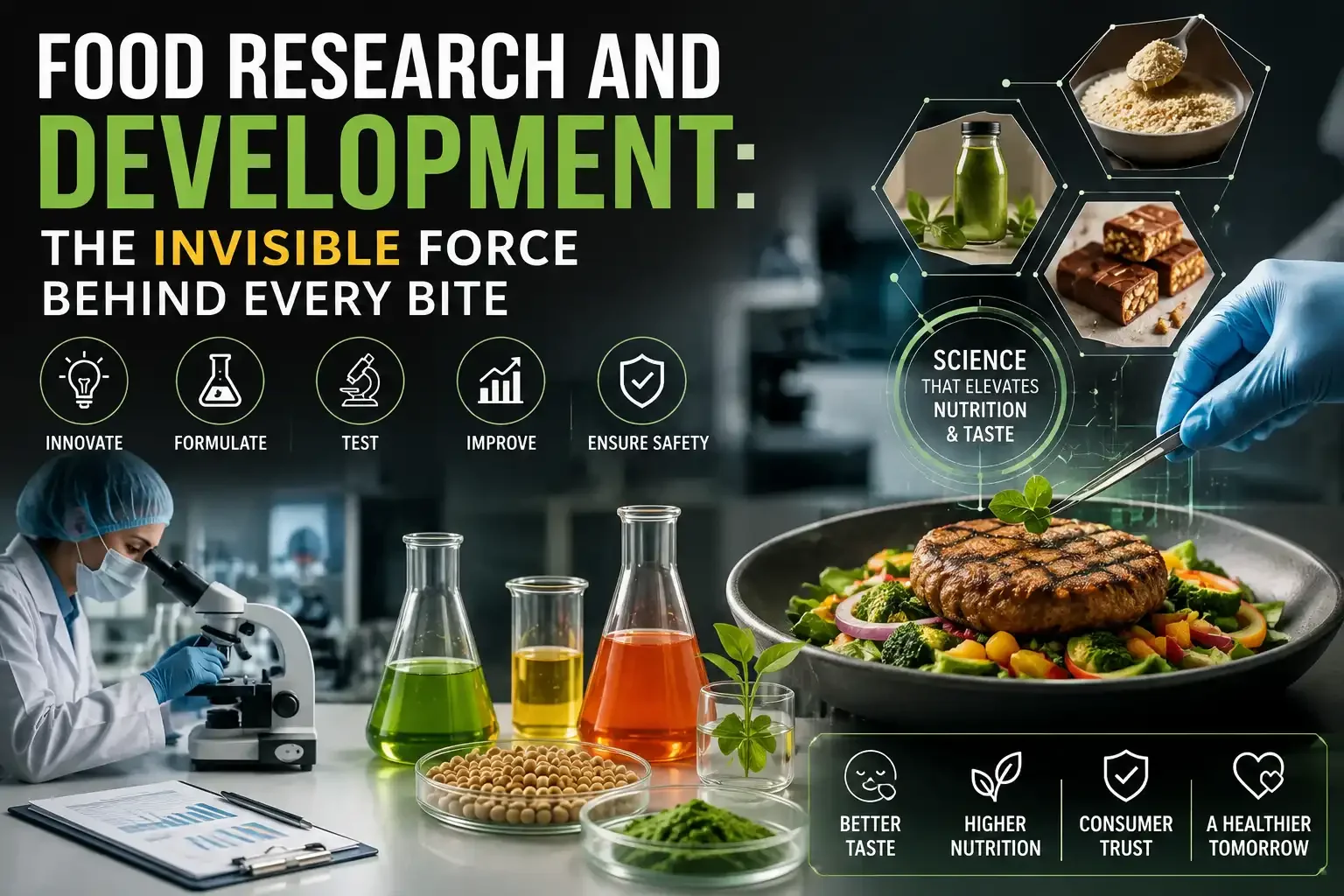
Strong food development depends on solid science. It is built on food research and development, which explores new ingredients, processing methods, and consumer insights before the product moves into commercial stages. Brands that skip research often face texture issues, short shelf life, or poor customer acceptance.
Why Work with a Food Consultant?
Launching a product involves many moving parts, and most new businesses do not have a full technical team. An experienced food consultant can guide you on formulation, regulatory approvals, costing, and quality systems, helping you avoid common mistakes.
Local knowledge adds real value. A food consultant Delhi offers hands-on support, faster sampling, and familiarity with regional compliance for businesses in the capital region. For brands planning nationwide distribution, a food consultant India can help adapt products to different regional tastes, climates, and supply chains.
Choosing the Right Manufacturing Partner
Once your product is ready, you need a reliable place to produce it. Many startups work with a Food Contract Manufacturer India rather than building their own plant. This reduces capital investment, speeds up time to market, and allows founders to focus on branding, marketing, and distribution while experts handle production.
Common Mistakes to Avoid
- Launching without proper shelf-life testing
- Ignoring regulatory and labeling requirements
- Underestimating production costs at scale
- Skipping sensory trials with real consumers
- Choosing packaging that does not protect the product
Avoiding these errors can save months of rework and protect your brand reputation.
Trends Influencing Food Development Today
Consumer demand is shifting toward clean-label ingredients, plant-based proteins, low-sugar options, functional foods, and traditional grains like millets. Sustainable packaging and reduced food waste are also becoming priorities. Brands that adapt early are better positioned to grow.
How Foodsure Supports Your Launch
Foodsure combines technical expertise with practical industry experience to support businesses from concept to shelf. Our services include:
- Product ideation and concept design
- Custom recipe and formulation development
- Shelf-life, stability, and quality guidance
- Regulatory and labeling support
- Scale-up and manufacturing coordination
Whether you are a first-time founder or an established brand looking to expand your range, Foodsure offers tailored, results-driven solutions.
Final Thoughts
A successful launch is never a matter of luck. It comes from careful planning, scientific testing, and smart partnerships. With a structured approach to food development, your product can move from a simple idea to a trusted name on the shelf.
Ready to start your journey? Connect with Foodsure and build a product the market will love.