Sign up with Google
 Sign in with Zoho

Most of us remember the first few months of working from home as a small victory. No traffic on Outer Ring Road, no rushed breakfast, no umbrella dance between the car and the lobby. The kitchen table became a desk, the sofa became a meeting room, and for a while it felt like we had discovered a better way to work.
Then the months stretched into years. The kitchen table started to ache. The sofa began to feel less like a meeting room and more like a trap. And somewhere along the way, many Bangalore professionals noticed that their best ideas were no longer arriving at home.
This article looks at what a home office really costs, why so many freelancers and small teams in the city’s southern neighbourhoods are rethinking their setup, and how to decide whether a shared workspace is the right next step.
The Costs Nobody Puts on a Spreadsheet
When people calculate the savings of working from home, they usually count the petrol, the lunch, and the time. Those savings are real. But a few quieter costs tend to hide in the background.
The boundary problem. When your bedroom, your office, and your dining room are the same four walls, work has no natural end. Replies go out at ten at night. A spreadsheet gets opened during dinner. Over time, the brain stops recognising when the day is over, and rest becomes less restful.
The interruption problem. Home is full of small, friendly interruptions: a delivery at the gate, a relative who wants to chat, a neighbour’s drill. None of them is serious. Together, they break deep work into fragments, and researchers who study attention have long observed that recovering focus after each break takes longer than most people expect.
The isolation problem. Freelancers and founders feel this one most. There is no colleague to bounce an idea off, no one to notice when you have been stuck for three hours. Ideas that would have improved in a five-minute conversation stay half-formed.
The professionalism problem. Meeting a client over a video call with a pressure cooker whistling in the background is not a disaster, but it is not the impression most people want to leave. For consultants and agency owners, the setting quietly shapes how clients judge the work.
None of this means working from home is a mistake. It means the home office works best as one option among several, and not as the only one.
Why South Bangalore Is Changing the Conversation
For years, the default assumption was that serious offices belonged in the central business district or along the eastern tech corridors. That assumption is fading. Many professionals now live in neighbourhoods like Jayanagar, JP Nagar, Banashankari, and along Bannerghatta Road, and they would rather work close to home than spend two hours a day commuting.
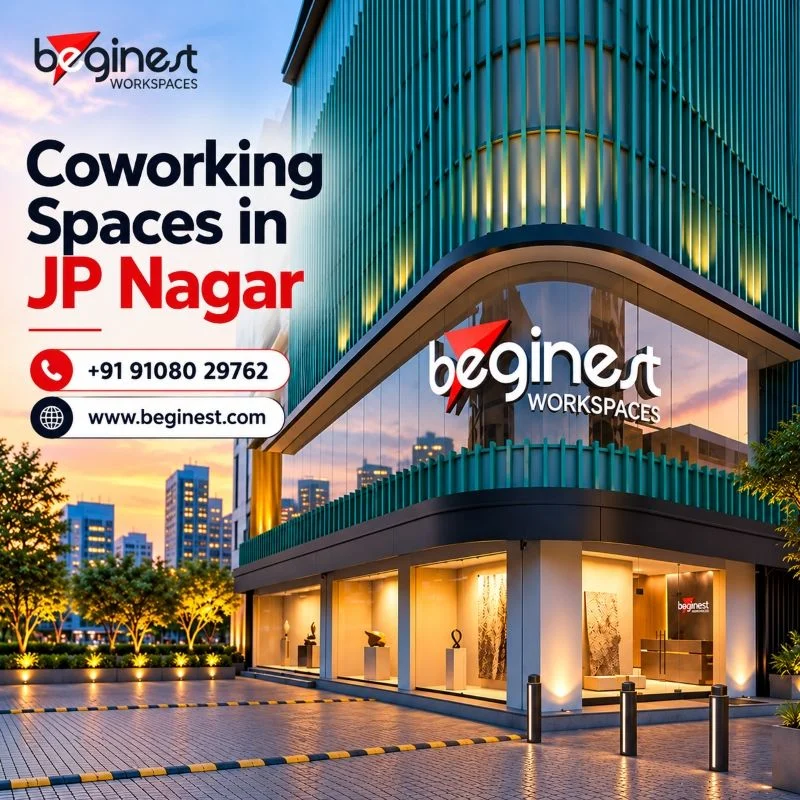
JP Nagar in particular has become a practical choice. It is a residential area with a growing commercial presence, strong road and metro links, and an ecosystem of cafes and restaurants that make the workday easier to enjoy. Teams that choose coworking spaces in JP Nagar often mention the same benefit first: the commute stops being a daily negotiation.
There is also a hiring advantage. A small company that can offer an office fifteen or twenty minutes from where candidates already live has a better conversation with them than a company asking for a long cross-city journey.
What a Shared Workspace Actually Gives You
A good flexible workspace is easy to describe and hard to appreciate until you have used one. Here is what tends to change.
A clear start and end to the day. Walking into a workspace is a ritual. It tells your mind that work has begun, and walking out tells it that work is over. That single habit improves focus and rest at the same time.
Infrastructure you do not have to manage. Reliable internet, power backup, furniture, housekeeping, and meeting facilities are handled by someone else. For a three-person team, not having to troubleshoot a router during a client call is worth more than it sounds.
Meeting rooms when you need them. Most small teams do not need a boardroom every day. They need one on the day a client visits or a hiring panel meets. Flexible access to meeting rooms lets you present well without paying for space that sits empty the other twenty days.
Community without obligation. The best workspaces create a light, friendly atmosphere. You can nod at the person at the next desk, ask for a recommendation for an accountant, or simply work in peace. Many freelancers describe this as the sweet spot between loneliness and distraction.
Choosing the Right Format for Your Stage
One of the biggest mistakes people make is picking a workspace based on what looks impressive instead of what fits. A short guide:
- Hot desks suit people who work out of the space a few days a week or who split time between clients. They are flexible and low-commitment.
- Dedicated desks suit professionals who come in daily and like a permanent setup, with their own screen, notes, and routine.
- Private cabins suit teams that discuss sensitive matters such as pricing, hiring, or client data and want a closed door.
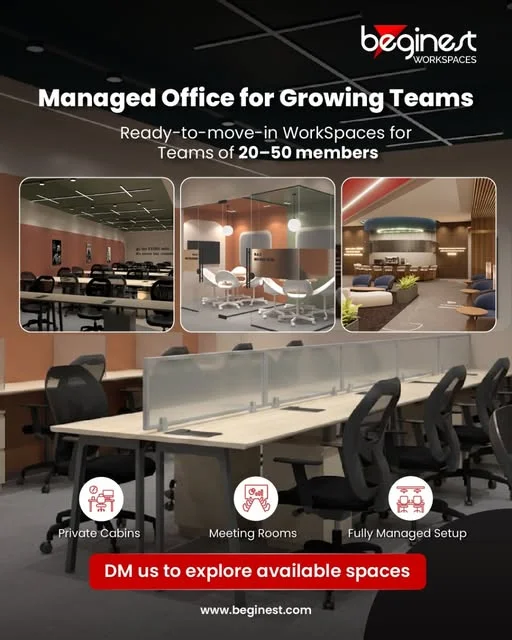
- Managed offices suit growing companies that want a ready-to-use floor, customised to their needs, without handling fit-outs and utilities.
- Day passes suit anyone who wants to test a space before committing, or who needs a professional setting for a single important day.
If you are unsure, the day pass is the safest start. You learn how the space sounds, smells, and feels at your usual working hours, and no one holds you to anything.
A Simple Checklist Before You Decide
Before choosing any workspace, spend a few minutes on these questions.
- Can I visit during the hours I will actually work?
- Does the internet hold up during a long video call?
- Is the seating comfortable for a full day?
- How are meeting rooms booked, and are they included in my plan?
- Can I add or reduce seats as my team changes?
- Is pricing clear, including anything billed separately?
- How easy is the commute for me and my team, on a normal day and on a rainy one?
If a provider answers these openly, that is usually a good sign. If the answers are vague, trust your instinct.
The Business Case for Flexibility
For small companies, the financial argument is as strong as the personal one. A traditional office lease asks for a security deposit, interior work, furniture, utilities, and a commitment that can run for years. For a business that is still finding its footing, that is a heavy bet.
A flexible arrangement replaces most of those upfront costs with a single, predictable fee. You can scale up when a project lands and scale down when it ends. That agility is difficult to put a price on, but any founder who has paid rent on an empty floor will tell you it matters.
For teams exploring options in the area, the range of workspace choices under coworking spaces in JP Nagar is a good place to compare seating types and see how each fits a different stage of growth.
Making Hybrid Work Actually Work
Many teams now operate in a hybrid pattern, with some days together and some days apart. The challenge is that “hybrid” can easily turn into “scattered” without a plan.
A few habits help:
- Pick anchor days. Choose one or two days a week when the whole team is in the same room. Use them for planning, feedback, and anything that benefits from conversation.
- Protect solo days. On non-anchor days, let people work wherever they focus best, whether that is home, a cafe, or a shared desk.
- Write things down. Decisions made in person should be recorded so remote colleagues are never left guessing.
- Review monthly. Ask the team what is working and what is not. Hybrid arrangements need adjustment, and small tweaks keep morale steady.
A flexible workspace supports this rhythm well, because you pay for presence when you need it and step back when you do not.
Future Outlook
The way people work in Bangalore is still evolving. As more professionals settle into hybrid routines, demand for neighbourhood-level workspaces is likely to keep growing, particularly in residential-commercial areas where people want quality offices close to home. Workspaces that offer managed floors, thoughtful meeting facilities, and a genuine sense of community will be the ones that earn long-term loyalty.
For freelancers, founders, and small teams, the lesson from the last few years is simple. Productivity is not about where you sit. It is about whether your environment supports the kind of work you are trying to do.
Where to Start
If you are curious, begin with a visit. Spend a day in a shared workspace, notice how your focus changes, and talk to the people around you. Many professionals find that one trial day answers more questions than weeks of research.
When you are ready to compare options, you can look into coworking spaces in JP Nagar and book a tour at a time that suits your schedule.
Visit Website: https://www.beginest.com/
Visit the product page: https://www.beginest.com/coworking-spaces/bangalore/jp-nagar.html
Phone Number: +91 91080 29762
social media:
https://www.instagram.com/beginest_workspaces/
https://www.facebook.com/Beginest/
https://www.linkedin.com/company/beginest/
https://www.pinterest.com/beginestcoworking/
https://www.youtube.com/@Beginestcoworking