Sign up with Google
 Sign in with Zoho

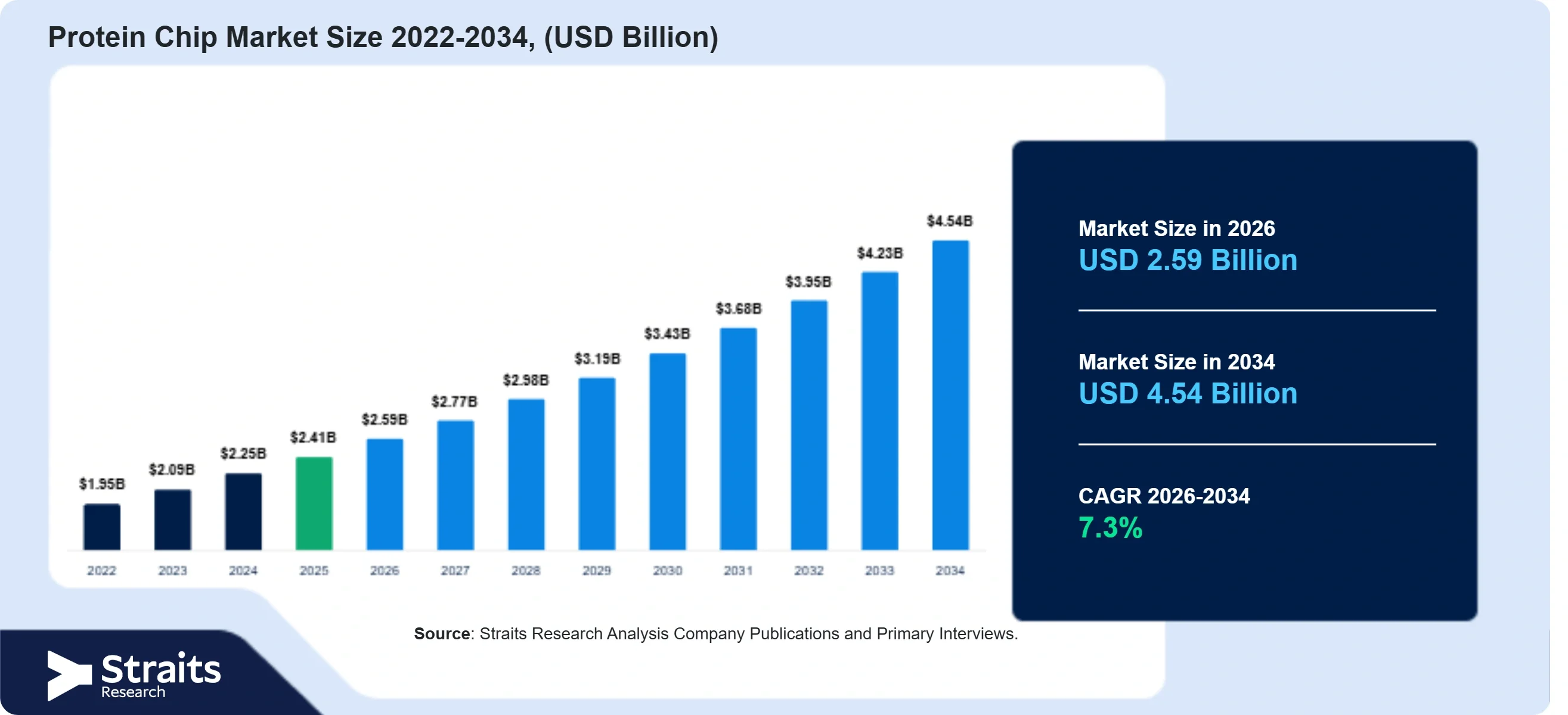
The global Protein Chip Market was valued at USD 2.41 billion in 2025 and is projected to grow from USD 2.59 billion in 2026 to USD 4.54 billion by 2034, registering a CAGR of 7.3% during the forecast period. Protein chips are advanced analytical platforms used to study protein expression, interactions, functions, and biological activities. These technologies support applications in drug discovery, biomarker identification, disease diagnosis, and personalized medicine. Increasing investments in proteomics research, advancements in biotechnology, and growing demand for high-throughput protein analysis are supporting market development. North America dominated the market with a share of 38.2% in 2025.
Market Drivers
Growing Investments in Proteomics Research: Pharmaceutical companies and research institutions are expanding proteomics studies to understand protein functions and disease mechanisms. Protein chips enable simultaneous analysis of multiple proteins, supporting biomarker discovery and accelerating research activities.
Increasing Demand for Drug Discovery and Development: Drug developers are adopting protein chip technologies to investigate protein interactions, identify therapeutic targets, and evaluate drug candidates. These capabilities support more efficient screening processes and strengthen demand for advanced protein analysis platforms.
Market Trends
Integration of AI and Advanced Data Analytics: Protein chip platforms are increasingly benefiting from AI-based data analysis tools that help interpret complex protein interaction patterns. These capabilities support biomarker identification, improve research efficiency, and enable more detailed biological insights.
Development of High-Throughput Protein Analysis Platforms: Biotechnology companies are advancing protein chip technologies to analyze multiple protein samples simultaneously. Improved sensitivity, miniaturization, and automated workflows are supporting applications across pharmaceutical research and clinical diagnostics.
Protein Chip Market
Market Overview
The global Protein Chip Market was valued at USD 2.41 billion in 2025 and is projected to grow from USD 2.59 billion in 2026 to USD 4.54 billion by 2034, registering a CAGR of 7.3% during the forecast period. Protein chips, also known as protein microarrays, are analytical platforms used to study protein expression, interactions, and biological functions. These technologies support applications in drug discovery, biomarker identification, clinical diagnostics, and proteomics research. Increasing investments in biotechnology, rising cancer research activities, and growing demand for precision medicine are supporting market development. North America dominated the market with a share of 38.2% in 2025.
straitsresearch.com
Market Drivers
Rising Cancer Research and Biomarker Discovery: The increasing global burden of cancer is encouraging pharmaceutical companies and research institutions to investigate disease-related protein expressions. Protein chips enable high-throughput protein profiling and biomarker identification, supporting oncology research, early disease detection, and therapeutic development.
straitsresearch.com
Growing Investments in Proteomics Research: Pharmaceutical companies, biotechnology firms, and academic institutions are expanding proteomics research to understand protein functions and disease mechanisms. Protein microarrays enable simultaneous analysis of multiple proteins, supporting drug target identification, protein interaction studies, and research efficiency.
Market Trends
Integration of AI in Proteomics and Precision Medicine: Researchers are incorporating artificial intelligence into protein analysis to interpret complex biological data and identify disease-associated biomarkers. These capabilities support personalized treatment approaches and improve research applications in cancer and neurological disorders.
straitsresearch.com
Expansion of Large-Scale Protein Profiling Programs: Research institutions and pharmaceutical companies are adopting high-density protein arrays for large-scale biological studies. These platforms support the analysis of thousands of proteins using smaller sample volumes, strengthening applications in disease prediction, drug discovery, and biomarker validation.
straitsresearch.com
Market Restraints
Challenges in Protein Sample Quality and Standardization: Protein samples are sensitive to environmental conditions and can degrade during collection, storage, and processing. Variations in sample preparation and the absence of standardized analytical protocols can affect testing accuracy and reproducibility, limiting consistent adoption across laboratories.
straitsresearch.com
High Costs of Advanced Protein Chip Technologies: High-density microarrays and specialized protein analysis instruments require investment in equipment, reagents, laboratory infrastructure, and skilled personnel. These expenses can restrict adoption among smaller research institutions and diagnostic laboratories.
Market Opportunities
Expansion of Personalized Medicine and Companion Diagnostics: Pharmaceutical companies and diagnostic developers can introduce protein chip platforms for identifying disease-specific biomarkers and monitoring treatment responses. These applications create opportunities for specialized diagnostic platforms, customized testing services, and pharmaceutical research partnerships.
Growing Investment in Drug Discovery and Biopharmaceutical Research: Biotechnology companies, contract research organizations, and pharmaceutical manufacturers can expand the use of protein chips for therapeutic target identification, antibody characterization, and toxicity assessment. Advanced multiplexing technologies and improved analytical sensitivity create additional opportunities for protein chip manufacturers.
straitsresearch.com
Market Segmentation
The protein chip market can be segmented by:
- Type: Analytical microarrays, functional protein microarrays, and reverse phase protein microarrays.
- Application: Antibody characterization, clinical diagnostics, proteomics, and others.
- End User: Hospitals and clinics, diagnostic laboratories, academic and research institutes, pharmaceutical and biotechnology companies, and others.straitsresearch.com
Regional Insights
North America dominated the protein chip market with a 38.2% share in 2025, supported by advanced biotechnology infrastructure, pharmaceutical R&D investments, and increasing proteomics research activities. Europe is expected to register the fastest growth, with a CAGR of 8.9% during the forecast period, driven by expanding life science research, precision diagnostics, and pharmaceutical innovation. Asia Pacific benefits from growing biotechnology investments, expanding pharmaceutical manufacturing, and increasing adoption of advanced diagnostic technologies. Latin America and the Middle East and Africa present opportunities through improvements in healthcare infrastructure and research capabilities.
straitsresearch.com
Competitive Landscape
The protein chip market includes biotechnology companies, life science technology providers, and manufacturers of analytical microarray platforms. Established players compete through high-throughput protein analysis, advanced detection technologies, product accuracy, and research partnerships, while emerging providers focus on specialized proteomics platforms, improved multiplexing capabilities, and AI-enabled protein analysis. Competition is shaped by technological innovation, analytical sensitivity, product reliability, and applications across pharmaceutical research and clinical diagnostics.
Contact Us
Phone:
U.S.: +1 646 905 0080
India: +91 8087085354
U.K.: +44 203 695 0070
Email: [email protected]
Source:https://straitsresearch.com/report/protein-chip-market





.webp)