Sign up with Google
 Sign in with Zoho
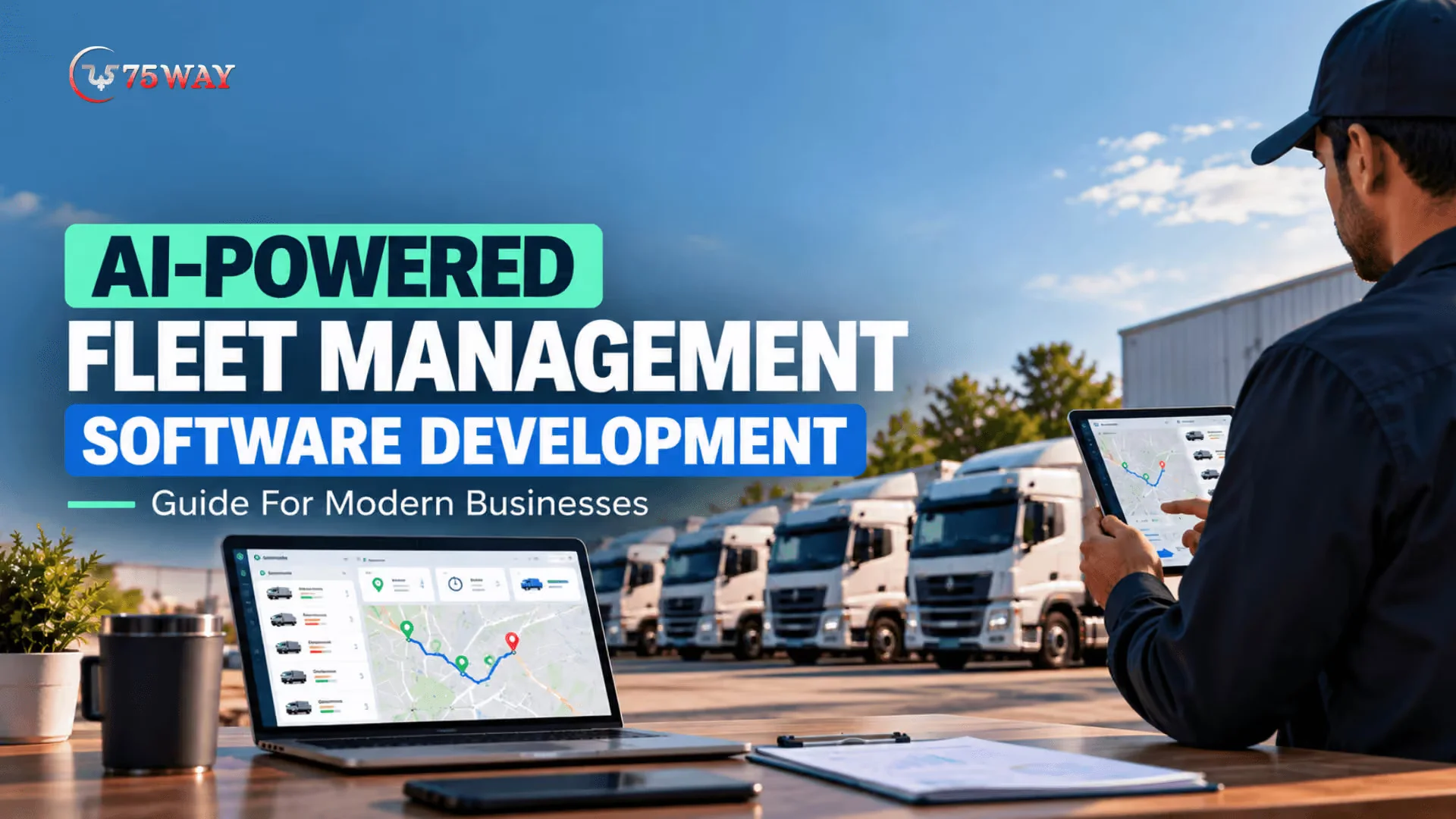
If your fleet still depends on spreadsheets, disconnected GPS tools, manual maintenance records, or systems that do not share data, the real problem may not be a lack of software. It may be the absence of one operational platform that turns fleet data into actionable decisions.
AI-powered fleet management software helps businesses connect vehicles, drivers, dispatch, maintenance, fuel, compliance, and operational reporting. By combining real-time data with predictive analytics, companies can identify potential problems earlier, optimize routes, and make better decisions about their fleet operations.
However, building a reliable platform involves more than adding GPS tracking and dashboards. Businesses must define the right features, integrate vehicle data, establish secure workflows, and select an architecture that can scale as operations grow.
This guide explains how to develop AI-powered fleet management software, which features to prioritize, how much development may cost, and when custom software makes business sense.
What Is Fleet Management Software Development?
Fleet management software development is the process of designing and building digital solutions for managing vehicles, drivers, routes, maintenance, fuel, compliance, and operational performance.
A modern platform may include:
- Web dashboards for fleet managers and dispatchers
- Mobile applications for drivers and technicians
- GPS tracking and route management
- Telematics and vehicle diagnostics
- Preventive maintenance and digital inspections
- Fuel and expense monitoring
- Compliance documentation
- Analytics, reporting, and automated alerts
- AI-powered recommendations and forecasting
These capabilities become more valuable when they work together. For example, when a driver reports a vehicle defect, the platform can notify the fleet manager, update the vehicle's availability, create a maintenance work order, and record the repair history.
AI can then analyze historical maintenance and diagnostic data to identify recurring issues or flag vehicles that may need attention.
Why Businesses Are Investing in AI-Powered Fleet Solutions
Fleet operators face increasing pressure to manage fuel expenses, reduce downtime, improve driver safety, and maintain reliable delivery schedules. Disconnected systems make these responsibilities more difficult because important information remains scattered across different tools.
AI-powered fleet platforms can help businesses:
- Identify unusual fuel consumption and operating expenses
- Predict potential maintenance issues
- Improve vehicle utilization
- Recommend efficient routes and assignments
- Monitor driver safety patterns
- Automate repetitive administrative tasks
- Generate reports from connected operational data
The potential value depends on data quality, integration, user adoption, and the specific problem being addressed. Businesses should establish measurable goals before investing in advanced AI capabilities.
Businesses That Can Benefit From Fleet Management Software
Fleet management software is useful across industries where vehicles or mobile assets are central to daily operations.
Common use cases include logistics companies, last-mile delivery businesses, construction firms, field service providers, equipment rental companies, healthcare transportation providers, utilities, and businesses operating internal vehicle fleets.
The requirements vary by industry. A cold-chain transportation company may need temperature monitoring, while a construction business may prioritize equipment utilization, operating hours, and job-site tracking.
The first development decision should therefore be identifying which operational problems the software needs to solve.
How to Build AI-Powered Fleet Management Software
1. Identify Operational Requirements
Start by documenting how vehicles are assigned, drivers complete jobs, technicians handle repairs, and managers respond to delays or other exceptions.
Identify repetitive tasks, existing software systems, data sources, and operational bottlenecks. Define measurable objectives, such as reducing vehicle downtime, improving route efficiency, or shortening maintenance response times.
2. Define the MVP and Essential Features
A minimum viable product should solve a meaningful operational problem without attempting to include every possible feature.
A practical MVP may include vehicle profiles, GPS tracking, driver management, digital inspections, maintenance scheduling, and an administrative dashboard.
Once these workflows are reliable, businesses can introduce more advanced capabilities, such as predictive maintenance, driver-risk analysis, and AI-powered reporting.
3. Design User-Friendly Interfaces
Different users need different workflows. Dispatchers require live vehicle visibility and assignment tools, drivers need simple mobile interfaces, technicians need maintenance records, and managers need operational and financial reports.
Keep interfaces straightforward, prioritize important actions, and consider offline functionality when vehicles operate in areas with unreliable connectivity.
4. Build the Backend and Data Infrastructure
The backend connects applications, vehicle data, business rules, and third-party integrations. It manages user accounts, vehicle records, routes, maintenance tasks, notifications, and reporting.
The architecture should support secure APIs, reliable data processing, appropriate database design, role-based permissions, audit logs, and scalability.
For businesses modernizing existing systems, legacy software modernization services can help improve compatibility between older operational applications and a modern fleet platform.
5. Integrate GPS and Telematics
GPS tracking provides vehicle location information, while telematics can supply additional data such as mileage, engine diagnostics, fuel usage, and driving events.
Depending on the fleet's requirements, integrations may include:
- GPS and mapping services
- Vehicle telematics devices
- Electronic logging device providers
- Fuel management systems
- Maintenance and inventory software
- Enterprise resource planning systems
- Notification and analytics services
Evaluate integration costs, API limitations, data availability, and ongoing maintenance requirements before selecting providers.
6. Introduce AI Where It Creates Measurable Value
AI should support specific decisions rather than simply add complexity to the product.
Predictive maintenance models can identify potential vehicle issues using historical records and diagnostic data. Route optimization can recommend efficient assignments, while anomaly detection can highlight unusual fuel consumption or vehicle behavior.
Businesses can also consider driver-risk insights, fleet demand forecasting, and natural-language reporting.
Start with one clearly defined use case, validate its performance using real operational data, and expand only when the results justify further investment.
7. Test and Deploy the Platform
Testing should cover more than application screens. Fleet environments can produce delayed GPS signals, weak connectivity, missing telemetry, duplicate records, and unexpected vehicle or device failures.
AI capabilities also require evaluation of prediction accuracy, false alerts, response times, and recommendation quality.
Deploy the initial product with a controlled group of users and vehicles. Collect feedback, measure operational improvements, resolve problems, and gradually expand the rollout.
Essential Features of Fleet Management Software
A dependable fleet management platform typically includes the following capabilities.
Real-time vehicle tracking: Displays vehicle locations, route histories, stops, and geofence events.
Driver management: Maintains driver records, assignments, qualifications, and relevant safety information.
Maintenance management: Organizes inspections, service schedules, repair records, and work orders.
Route planning and dispatch: Helps assign drivers and vehicles based on availability, delivery requirements, and operating conditions.
Fuel and expense monitoring: Connects fuel transactions, mileage, and operating expenses to identify unusual patterns.
Digital inspections: Allows drivers and technicians to submit inspection results, photographs, and defect reports.
Automated alerts: Notifies users about maintenance needs, route deviations, and other important exceptions.
Analytics and reporting: Provides visibility into fleet utilization, operating costs, downtime, and performance trends.
Security and access control: Protects operational information through appropriate authentication, permissions, and audit trails.
The strongest solutions connect these features into workflows instead of requiring teams to manage each activity separately.
Advanced AI Features for Modern Fleet Platforms
Predictive Maintenance
AI can analyze diagnostic codes, mileage, repair history, and sensor data to identify potential maintenance risks. The platform can then notify the appropriate team or create a maintenance task for review.
Intelligent Route Optimization
Routing algorithms can evaluate traffic, vehicle availability, delivery windows, and changing priorities to recommend more efficient routes and assignments.
Driver Safety Analytics
By examining patterns across speeding, harsh braking, acceleration, and idling, the system can identify recurring risks and help managers provide targeted driver coaching.
Fuel Anomaly Detection
AI-powered analytics can compare fuel consumption against mileage, routes, vehicle condition, and operating patterns to highlight unusual activity that warrants investigation.
Automated Fleet Reporting
Natural-language interfaces can allow authorized users to ask questions about maintenance expenses, vehicle utilization, or fuel performance and receive answers from available operational data.
How Much Does Fleet Management Software Development Cost?
The development budget depends on the product's complexity, number of platforms, integrations, data volume, security requirements, and AI capabilities.
These are indicative planning estimates rather than fixed quotations. Actual costs vary depending on the development team and project requirements.
A basic MVP may cover essential tracking, vehicle records, driver management, and simple reporting. A mid-level platform may add maintenance workflows, advanced dispatch, telematics integrations, and analytics. Enterprise solutions can require high-volume data processing, advanced AI, complex permissions, and extensive integrations.
Factors That Affect Development Costs
Platform requirements: Building web dashboards alongside driver and manager mobile applications increases development effort.
Integrations: GPS devices, telematics providers, fuel systems, and enterprise applications each introduce integration and testing requirements.
AI complexity: Custom predictive models require suitable data pipelines, validation, monitoring, and ongoing improvements.
Security and compliance: Audit trails, access controls, encryption, and applicable regulatory workflows can increase project scope.
Scalability: A system serving thousands of vehicles requires different data-processing and infrastructure strategies from a small fleet application.
To manage costs, prioritize essential workflows, use established third-party services where appropriate, and validate the MVP with real users before expanding the feature set.
Custom Fleet Software vs. Off-the-Shelf Solutions
Custom fleet software is designed around a company's specific workflows, integrations, data, and growth plans. It provides greater control over functionality, AI capabilities, reporting, and future product development, but usually requires a larger upfront investment.
Off-the-shelf software can be quicker and more affordable to deploy when standard tracking, maintenance, and reporting features meet business requirements.
Custom development may be appropriate when existing products cannot support specialized workflows, complex integrations, or plans to commercialize the platform. Businesses with straightforward requirements may find that a ready-made product is more practical.
Before making a decision, compare the total cost of ownership, customization options, integration capabilities, security, scalability, and ongoing support.
How to Choose a Fleet Management Software Development Company
Choose a development partner that understands both software engineering and fleet operations.
Evaluate experience with GPS tracking, telematics APIs, real-time dashboards, mobile applications, data architecture, security, and third-party integrations.
Ask potential partners how they would handle high-frequency vehicle data, design offline mobile workflows, test the system under realistic loads, and introduce AI capabilities without compromising reliability.
A strong development partner should explain technical trade-offs, identify project risks, and recommend a phased roadmap aligned with your business objectives.
Final Thoughts
AI-powered fleet management software can help businesses connect vehicle tracking, maintenance, dispatch, driver management, compliance, and operational analytics in one platform.
The most effective development strategy begins with a specific business problem, defines a focused MVP, establishes reliable data integrations, and introduces AI where it can deliver measurable improvements.
Businesses with standard requirements may benefit from existing software, while organizations with specialized workflows, complex integrations, or long-term product ambitions may find custom development more suitable.
Start with a clear operational objective, validate the solution with real users, and scale the platform as the business case becomes stronger.
Frequently Asked Questions
What is fleet management software development?
It is the process of building software to manage vehicles, drivers, routes, maintenance, fuel, compliance, and operational information through connected digital workflows.
How much does fleet management software cost?
Development may range from approximately $5,000 to $250,000 or more, depending on features, integrations, architecture, security, and AI requirements.
How long does it take to develop fleet management software?
A focused MVP may take a few months, while a complex enterprise platform with telematics, AI, and extensive integrations may require a year or longer.
Does fleet management software require AI?
No. A platform can deliver value through tracking, maintenance, dispatch, and reporting without AI. Advanced analytics can be introduced when reliable data and a clear business objective justify the investment.
Should businesses build custom software or buy an existing platform?
Custom development is useful when existing products cannot meet important workflow, integration, or scalability requirements. Off-the-shelf software is often more practical when standard features are sufficient.
What is the difference between fleet management software and GPS tracking software?
GPS tracking primarily focuses on vehicle location. Fleet management software connects location data with maintenance, drivers, fuel, inspections, dispatch, compliance, and operational reporting.