Sign up with Google
 Sign in with Zoho

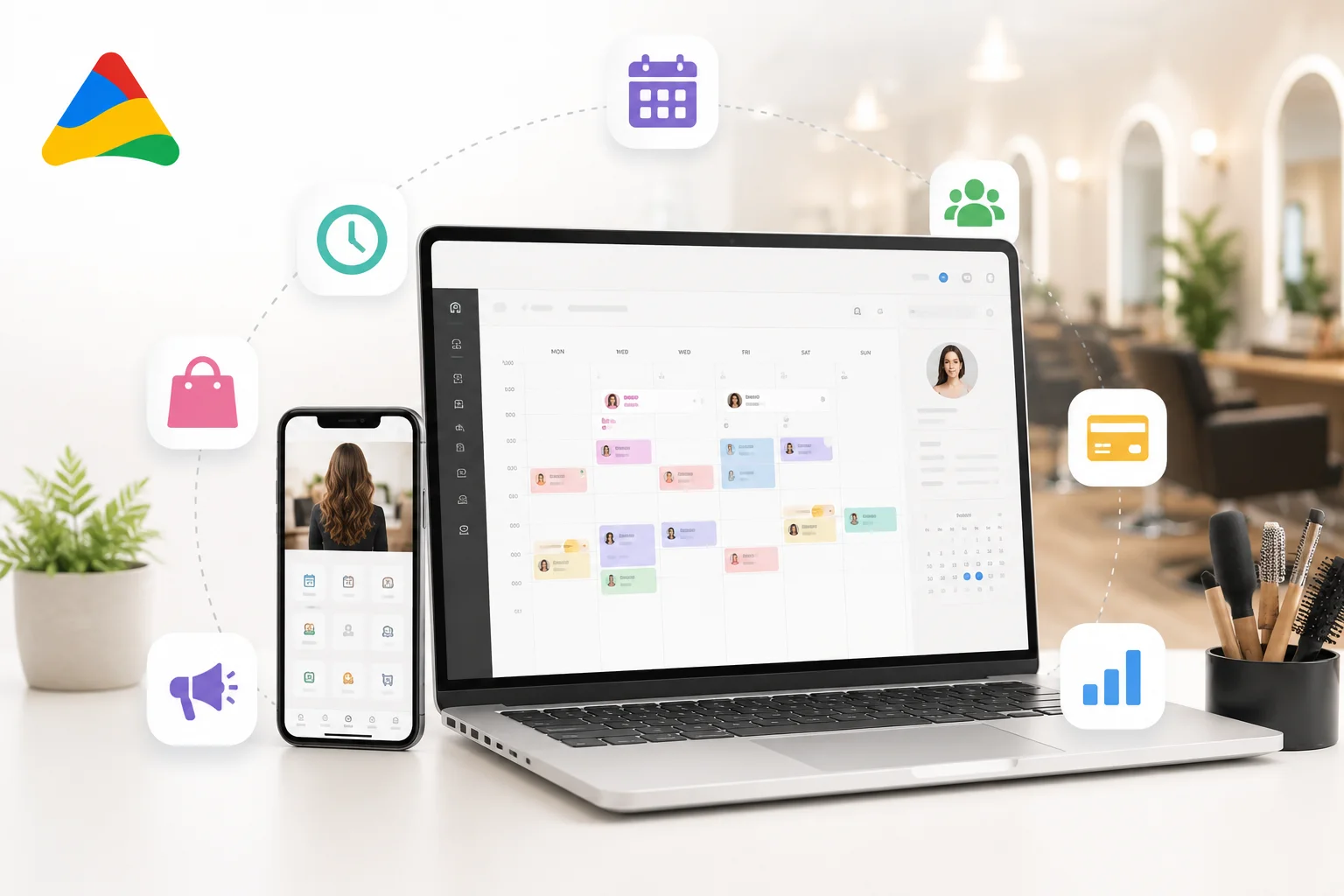
A missed call during a blow-dry doesn't feel like much on its own. Count how many of those calls turn into bookings for the salon down the street, though, and the picture changes fast. You already know the juggling act: a full chair, a phone that won't quit, a client waiting to pay, and something has to give. Usually it's whatever nobody happens to be watching in that moment. The real question isn't whether your salon needs a better system. It's how much longer you can get away without one. Salon software is the fix. Nothing flashy about it. It's the plumbing that keeps a busy salon from leaking time, money, and clients.
What Is Salon Software and Why Does Your Salon Need It?
Salon software handles the unglamorous stuff, bookings, staff schedules, customer records, payments, the things that decide whether the day goes smoothly. Nobody starts here, though. Most salons start with a paper diary, then a spreadsheet, then a group chat for shift swaps, then a card reader that has no idea any of the other tools exist. You'd think that covers it. It doesn't, not once each piece stops talking to the others. The same booking sometimes gets written down twice. One stylist's memory holds a regular's exact color formula, not a shared record anywhere, so the whole thing falls apart the day she calls in sick. Revenue quietly slips on a Tuesday nobody notices, until someone checks the bank statement on Friday.
Anybody who has seen the whole Saturday morning go wrong when two customers came to the very same 10 a.m. appointment knows how quickly little things can become big problems. In the absence of a smart software, problems appear in predictable places. Two people write the same slot into two different lists. The desk phone eats staff time during the exact hours when answering it matters least. A shift-swap group chat stands in for an actual schedule, and customer history lives in memory instead of a record. Put everything into one system, and most of that just disappears. Book online, and it lands on the same calendar the front desk already sees. Instead of using up someone’s afternoon, reminders and simple reports operate behind the scenes, while schedules remain accessible rather than hidden away in an old chat thread from three weeks ago.
Key Features to Look for in Salon Software
Of everything on a typical feature list, two things carry the weight.
Online scheduling is one. Clients book from their phone at 11 p.m., the calendar updates in real time so two people can't grab the same slot, and reminders quietly cut into the no-shows that drain a week's revenue. Customer records are the other, easy to underrate until you've watched a stylist try to reconstruct a client's color history from memory while they wait. Done right, a profile holds appointment history and preferences, so the second visit feels personal instead of starting from zero.
Staff scheduling, payments, and marketing tools matter too, just less evenly. Scheduling removes the guesswork of who's free at 3 p.m. and who's double-booked into two chairs. Payments matter because checkout inside the same system as the appointment is just faster. Marketing tools depend most on the salon. A full book can treat them as a nice-to-have, while a salon trying to fill Tuesday mornings might find win-back texts matter more than anything else here.
How Salon Software Can Improve the Customer Experience
Everything above changes the business side. It changes what the client feels, too, something that's easy to miss when you're comparing platforms purely on features.
Booking gets faster, for a start. Nobody has to call during the busiest hour just to get a haircut on the calendar. Waiting gets shorter, since real-time scheduling means fewer overlaps for the front desk to untangle while a client stands there. Just send reminders before an appointment and some follow-ups afterwards, and you won’t even need any extra effort from your employees to make sure the relationship remains positive. Plus, when your stylist has access to all the client’s history before meeting her, then he is definitely delivering a personalized service.
Meet Salonist: Salon Software Built to Simplify Salon Management
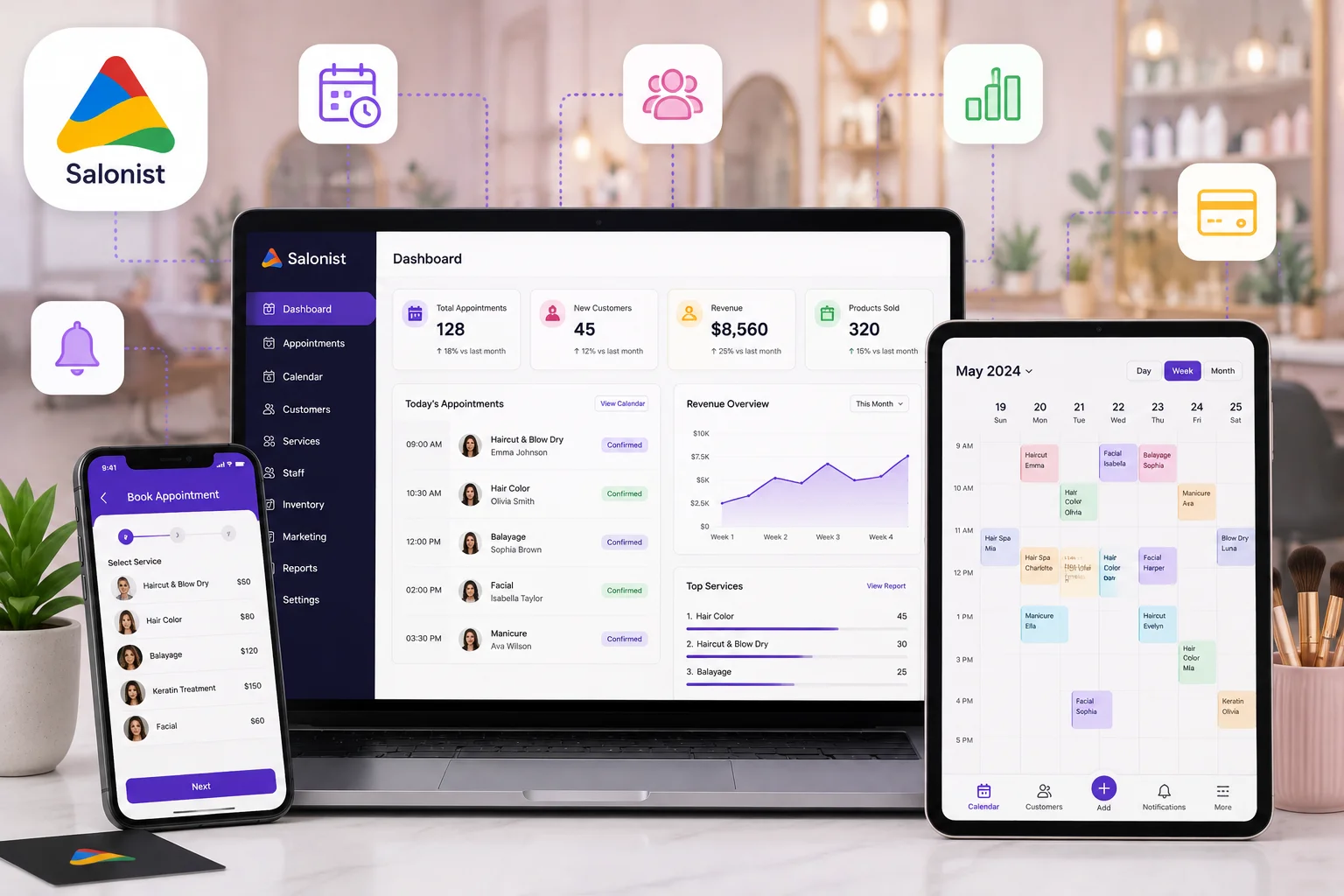
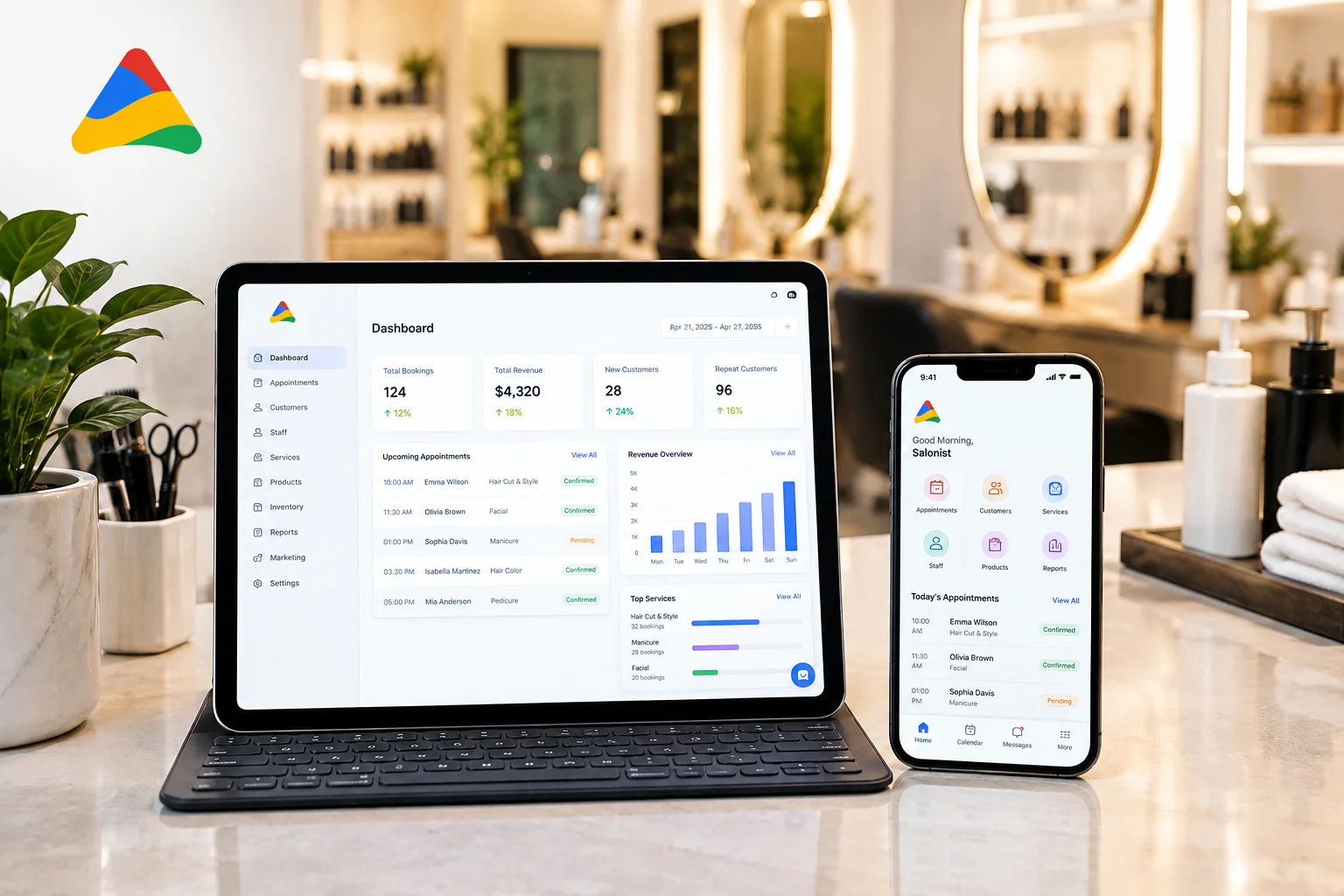
Here comes the actual implementation of all the elements listed above. It is done through salon management software such as Salonist, which unites appointment booking, customer database, scheduling for employees, and payments in one application instead of five-six applications that individual salons combine by themselves. Nothing dramatic about it, just fewer places for a booking to slip through. The point isn't handing an owner one more piece of software to babysit; it's cutting the hours spent on operations so more of the week goes toward the salon. Client history sits in one profile any stylist can pull up before an appointment starts, and sales and appointment data roll into a single view, so an owner can see how the week is going instead of guessing from the till.
Benefits of Using Salonist for Your Salon Business
Put those pieces together and a few things change, quietly rather than all at once. Less time lost to admin. Fewer scheduling mistakes. A clearer read on the business. Staff spend more of the day with clients instead of fixing calendar errors. Service feels consistent across the floor because it's backed by real records, not whichever stylist remembers a preference. Owners make calls based on what the numbers show instead of a gut feeling about a slow month. And time freed up from daily admin can go toward something that actually grows the business, a new service line, longer hours, a second location.
How to Choose the Right Salon Software for Your Business
Every platform claims roughly the same eight or nine things on its pricing page. What actually separates them tends to show up after week two, once your team is using it day to day, not before.
Size and structure change what you need. A single-chair studio and a six-location chain aren't shopping for the same thing, even if both search for the same keyword. The convenience of using a product plays a greater role than owners realize because if staff cannot master something within one day, they will never be consistent with it regardless of how many functions it performs. It is vital to pay the most attention to booking and client management systems. Reporting should tell you something useful, not just produce numbers for a dashboard.
If you want a closer look at weighing options before you commit, this guide on choosing the right tools for your business walks through it in more detail. Scalability's worth a thought too, even without expansion plans this year. Software that fits one location today should still fit if you add a second next year, so you're not migrating everything mid-growth.
Why the Right Salon Software Is an Investment, Not Just an Expense
None of this is complicated math. Salons just rarely sit down and do it. Time saved on admin, fewer scheduling mistakes, clients kept instead of lost to a competitor with easier booking, all of it outpaces a subscription fee fairly quickly. The actual return is a more efficient staff, clearer numbers, and room to grow without extra chaos, not a line item on a budget spreadsheet. Weigh that against what a messy system quietly costs in lost bookings and wasted hours, and the math usually isn't close.
Simplify Your Salon Business With Salonist
Running a salon without the right system means fighting the same battles every week, missed bookings, scattered records, staff time lost to admin that should take minutes instead of hours. Salon software doesn't remove the work of running a business. It removes the parts that shouldn't need a human doing them by hand. Platforms like Salonist bring appointments, customers, staff, and payments into one place, so the operational side of your salon stops competing with the reasons you got into it.
Ready to spend less time managing the back office and more time actually growing your salon? Explore Salonist and see how it fits into your week.