Sign up with Google
 Sign in with Zoho

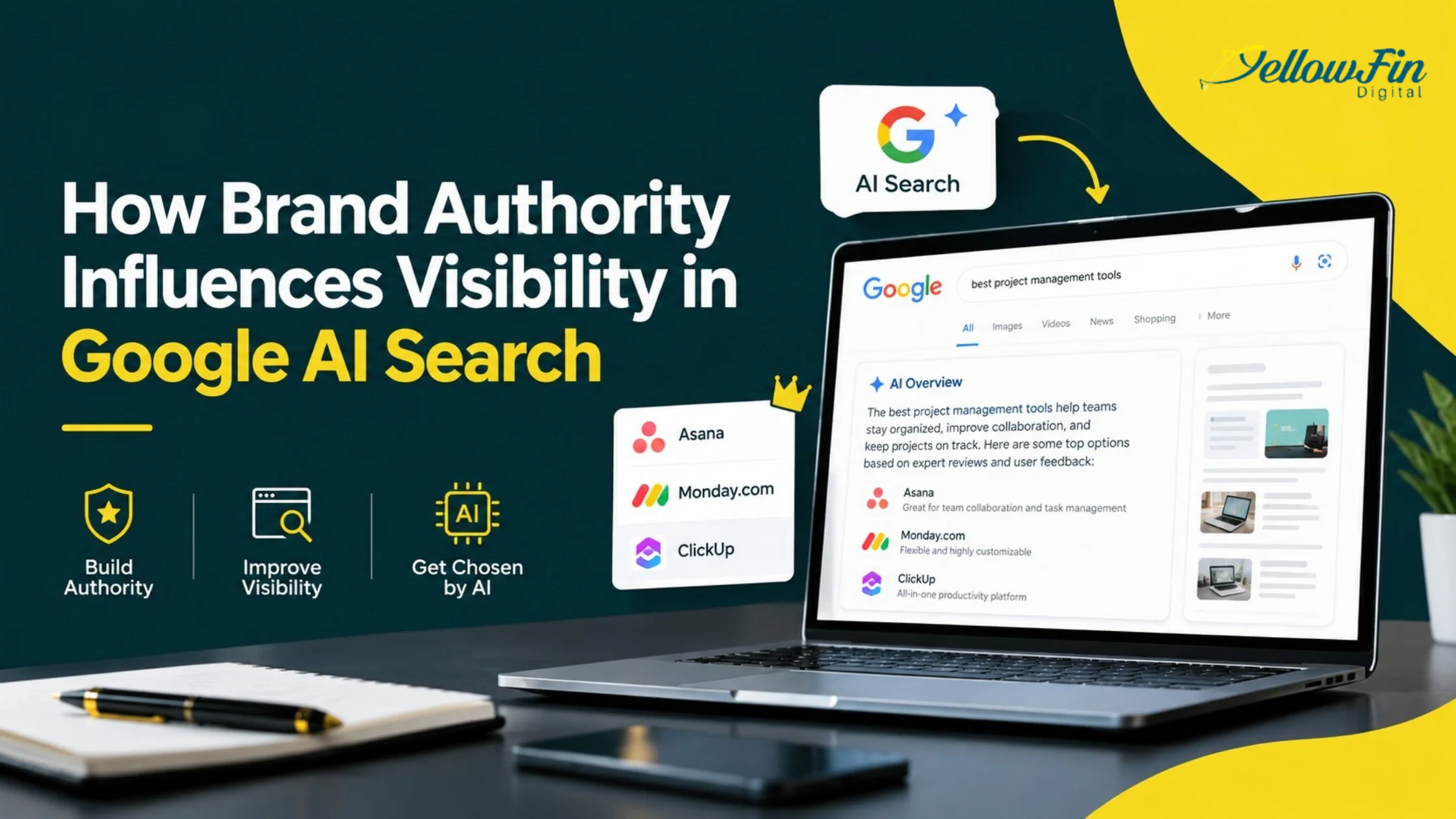
Type "best" before almost any product or service into Google, and chances are you won't see ten blue links anymore. You'll see an answer. Already written, already ranked, already recommending names before you've scrolled an inch.
That's the new front door to the internet, and it quietly rewrites what brand visibility even means. Showing up used to be the goal. Now the goal is being chosen.
For years, ranking well meant chasing keywords, collecting backlinks, and ticking off technical boxes. That playbook still helps, but on its own, it doesn't cut it anymore.
Google's AI-driven results don't just crawl a page and file it away; they read it, weigh it against everything else written on the same topic, and decide, almost instantly, whether a brand has earned the right to be mentioned at all.
That decision comes down to one thing more than any other: authority.
Why Google AI Search Plays by Different Rules
Traditional search engine visibility used to be a numbers game: more keywords, more links, more pages, better odds.
Google AI search doesn't work like that. It pulls information from across the web, stitches together one direct answer, and hands the user a short list of names it already trusts instead of a page to scroll through.
Nowhere is this more obvious than in AI Overviews, the summary boxes now sitting above regular results for a huge share of searches.
Someone asks a question, the AI Overview answers it before they've clicked anything, and any brand left out of that summary basically doesn't exist for that search.
Google keeps rolling out changes here, and keeping up with Google's new search features has become part of the job now, not an occasional check-in.
In practical terms, AI search visibility depends less on matching a query word-for-word and more on whether a brand had already built credibility around that topic long before the question was asked.
Brand Authority Is the New Ranking Currency
Brand authority is really just trust that's built up over time through consistent, provable expertise. Old-school SEO measured it mostly through backlinks and how long a domain had existed. AI-driven search measures something wider: how consistently a brand's expertise shows up across the internet, and how comfortable an AI model feels vouching for it in front of a real person.
That's where entity authority comes in. Google's systems aren't just looking at a website anymore, they're trying to understand a brand as a whole, a distinct, recognizable "thing" with a consistent identity across its own site, review platforms, industry write-ups, and social mentions.
Structured data matters more here than most brands realize. JSON-LD schema, especially Organization, SameAs, and Article markup, gives AI systems a machine-readable map of who a brand is and where else it shows up online, instead of leaving them to guess at connections they could otherwise confirm instantly.
Topical authority works the same way. A brand that's published deep, connected content around one subject, instead of scattered posts on whatever seemed trendy that week, signals real expertise.
AI models lean toward sources that clearly know a subject inside and out, not ones that mention a keyword once and move on.
How AI Models Actually Read a Page
Here's something worth understanding: generative engines don't read a page top to bottom the way a person might. They pull short, self-contained passages that directly answer a question, then decide whether that passage is worth quoting or citing.
This is passage-level optimization, and it rewards content that puts the direct answer up front instead of burying it under three paragraphs of throat-clearing.
Alongside that sits information gain, essentially, does this page say something the model hasn't already seen a dozen times elsewhere? Original data, a genuinely new framework, an insight pulled from real experience: these are what make a passage worth extracting instead of skipping.
A page that just restates the obvious gives an AI model no reason to pick it over the next one.
E-E-A-T Hasn't Gone Anywhere
E-E-A-T, Experience, Expertise, Authoritativeness, and Trustworthiness, was originally written to guide human quality raters. It's turned out to be one of the clearest windows into what AI models look for too, mostly because an AI system answering a question is doing exactly what a rater would: asking whether the source behind a claim knows what it's talking about, and whether it can be trusted to get it right.
Experience and expertise come through in original insights, case studies, and content that clearly comes from doing the work, not just summarizing what's already out there. Authoritativeness shows up when other credible sources reference a brand, not when a brand simply says it's credible.
Trustworthiness builds through accuracy and consistency, shown again and again over time, not claimed once on an About page.
Brands that build their content around these four ideas tend to see stronger organic search visibility, and a better shot at being pulled into AI-generated answers.
Online Brand Reputation Now Doubles as a Visibility Signal
AI models don't stop at a brand's own website. They pull from an entire ecosystem, review sites, forums, news coverage, comparison articles, to form an opinion on how a brand is perceived out in the world.
Online brand reputation has quietly become a ranking input, whether that was ever the plan or not.
And here's the part that catches most SEO-trained brands off guard: unlinked brand mentions, a name dropped in a forum thread, a review site, a news roundup, with no backlink attached, now correlate more strongly with AI Overviews citations than traditional backlinks do.
A model doesn't need a hyperlink to recognize a name it keeps seeing across trusted sources; it just needs to see that name often enough, in the right company, to treat it as known and credible.
A brand with solid reviews and steady mentions sends the same message over and over: this name can be trusted. A thin, patchy digital footprint sends the opposite message, even on a technically flawless website.
Building the Kind of Authority AI Search Rewards
Improving Google search rankings in this new landscape means building depth, not just polishing pages. A few things consistently make a difference:
- Publishing original content with real information gain, not a reworded version of whatever's already ranking.
- Implementing Organization, SameAs, and Article schema so entity signals stay consistent everywhere the brand appears.
- Earning mentions, linked or not, on credible third-party sites, since AI models lean heavily on outside validation.
- Structuring content for passage-level extraction, with direct answers up front and clear headers.
- Watching how the brand shows up across AI platforms, not just traditional rankings, so gaps get caught early.
Keeping all of this moving at once is where most brands hit a wall, not because the strategy is complicated, but because it needs steady attention across content, schema, and reputation together.
That's basically the gap AI SEO services exist to close, blending traditional optimization with the authority signals AI search now runs on.
Claim Your Brand Visibility in the Era of AI Search
Visibility in Google AI search isn't handed out for keyword density anymore. It's earned through authority that holds up consistently across the whole web, not just on one polished homepage.
Brands that treat authority-building as an ongoing habit, rather than a project they finish and forget, are the ones AI systems keep choosing to recommend.
If a brand isn't showing up in AI-generated answers yet, the fix rarely starts with writing more content. It starts with an honest look at how authoritative that brand actually looks from the outside.
That's where a broader set of digital marketing services comes in, tying content, reputation, and technical SEO into one strategy built for how people search today. Don't wait for a competitor to claim that visibility first.