Sign up with Google
 Sign in with Zoho

By lunchtime, the dining table is a work desk. By evening, it needs to hold dinner. Across the room, the sofa becomes a reading spot, a place for family conversations, and somewhere to welcome visitors. Decorating this kind of space means thinking beyond how it looks when everything is put away.
The challenge is choosing pieces that bring character without making each change of activity harder. A room can feel considered while accommodating laptops, tea cups, schoolbooks, and guests. The starting point is understanding which parts need to stay flexible.
Plan Around the Room’s Busiest Moment
An arrangement that works when you are home alone may become awkward when everyone gathers. Before choosing furniture or accessories, picture the room during its busiest ordinary hour.
Perhaps someone is working at the dining table while another person watches television. There may be a child playing nearby or a visitor looking for somewhere to sit.
Check the routes between doors, seats, and storage. Can someone pull out a dining chair without blocking the passage? Can a cupboard open fully beside the sofa?
Mark proposed furniture footprints on the floor before buying. Include the space needed to use each piece, rather than measuring only the object itself. This helps reveal whether a table is practical in that particular position.
Separate Permanent Display from Flexible Surfaces
Some parts of a room can hold an arrangement for weeks. Others need clearing several times a day. Treating them differently makes decorating easier.
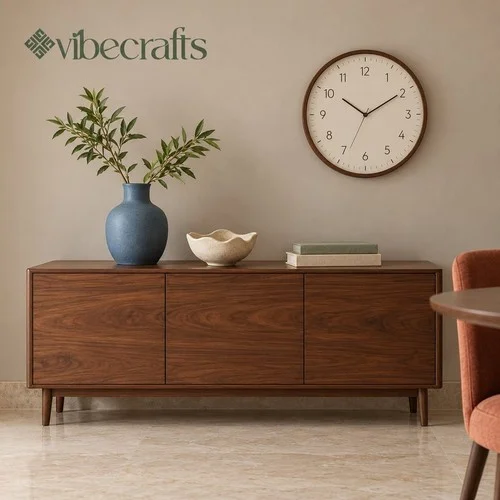
A shelf or cabinet top might suit a photograph, a sculptural object, and a few books. A dining table used for work needs a display that can move easily.
For that changing surface, consider a shallow tray with just one or two accessories. Before arranging it, decide where the tray will go when the table is needed. Check that the alternative surface has enough space and that the loaded tray is comfortable to carry.
When browsing home decor items at Vibecrafts, this distinction gives each potential purchase a clearer role: something to enjoy in place, or something that can move with the day.
Use Colour to Connect Different Activities
A shared room does not need identical furniture throughout, but a few visual connections can help its different areas feel related.
For example, an olive cushion in the seating area might echo a small ceramic piece near the dining table. A warm wooden picture frame can relate to a cabinet elsewhere in the room.
Keep the repetition selective. If every accessory uses the same colour, the arrangement can feel overly coordinated. Let texture provide variety: a woven cushion, smooth ceramic, and wood grain can sit comfortably together.
Look at the room from its entrance before adding more. This wider view helps you judge whether the repeated details create a connection or simply draw attention to themselves.
Choose Furniture for Reach and Movement
In a room with several uses, furniture needs to work with people’s movements.
A side table should be reachable from the seat it serves. An occasional chair needs somewhere sensible to go when extra floor space is required. Furniture described as compact still deserves careful measurement.
If you expect to move a piece regularly, check its listed weight and handling instructions. A smaller table is not necessarily easy to lift, and a decorative stool should not be assumed suitable for seating unless the product information confirms it.
Also consider how furniture meets the floor. Follow appropriate guidance for floor protection, and check that rugs do not interfere with stability or chair movement.
Match Upkeep to Where an Item Will Live
Placement affects maintenance as much as appearance. An accessory beside a frequently used dining table may need cleaning more often than one on a bedroom shelf.
Consider whether you can reach around an arrangement to dust it. Closely packed objects can make an otherwise simple task inconvenient. Detailed surfaces may also require more attention than smooth ones.
Read care instructions for the specific product. Similar-looking finishes may respond differently to moisture or cleaning products.
For upholstered pieces, review the stated cleaning guidance before choosing a location near food or drinks. The aim is to select something you can comfortably look after within your usual routine.
Leave Space for the Room to Change
Before spending your budget, try the arrangement through several normal days. Notice which objects keep getting moved and where belongings accumulate.
That information can guide a more useful purchase. You might need accessible storage before another accessory, or a smaller decorative arrangement to free up a shared table.
A room that serves several purposes benefits from thoughtful limits. Choose pieces you enjoy, give practical surfaces enough room to work, and allow daily life to influence the layout. When exploring Vibecrafts, begin with that understanding of your space. A considered addition should feel at home through the room’s many uses.