Sign up with Google
 Sign in with Zoho
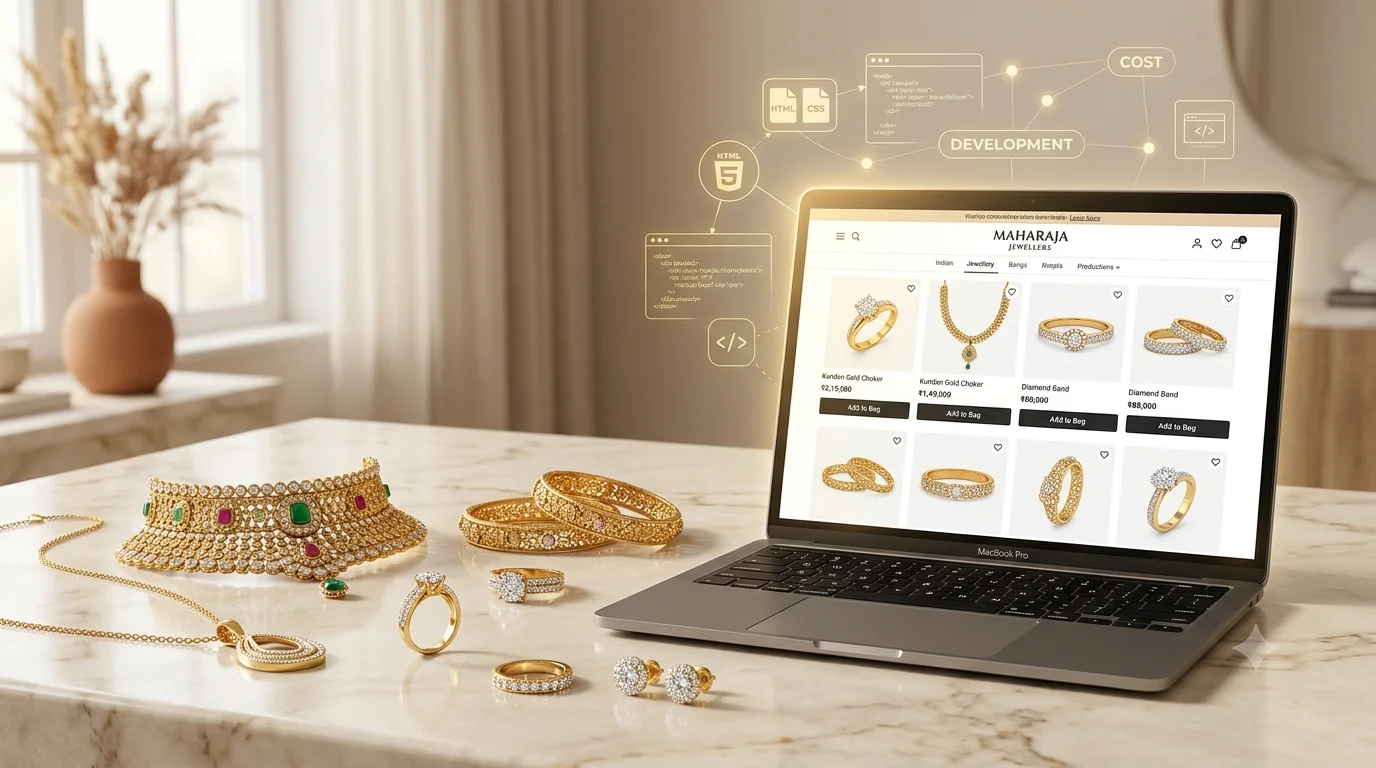
A jewellery website must do more than look beautiful. It needs to show every small detail of a piece, build customer trust, and make expensive purchases feel safe. A well-built site can help your brand reach more people and grow online sales.
But how much do the best jewellery website development services cost in India?
The answer depends on your business needs, design, features, and development team. A simple online jewellery store may cost a few lakh rupees, while a fully custom platform can cost much more.
In this guide, we explain typical costs, features that raise the price, extra charges to expect, and how to choose the right service provider.
The Price Range Depends on What Your Store Needs
Typical Jewellery Website Development Costs in India
These are planning estimates to help you set a budget. They are not fixed market rates.
The final cost depends on the agency, features, design, and project size. GST, hosting, platform fees, paid apps, product photography, and other tools may cost extra. Always compare written quotes that cover the same list of features.
What Each Budget Level Can Include
- Template-based website: Uses a ready-made design. A good option for small jewellery brands with a limited budget.
- Custom Shopify or WooCommerce store: Offers more design freedom, including better product filters, custom product pages, stock management, and multiple payment options.
- Bespoke website: Built around your business needs. It may include custom jewellery design tools, advanced inventory systems, and links with your business software.
- Large ecommerce website: May need stronger security, multiple store locations, complex pricing, and custom integrations.
Some costs are paid once, such as design and development. Others, like hosting, subscriptions, and support, continue every month or year.
A Simple Budget Example
Imagine a small jewellery brand launching with 100–300 products:
This is only an example. Agency rates, project scope, and team location can change the final cost.
Jewellery Features That Raise the Build Cost
Product Pages That Help Buyers Judge Each Piece
Jewellery buyers want to see exactly what they are paying for. Strong product pages build confidence. Your website may need:
- High-quality product images
- Image zoom and multiple viewing angles
- Product videos or 360-degree views
- Metal type, purity, weight, and size details
- Stone information and care instructions
- Certificate and hallmark details, where applicable
For example, a gold ring page should clearly state its weight, purity, available sizes, and price breakup. Advanced images and videos add development cost, and professional photography or video shoots need a separate budget.
Tools for Custom Orders and High-Value Sales
Some brands let customers personalise their jewellery. These features may include size selection, engraving, custom designs, and special order requests.
You may also want appointment booking, live chat, or callback options for buyers who need help before a big purchase.
Made-to-order jewellery needs careful stock management. The site may need to show production time, delivery estimates, and order status. These features increase development time and cost.
Trust, Payments, and Safe Delivery
Trust matters most when customers buy jewellery online. Your website should clearly explain return rules, warranty terms, delivery timelines, and support contacts. Depending on your products, you may also need:
- Payment gateway integration
- EMI options, where available
- Secure checkout
- Order tracking
- Insured shipping arrangements
- Fraud prevention tools
Payment gateway charges, shipping costs, and some security tools create ongoing expenses. Make sure every product claim, hallmark detail, and certificate on the site is accurate.
The Main Factors Behind Agency Quotes
Platform Choice and Custom Work
Your platform affects both the starting cost and future expenses.
- Shopify: A practical choice for brands that want an easier setup and managed services. Subscription and app fees may apply.
- WooCommerce: Offers more control and flexibility, but hosting, updates, security, and plugin management need ongoing attention.
- Custom-built platform: Supports special business needs, but usually has a higher starting cost and greater maintenance needs.
Ask agencies to list paid themes, plugins, apps, licences, and integration charges in the proposal.
Design, Content, and Product Data
A unique design usually costs more than a ready-made theme. Content also affects your budget: product descriptions, image editing, category pages, size charts, and buying guides all take time. Settle these questions before you start:
- Who will provide product images?
- Who will write product descriptions?
- Who will upload product details?
- Who will check weight, size, and pricing data?
- Is mobile design included?
Mobile experience is essential, since many customers browse on smaller screens.
Support, Hosting, and Future Updates
Launch is only the beginning. You will need regular updates, backups, bug fixes, security checks, and technical support.
Monthly maintenance may cost roughly ₹5,000 – ₹50,000 or more depending on the service level. This is an indicative estimate, not a standard rate. Hosting, subscriptions, and app fees may be billed separately. Before signing, ask how quickly the team responds to problems and what emergency support costs.
How to Choose the Right Service Provider
Compare Proposals by Scope, Not Just Price
Do not pick an agency only because it offers the lowest quote. Ask for a written proposal covering:
- Website design and development
- Product uploads and content work
- Payment and shipping setup
- Testing and launch
- Support and maintenance
- Delivery timeline
- Extra work charges
Also check what happens if you request changes after approving the design. A clear agreement helps you avoid surprise costs and delays.
Check Relevant Work and Results
Look at jewellery or luxury retail sites the agency has built. Review their product pages, navigation, mobile experience, filters, and checkout flow.
Established brands such as Tanishq and CaratLane are useful examples of how jewellery products and customer information can be presented. However, do not assume their development costs or business results. Public sites show features, not private project details.
Ask the agency which parts of those projects its own team delivered, and whether it can share real outcomes.
Questions to Ask Any Agency or Consultant
- What increases jewellery website development costs the most?
- How can a small jewellery brand reduce its budget without losing customer trust?
Plan a Launch Budget That Avoids Costly Surprises
Separate Must-Haves from "Later" Features
Must-have features:
- Mobile-friendly design
- Clear product pages
- Product search and filters
- Secure checkout
- Multiple payment options
- Delivery and return information
- Basic analytics
Features you can add later:
- 3D product views
- Loyalty programmes
- Advanced product customisation
- AI shopping tools
- Advanced reports
Choose features based on customer needs and business goals, not trends.
Ask These Questions Before Signing
- Who owns the website, domain, code, and product data?
- What are the total setup and monthly costs?
- Are GST, apps, payment fees, and content included?
- What is the expected launch date?
- What happens if the project is delayed?
- How are changes and extra work billed?
A Sample Launch Budget
Suppose a jewellery brand builds a custom Shopify store with 100–300 products:
This excludes applicable GST, ongoing platform charges, payment processing fees, and other unlisted expenses. The figures are planning estimates, not fixed prices, so confirm actual charges with your provider.
Choose a Site That Earns Trust, Not Just a Lower Quote
Jewellery website development in India can start around ₹50,000 for a basic store and cross ₹15 lakh for a large or custom platform. Your final budget depends on design, product range, technology, integrations, and support needs.
The market is also growing fast. According to Bain & Company's How India Shops Online 2025 report, India's e-retail market reached about $60 billion in gross merchandise value (GMV) in 2024. The follow-up Bain & Company–Flipkart report, How India Shops Online 2026, puts 2025 GMV at roughly $65–66 billion, with growth of 19–21%. This creates real opportunity for jewellery brands, but success still depends on customer trust, product quality, and a smooth shopping experience.
When you evaluate website development services, focus on jewellery experience, clear pricing, support, and ownership of your website.
Your next step: List your products, set your budget, and write down your must-have features. Then request at least three detailed quotes and compare them fairly.