Sign up with Google
 Sign in with Zoho

Every CPA firm knows the March crunch: hundreds of returns, one overflowing inbox, and a client who just found a missing 1099. Software should ease that pressure, but the wrong choice adds clicks, rework, and review delays.
Choosing the best tax filing software for CPA firms comes down to a few practical checks. This guide walks through them so you can compare tools with a clear scorecard.
What CPA Firms Need From Tax Software
Consumer tax apps and professional tools solve different problems. A firm handles many clients, many entity types, and many hands touching each file.
Here is what most firms need:
- Multi-client management: one dashboard for every return and its status
- Broad form coverage: individual, business, partnership, and state returns
- Team roles: preparers, reviewers, and partners with different access levels
- Reliable e-filing: federal and state, with clear rejection messages
If a tool is strong on forms but weak on workflow, your team will feel it during busy season.
Core Features to Compare
Accuracy and E-File Support
The software must stay current with IRS and state rules. Ask each vendor how quickly they push updates after a tax law change. Also check the e-file rejection rate and how easy it is to fix errors.
Document Intake and Automation
Manual data entry is where errors and overtime begin. Look for tools that can:
- Pull data from W-2s, 1099s, and K-1s automatically
- Let clients upload documents through a secure portal
- Flag missing or mismatched items before preparation starts
Review Workflow and Audit Trail
A good review process protects your firm. You want to see who changed what, when, and why. Built-in checklists and reviewer sign-offs make quality control repeatable instead of dependent on one person's memory.
Security and Compliance
Tax files hold Social Security numbers and bank details, so security is not optional. Under the FTC Safeguards Rule, tax preparers must keep a written information security plan.
Ask vendors about:
- Encryption for data in transit and at rest
- Multi-factor authentication
- SOC 2 reports or similar audits
- Data backup and recovery plans
How AI Is Changing Tax Preparation
AI is moving from a buzzword to a daily tool in accounting. It reads documents, sorts data into the right fields, and highlights unusual entries for a human to check.
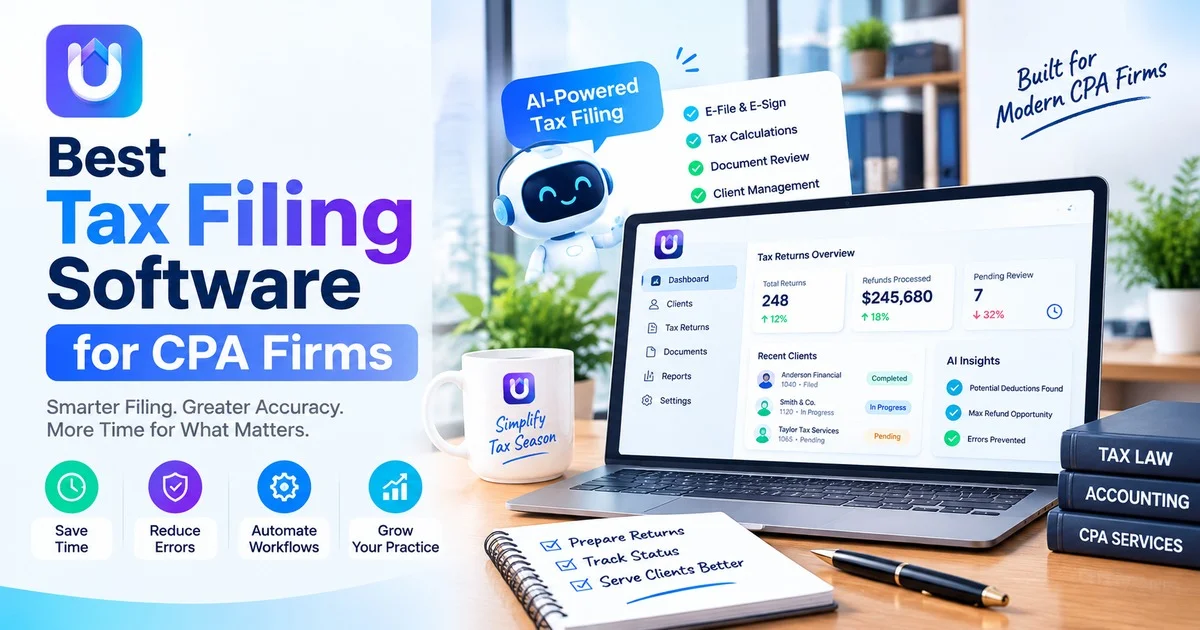
Some newer platforms, such as UpTax are built around this AI-first approach to tax preparation. Whether you look at newer tools or established ones, judge them by the same standards: accuracy, transparency, and how well they fit your review process.
One rule holds for every tool. AI can speed up preparation, but a licensed professional stays responsible for the return.
Understanding Pricing Models
Pricing often decides the shortlist, so compare it carefully. Most vendors use one of these models:
- Per-return pricing: you pay for each return filed. This works well for small or seasonal practices.
- Per-seat pricing: you pay for each user. Costs rise as your team grows.
- Flat or tiered plans: one fee covers a set volume. This is easier to budget but may include features you never use.
Watch for extras such as state e-file fees, bank product fees, and charges for client portals.
A Simple Scorecard for Choosing
Rate each tool from 1 to 5 in these areas, then compare totals:
- Form and state coverage
- Document intake and automation
- Review and audit tools
- Security and compliance
- Client portal experience
- Support quality during busy season
- Total cost per return
Run a pilot before you commit. Use 10 to 20 real returns from last season and compare time spent, errors found, and staff feedback. Real files reveal more than any demo.
Frequently Asked Questions
What is the best tax filing software for CPA firms?
There is no single winner for every firm. A solo practice, a 10-person firm, and a multi-office group have different needs. Compare tools on form coverage, workflow, security, and cost, then pilot your top two.
How much does professional tax software cost?
Costs vary widely by model, return volume, and add-ons. Some vendors charge per return, others charge per user or offer flat plans. Always request a full quote that includes state filing and portal fees.
Can AI prepare tax returns without a CPA?
AI can extract data, suggest entries, and flag issues, but it does not replace professional judgment. A licensed preparer must still review the return and sign it. Treat AI as an assistant, not the final reviewer.
Is cloud-based tax software safe for client data?
It can be, if the vendor uses strong encryption, multi-factor authentication, and regular security audits. Ask for documentation and confirm the tool supports your written security plan.
When should a firm switch tax software?
Many firms switch after busy season, when pain points are fresh and there is time to test. Warning signs include frequent rejections, slow support, and heavy manual entry.
The Bottom Line
The right software is the one your team will use well under deadline pressure. Score your options honestly, test them on real files, and give extra weight to the tools that remove repetitive work without hiding how they reach their results.