Sign up with Google
 Sign in with Zoho

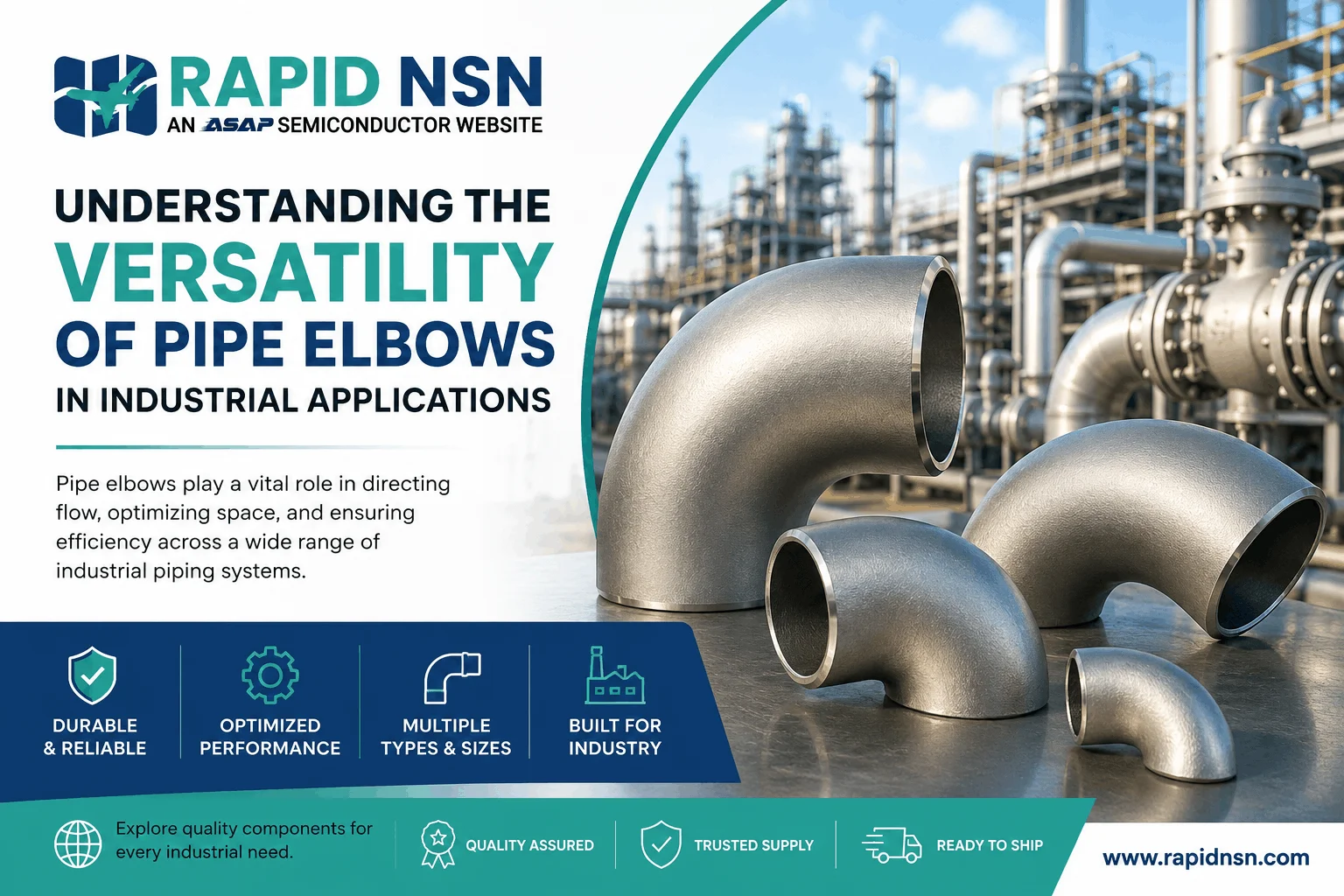
Pipe elbows are one of the most important kinds of fitting used in industrial piping systems. Even though they are fairly simple components, pipe elbows have a vital function in controlling the direction of fluids, gases, steam, and other materials as they travel through the pipelines. They enable piping systems to change direction without the need for complicated setups, thus leading to more efficient layouts, reliable operation, and easier maintenance.
Pipe elbows are used in a wide variety of applications, such as in manufacturing plants, chemical processing facilities, oil and gas operations, power generation plants, water treatment systems, construction projects, and in aerospace-related operations. Because they are available in different sizes, materials, types of connection, and angles, they can be adapted to meet a wide range of engineering requirements.
It is important to choose the right pipe elbow if the performance and reliability of the piping system are to be maintained. When making the selection, engineers should take into account a number of factors such as the diameter of the pipe, its pressure rating, the temperature range, compatibility of the material, the method of connection, and the required bend angle.
The flow characteristics should also be taken into account since an inappropriate elbow can lead to an increase in turbulence, pressure loss, or mechanical stress in the system; when it comes to applications involving sensitive fluids or high flow rates, choosing an elbow with the correct radius can help to ensure efficient fluid flow.
It is just as important to have the right dimensional compatibility. The elbow has to match the piping it is connected to both in size and in terms of the way it connects. If an incorrectly sized fitting is used then this can lead to trouble during installation, to leakage, to reduced system performance, or to early component failure.
Installation and Maintenance Considerations
Correct installation has a significant effect on the service life of pipe elbows. The installers must make sure that the fittings are properly aligned and firmly connected in accordance with the relevant engineering requirements and the manufacturer's specifications. When welding connections, it is necessary to follow the proper procedures, and the threaded connections should be properly fitted in order to reduce leakage.
Routine inspections can be used to detect signs of corrosion, cracking, deformation, leakage, or other issues, and industrial facilities may include elbows in their general inspection and maintenance programs especially where piping systems are operating under high pressure, high temperature, or corrosive conditions.
Conclusion
Although pipe elbows are small components they carry out an essential role in modern industrial piping systems; it is because of their ability to change the direction of the flow that efficient and practical arrangements of pipelines can be designed for a wide range of industries. There are available a variety of types of pipe elbows, including 45-degree and 90-degree designs as well as long-radius, short-radius, welded, threaded and special configurations, so that they can meet different engineering requirements.
To select the correct elbow it is necessary to take into account the material, the dimensions, the pressure, the temperature, the type of connection, and the operating environment. If they are properly chosen, fitted, and looked after, these fittings can help to ensure reliable piping performance and long-term system efficiency. Since industrial infrastructure is still undergoing continuous development, the versatility and significance of pipe elbows will continue to be noticeable in a wide variety of applications.
Know more: https://www.rapidnsn.com/blog/exploring-the-diversity-of-pipe-elbows-in-industrial-applications/