Sign up with Google
 Sign in with Zoho
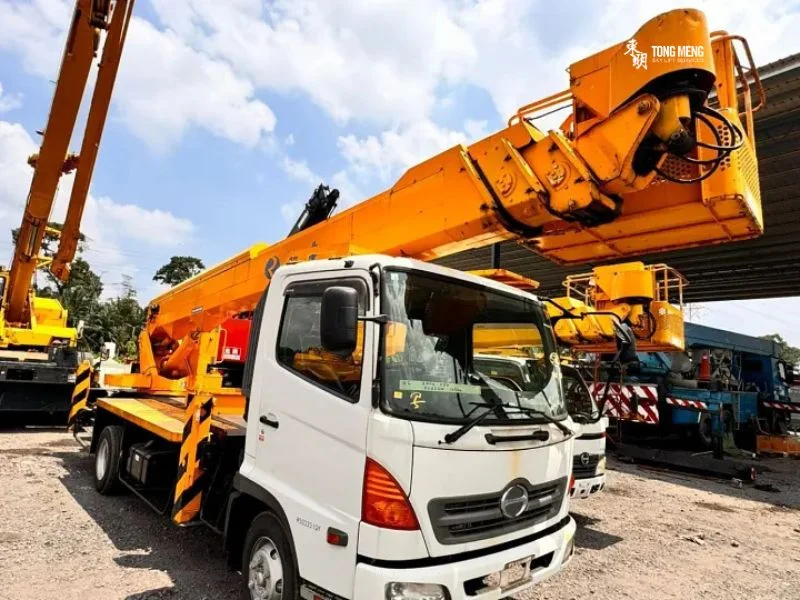
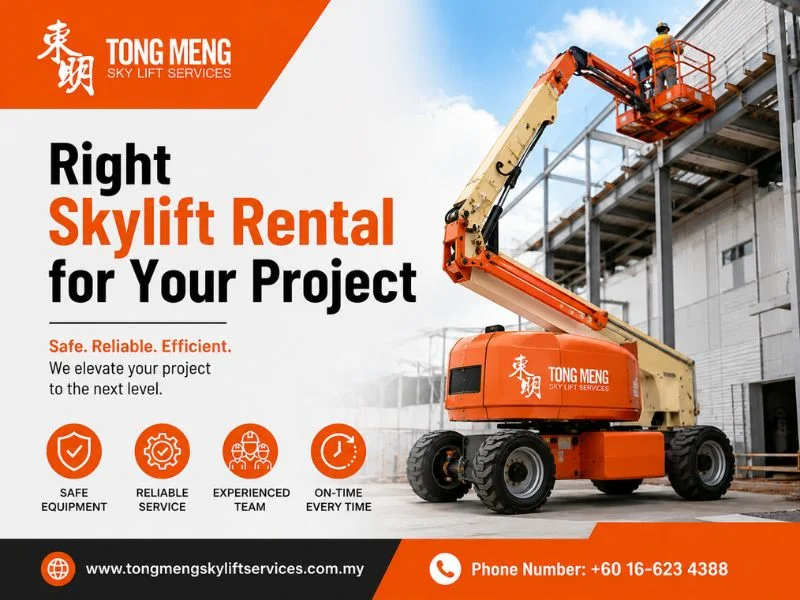
Choosing the right skylift rental comes down to five core factors: working height, horizontal reach, load capacity, terrain type, and job duration. Match each factor to your specific site conditions before committing to any equipment. The wrong machine wastes time, increases safety risk, and drives up costs — the right one keeps your crew productive and your project on schedule.
Whether you're managing a high-rise facade repair, a commercial fit-out, or an outdoor infrastructure job, selecting the correct skylift rental is one of the most important decisions you'll make before work begins. This guide walks you through every factor that matters — so you can make a confident, informed choice.
Why Equipment Selection Matters More Than Price
Many contractors default to the cheapest available option. That approach backfires fast. An undersized machine that can't reach your working height means delays. An oversized unit on a soft ground site means ground damage — or worse, a tip-over risk.
According to the Department of Occupational Safety and Health Malaysia (DOSH), improper use of mobile elevating work platforms is one of the leading causes of worksite injury in the construction sector. The right equipment selection is a safety decision first, and a cost decision second.
Step 1: Determine Your Required Working Height
This is your starting point. Measure the maximum height your crew needs to reach — not just stand at. If your task is at 18 metres, you need a machine rated beyond that to allow for safe working clearance.
General guidance:
- Up to 12 metres: Compact scissor lifts or small boom lifts — ideal for indoor ceilings, false ceiling works, and low-rise façades
- 12–20 metres: Mid-range boom lifts suited to external building maintenance and signage installation
- 20–45 metres and above: Heavy-duty telescopic or articulating boom lifts for high-rise, transmission towers, and large infrastructure projects
Never select a machine rated at exactly your target height. Add at least 10–15% buffer for safe posture and reach overhead.
Step 2: Assess Horizontal Reach and Articulation Needs
Height alone doesn't tell the full story. Many jobsites require working over obstacles — parked vehicles, planters, setback edges, or existing structures. This is where articulating boom lifts outperform straight telescopic models.
An articulating boom lift can bend at the joint to reach over and around obstructions, while a telescopic boom extends in a straight line for maximum horizontal reach. If your site has a clear path to the work zone, telescopic models offer greater horizontal distance. If you're navigating around obstructions, go articulating.
Ask your rental provider for a working envelope diagram — this shows exactly where the platform can reach at any given extension angle.
Step 3: Know Your Load Requirements
Platform capacity is often overlooked until it becomes a problem on site. Every aerial lift rental comes with a rated platform load — typically between 200 kg and 500 kg depending on the model. That load includes workers, tools, and materials simultaneously.
Common mistakes project managers make:
- Counting only the worker's body weight and forgetting tools and equipment bags
- Planning for two workers without confirming the two-person load rating
- Carrying materials in multiple trips when a higher-capacity unit would have cut time in half
Always specify the number of workers using the platform at one time and the combined weight of all tools and materials before requesting a quote.
Step 4: Evaluate Your Ground and Terrain Conditions
Terrain is what separates indoor-suitable machines from outdoor-ready ones. A standard scissor lift designed for smooth warehouse floors will perform poorly — and unsafely — on uneven outdoor ground.
Indoor or Smooth Surfaces
Electric scissor lifts and compact boom lifts work well here. They produce zero emissions, operate quietly, and are gentle on finished floors. Most warehouses, shopping complexes, and indoor construction sites in Malaysia use electric models for exactly this reason.
Outdoor or Rough Terrain
Rough terrain boom lifts and 4WD mobile elevating work platforms (MEWPs) are built for uneven ground, slopes, and outdoor construction sites. They feature larger tyres, greater ground clearance, and enhanced stability systems. If your site is outdoors with soft soil, slopes, or gravel — this is the category you need.
Confined or Narrow Sites
Compact spider lifts or narrow scissor lifts can access areas less than 1 metre wide. These are common in heritage building restorations, internal stairwell work, and sites with limited access corridors.
Step 5: Factor in Fuel Type and Emission Restrictions
In Malaysia, certain enclosed or semi-enclosed work environments restrict diesel-powered equipment due to fume accumulation risks. Electric models are mandated in many indoor environments under OSH regulations.
For outdoor sites with no power supply access, diesel or dual-fuel machines offer the operational range and power output required for heavy lift tasks. Confirm with your site safety officer before selecting fuel type — it affects both compliance and crew safety.
Comparing Equipment Types at a Glance
Step 6: Rental Duration and Mobilisation Planning
Short-term rentals (daily or weekly) are cost-effective for single-phase tasks. For extended projects, monthly rental agreements typically offer better rates and reduce the administrative burden of reordering equipment. Plan your task timeline accurately — underestimating rental duration leads to rushed work or costly last-minute extensions.
Also consider mobilisation logistics. What is the access route to your site? Can a low-loader deliver the machine without obstruction? Is there a loading zone? A skylift rental service provider experienced with Malaysian construction sites will assess this during the booking process and flag issues before delivery — not on the morning of.
Questions to Ask Your Rental Provider Before Confirming
Not all rental providers offer the same level of support. Before confirming any booking, get clear answers on:
- Is the machine in compliance with DOSH inspection requirements?
- What is the maximum safe working load for the platform configuration you're renting?
- Is a certified operator required, or can your crew operate it with MEWP competency training?
- What is the breakdown response time if the machine develops a fault on site?
- Does the rental include delivery, setup, and collection — or are those charged separately?
These questions separate professional providers from those who simply drop off a machine and move on.
A Note on Compliance in Malaysia
Under the Occupational Safety and Health Act 1994 (OSHA 1994) and the relevant DOSH guidelines, operators of MEWPs in Malaysia must be competent and, in many cases, hold a documented certificate of training. Employers are responsible for ensuring that any rented boom lift rental or MEWP is operated safely by trained personnel.
Selecting certified equipment from a licensed provider is not optional — it's a legal obligation that protects your workers and your project liability.
Making the Final Decision
Run through this checklist before finalising your equipment choice:
- Working height confirmed with clearance buffer
- Horizontal reach mapped against site obstacles
- Platform load calculated including all personnel and tools
- Terrain type assessed and matched to machine category
- Fuel type verified against site safety and emission rules
- Rental duration estimated with a contingency margin
- Provider compliance and support capability confirmed
If even one of these points is unverified, you risk either equipment failure, safety incidents, or project delays. A five-minute conversation with an experienced provider can resolve most of these questions before they become problems on site.
For projects across Malaysia — from Klang Valley high-rises to industrial sites in Johor and Penang — Tong Meng Skylift Services offers a wide range of aerial lift rental solutions matched to site-specific requirements, with equipment that meets local safety standards and a team that understands the demands of Malaysian construction environments.
Frequently Asked Questions
What is the difference between a boom lift and a scissor lift?
A boom lift extends outward and upward using an articulating or telescopic arm, offering horizontal reach in addition to height. A scissor lift moves only vertically and is better suited for tasks directly below the work area on flat, stable ground.
How do I know what height skylift rental I need?
Measure the height of your task and add a 10–15% buffer for safe overhead reach and working posture. Always select a machine rated above your required working height — never at exactly the same level as your task point.
Can I use a skylift on uneven or outdoor terrain?
Yes, but only with a machine rated for rough terrain. Standard electric scissor lifts are designed for smooth, flat surfaces. For outdoor or uneven ground, choose a 4WD rough terrain boom lift or a mobile elevating work platform with appropriate ground clearance and stabilisation features.
Do I need a certified operator to use a rented aerial lift in Malaysia?
Under DOSH guidelines and OSHA 1994, operators must be competent and trained to use MEWPs safely. Many sites require documented training or certification. Confirm requirements with your site safety officer and rental provider before the machine arrives on site.
How far in advance should I book a skylift rental?
For standard projects, booking 3–5 working days in advance is typically sufficient. During peak construction periods or for specialised equipment like high-reach telescopic booms, book at least 1–2 weeks ahead to ensure availability and allow time for site delivery planning.
What should be included in a skylift rental service agreement?
A complete rental agreement should cover the daily or monthly rate, delivery and collection charges, operator responsibility, machine inspection records, breakdown support terms, and liability clauses. Always confirm DOSH compliance documentation is included before signing or allowing work to begin.