Sign up with Google
 Sign in with Zoho

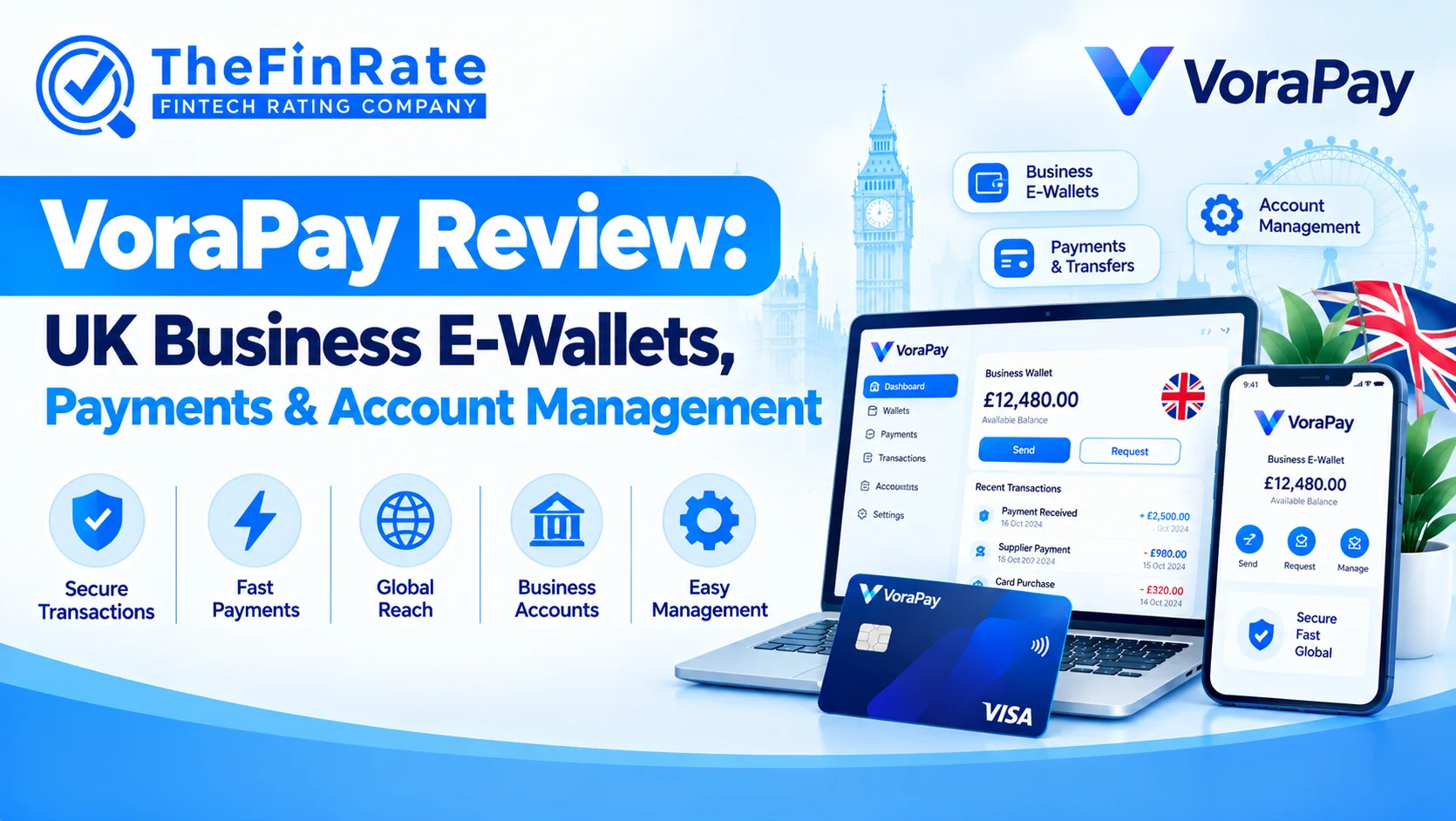
If you are searching for a VoraPay review, you are probably asking one of three things: what does VoraPay actually offer UK businesses, is it safe and regulated, and is it worth using over better-known alternatives? This review answers all three. It is built on what public records and the provider's own legal documents show, and it flags clearly where information is thin, so you can make a decision without relying on marketing claims.
Quick answer: VoraPay is a UK-registered fintech name linked to e-money and payment services. Public information about its current product, pricing, and regulatory permissions is limited, and the company behind the name has changed. Before opening a business account or loading funds, verify the legal entity and its permissions on the FCA Register. The checklist below shows how.
What is VoraPay?
VoraPay presents itself as a UK provider of electronic money and payment services. Its published terms and conditions, titled for use of electronic money and payment services, describe an account-based model in which customers hold e-money rather than a traditional bank deposit. That places it in the same broad category as e-wallets and business payment accounts offered by other UK fintech providers.
Company records show that Vorapay Limited was incorporated in England on 26 September 2019 and is registered at a London address. Records also indicate the company later changed its legal name, with VoraPay Limited listed as a previous name of a company now called Remium Limited, a change dated December 2022. This matters for your due diligence: the brand name you see online and the legal entity that holds your money may not be the same, and you should confirm exactly which company you would be contracting with.
For more plain-language guides on payments and business finance, visit TheFinRate.
What UK businesses typically look for in an e-wallet or payment account
Before comparing providers, it helps to know what a business e-wallet should deliver. Most UK businesses evaluate:
- Account structure: UK account number and sort code, multi-currency balances, and sub-accounts for different projects or teams
- Payments: Faster Payments, bank transfers, card acceptance, and payouts to suppliers or contractors
- Account management: Online dashboard or app, user permissions, bookkeeping exports, and integrations with accounting software
- Costs: Monthly fees, per-transaction fees, FX margins, and charges for incoming or outgoing transfers
- Safety: Regulation, safeguarding of customer funds, and clear complaint routes
- Support: Response times and the ability to speak with a person when something goes wrong
We could not independently confirm VoraPay's current feature set, pricing, or account limits from public sources, so we have not listed specific fees or features here. Always get these in writing from the provider before you commit.
Is VoraPay regulated and safe?
In the UK, businesses that issue e-money or provide payment services must be authorised or registered by the Financial Conduct Authority (FCA). Authorised e-money institutions must safeguard customer funds, meaning the money you hold is kept separate from the firm's own money.
Two important points apply to every e-wallet and fintech account, not just VoraPay:
- E-money is not a bank deposit. Funds held in an e-money account are protected through safeguarding rules, not the Financial Services Compensation Scheme (FSCS) deposit guarantee that covers eligible bank deposits. Always check which type of protection applies.
- Regulation depends on the exact legal entity. A brand name on a website is not enough. You need the registered company name and its FCA reference number, and you need to check that its permissions cover the service you intend to use.
How to verify VoraPay in under ten minutes
- Find the full legal company name and company number in the provider's terms and on its website footer.
- Search that exact name on the FCA Register and confirm the firm is authorised or registered, and that its status is active.
- Confirm the permissions listed include e-money issuance or payment services, matching what you plan to use.
- Check the FCA Warning List to make sure the firm and its website do not appear as unauthorised.
- Look up the company on Companies House for its filing history, directors, accounts, and any name changes.
- Read the safeguarding section of the terms and note how and where your funds are held.
- Search for independent customer reviews, and read complaints about delays, frozen accounts, or fund access.
If you cannot match the brand to an FCA-authorised or registered legal entity, do not move money into the account.
Payments and account management: what to ask before signing up
Because public detail on VoraPay's product is limited, send the provider these questions and keep the answers in writing:
- Which legal entity will hold my account, and what is its FCA firm reference number?
- Is my money safeguarded, with which institution, and how often is it reconciled?
- What are the full fees for opening, holding, sending, receiving, and converting money?
- Which payment types are supported, such as Faster Payments, CHAPS, SEPA, and card payments?
- What are the account limits, and what triggers a review or freeze?
- How long do onboarding and verification take, and what documents are required?
- How do I get my money out if I close the account?
- What is the complaints process, and does it include access to the Financial Ombudsman Service?
Vague, evasive, or inconsistent answers to these questions are a red flag.
Pros and cons to weigh
Potential advantages of a smaller e-money provider
- May offer a more personal service than large platforms
- May accept business types that larger providers find difficult
- E-money accounts can be quick to open compared with a traditional bank account
Points of caution
- Limited public information makes independent verification harder
- A change of company name means you must confirm the current legal entity
- E-money funds do not carry FSCS deposit protection
- Smaller providers can apply account limits or reviews that affect cash flow
VoraPay alternatives for UK businesses
If you cannot verify VoraPay to your satisfaction, or you want an established option, compare it against well-known UK business account and e-money providers. Common names to research include Wise Business, Revolut Business, Tide, Starling Bank, and Monzo Business, each with different strengths across multi-currency payments, banking features, and pricing. Check current fees and terms directly on each provider's website, because they change regularly.
If your main goal is to accept card payments from customers rather than hold funds in a wallet, you may need a different tool altogether. Our guide to merchant account providers explains how merchant accounts work and what they cost, and our overview of payment processing companies shows how the pieces fit together. If you sell online, see our breakdown of payment gateway solutions too.
Who is VoraPay best suited to?
Based on the limited public information available, a provider like VoraPay may be worth considering only if you have verified its regulatory status, understood its fee structure in writing, and are comfortable with the safeguarding arrangements. If you need strong brand recognition, deep integrations, or deposit-style protection, an established provider may be a safer starting point.
Frequently asked questions
- Is VoraPay legit?
We found a UK-registered company linked to the VoraPay name, but its name has changed over time, and we could not confirm its current regulatory permissions from public sources. Verify it on the FCA Register before using it.
- Is VoraPay FCA regulated?
Check the FCA Register using the exact legal entity name and firm reference number from the provider's terms. Do not rely on the brand name alone.
- Is my money protected in a VoraPay account?
E-money is protected through safeguarding rules rather than the FSCS bank deposit guarantee. Ask the provider how and where your funds are held.
- Can VoraPay accept card payments for my business?
We could not confirm this from public information. Ask the provider directly, and compare it with dedicated merchant account and payment gateway services if card acceptance is your priority.
- What are the best alternatives to VoraPay?
Established UK options include Wise Business, Revolut Business, Tide, Starling, and Monzo Business. Compare current fees, limits, and protections before choosing.
Final verdict
A good VoraPay review should tell you what is known and what is not. The name is linked to a UK e-money and payment services offering, but public information about its features, fees, and current regulatory permissions is limited, and the company behind the brand has changed names. Before you open an account or move funds, confirm the legal entity on the FCA Register, read the safeguarding terms, and get fees in writing. If anything does not add up, choose a provider you can verify.
Disclaimer: This article is for general information and is not financial, legal, or investment advice. It is based on publicly available records and may not reflect the provider's current products, fees, or regulatory status. Verify all details directly with the provider and the FCA before making decisions.