Sign up with Google
 Sign in with Zoho

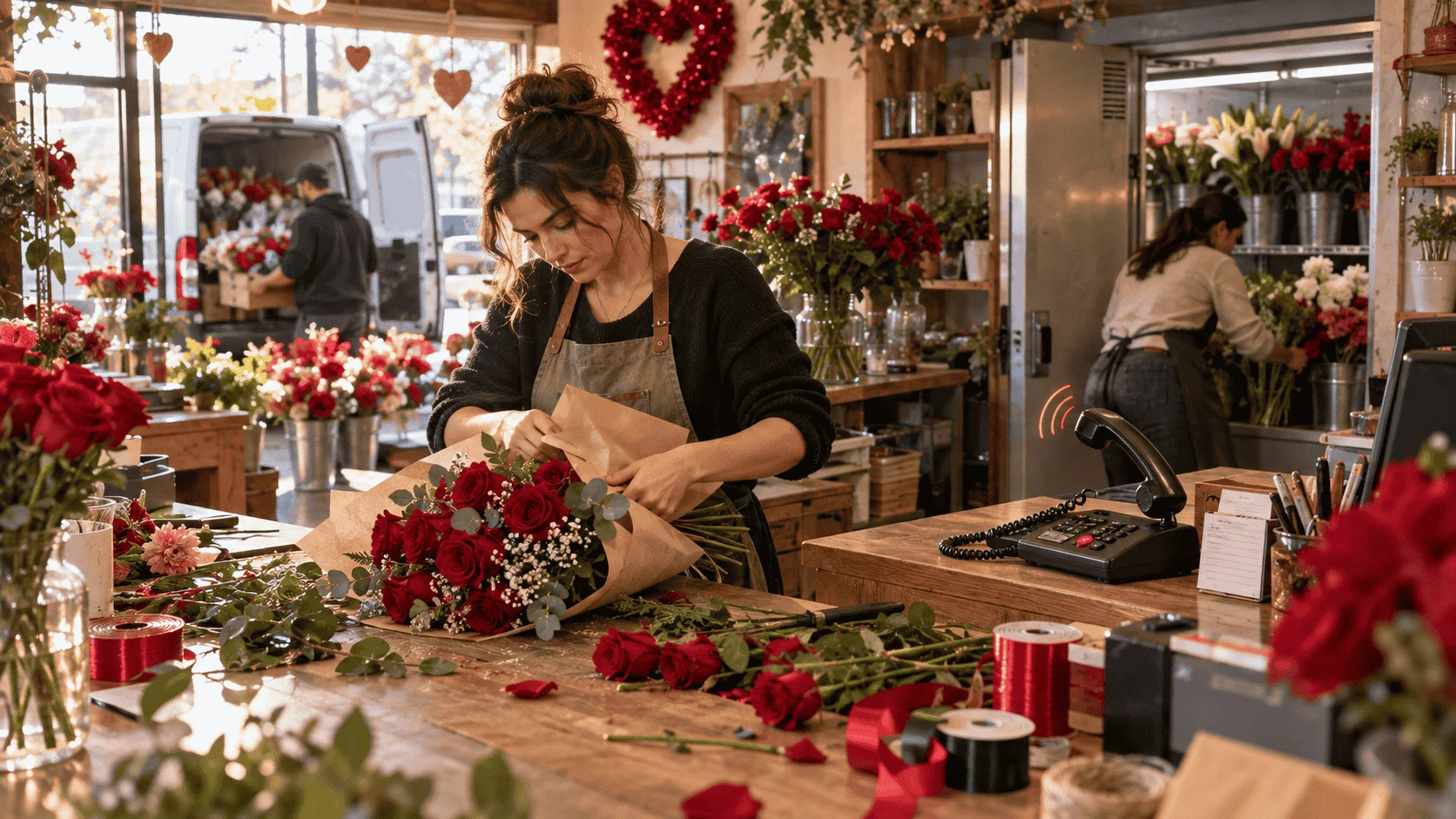
Valentine's Day morning at a flower shop looks a certain way. Buckets of roses everywhere, three people cutting stems at once, someone running out the door with a delivery, and a phone that hasn't stopped ringing since the doors opened. Most of those calls never get picked up until the second or third try, if they get picked up at all. Nobody's slacking off. There simply aren't enough hands to answer a phone and build fifty arrangements before noon. That's the paradox of peak season for florists. Business has never been better and worse at the same time, better because demand is through the roof, worse because a big chunk of that demand is walking away unanswered, dialing the next shop on the list, and never even realizing there was a person standing thirty feet from that ringing phone the whole time.
Why Peak Holidays Multiply Call Volume Overnight
A florist's call volume on a normal Tuesday might be a dozen calls spread evenly across the day. Valentine's week, that same shop could see two hundred calls in seventy two hours. Mother's Day isn't far behind. Christmas week stretches things out over a longer window but adds corporate orders and holiday party arrangements into the mix, so the phone rings just as hard, just with more variety in what people are asking for. Staffing doesn't scale to match any of this. A shop running with three or four people on a normal week usually adds one or two extra hands for the holiday rush, not the five or six it would actually take to answer every incoming call while also fulfilling the orders already on the books. So the phone becomes the thing that gets sacrificed, because someone has to be cutting stems and wiring boutonnieres, and that someone can't also be on hold with a customer picking between pink and white roses.
What Happens on the Shop Floor During a Rush
Picture the workspace itself. Coolers packed with flowers, a design table covered in greenery and ribbon, and three or four people moving fast because orders are due out the door in a specific window. A phone rings. Someone glances at it, hands full of stems, and makes a split second call. Answer it and lose thirty seconds on the arrangement they're midway through, or let it go and hope the caller tries back later. Multiply that decision by dozens of times a day and you start to see why so many calls simply never get answered during the two or three days a florist actually needs the revenue most. Not disorganization. Just physics. There are only so many hands, and every single one of them is already doing something that matters.
Why a Missed Florist Call Is Rarely Just a Missed Call
Flower orders carry a specific kind of urgency that a lot of other purchases don't have. Someone calling to order a Valentine's bouquet usually needs it delivered on a specific day, sometimes a specific window within that day. There's no flexibility built in. If a florist doesn't pick up, the caller isn't going to wait around hoping for a callback that might come too late to matter. They call the next shop immediately, because the deadline doesn't move just because the first shop was busy. This is roughly what people mean when they talk about missed calls and business loss, a term that's come up a lot as businesses start tracking just how much revenue disappears silently through unanswered phones. It doesn't show up anywhere obvious. There's no line item for it. It just quietly shrinks the season's total, invisible until someone actually sits down and estimates how many calls went unanswered against how many orders came through instead.
The Nature of Florist Orders Makes Phone Handling Harder
Flower orders aren't simple transactions either, which makes the problem worse than it would be for a business taking straightforward reservations. A single call might involve picking a style, choosing a price point, writing a card message, confirming a delivery address, and coordinating timing around a specific event. That's a real conversation, not a quick yes or no. Rushing through it to get back to the design table risks getting details wrong, the kind of mistake that turns into an awkward phone call later when a card message shows up wrong on someone's anniversary flowers. So florists are stuck choosing between two bad outcomes during peak season. Answer every call properly and fall behind on the orders already promised, or focus on fulfillment and let the phone go, losing new orders in the process. Neither option actually solves the underlying problem, which is that there simply isn't enough capacity to do both well at the same time.
How Some Florists Are Rethinking Peak Season Coverage
A number of shops have started looking at tools built specifically to handle overflow calls during these predictable seasonal spikes, catching whatever the in-store team can't get to and taking the order details directly. This is generally what's meant by an AI Voice Agent for Florists, designed to answer instantly, walk a caller through the same kind of questions a person would ask about style, budget, and delivery timing, and get the order queued up without pulling anyone away from the design table. Nobody's pitching this as a replacement for the personal touch a small flower shop is known for. Think of it more as making sure that touch still reaches the caller who dialed during the exact fifteen minutes everyone in the shop was elbow deep in roses and couldn't get to the phone.
The Bigger Pattern Behind Missed Calls
What happens at a flower shop during Valentine's week is really just a sharper version of something happening across plenty of service businesses year round, just compressed into a few brutal days instead of spread thin across a whole year. There's a broader look at how this plays out across different types of businesses in this piece on Missed Calls Business Loss, which breaks down why unanswered calls tend to cost far more than most owners initially assume once the numbers actually get tallied up. Florists just feel it more acutely because their busiest days are so concentrated and so unforgiving on timing. There's no quiet Tuesday next week to make up for a missed order on February fourteenth.
What Florists Can Do Before the Next Rush
None of this requires overhauling the whole shop before the next holiday hits. A reasonable starting point is simply tracking how many calls come in during a peak week versus how many actually get answered, since most shop owners are surprised by the gap once they actually look. From there, deciding what needs a person's judgment, like a complicated custom order, versus what could be captured just as well through a faster answering process, tends to make the next rush a little less chaotic than the last one.