Sign up with Google
 Sign in with Zoho
Ask five agencies about Magento theme development cost and you will get five very different answers. One quotes $800. Another quotes $12,000. A third says “it depends” and sends you a long form. If you are a store owner trying to budget, that is frustrating.
The truth is that the prices are not random. They reflect different approaches, different team locations and different definitions of the word “theme.” This guide explains what is behind the numbers so you can judge a quote with confidence.
What Is the Average Magento Theme Development Cost in 2026?
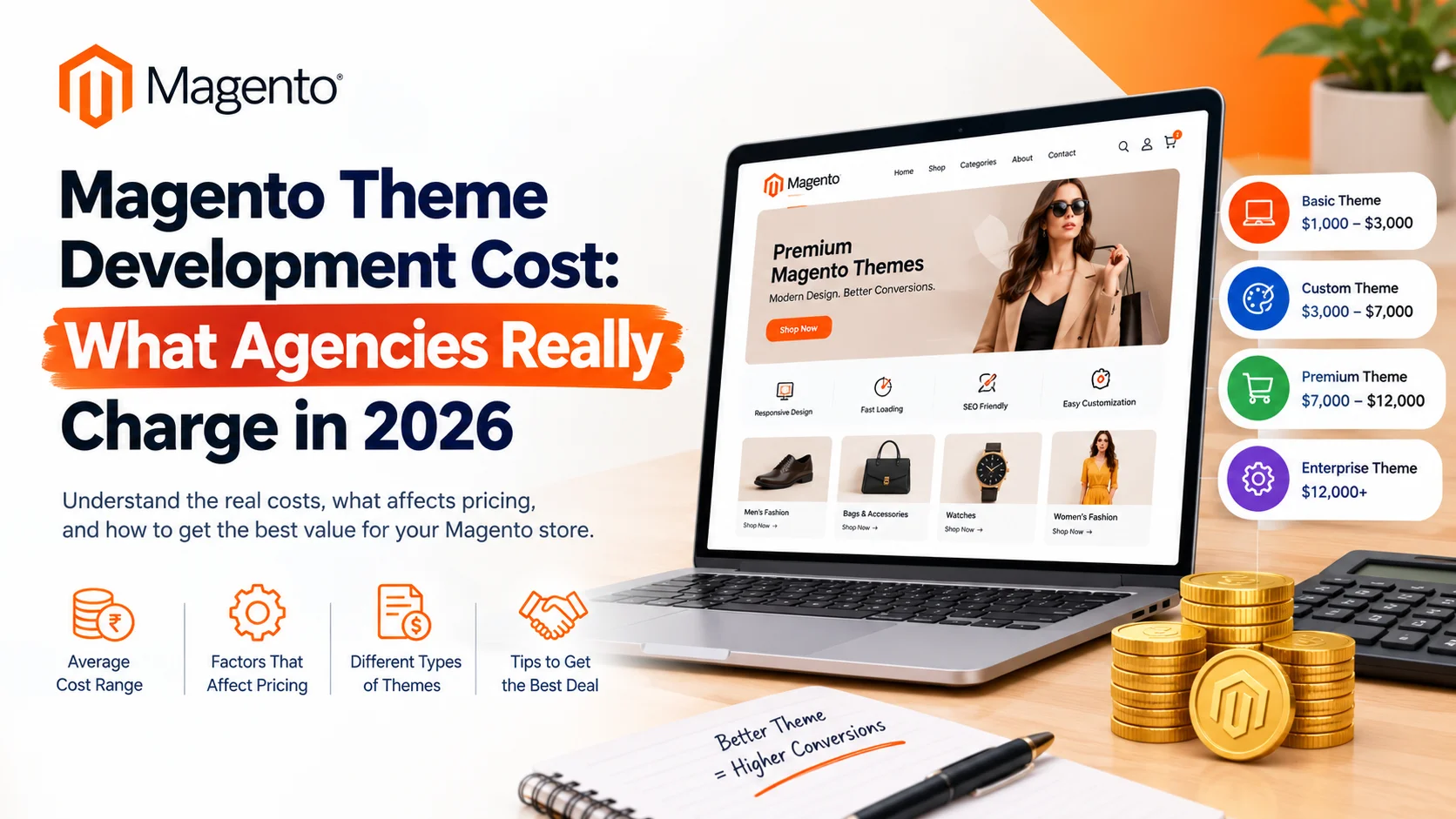
Here is a realistic snapshot. These are ranges, not promises, and the gaps between sources are wide.
You may see freelance marketplace listings offering a custom theme for $500 to $1,500. That can work for a small store with simple needs. For a serious catalog with B2B pricing, multiple store views and heavy traffic, agency-level projects land much higher.
Why Quotes Vary So Much
Three things explain most of the difference.
1. Who is doing the work. A freelance developer abroad may charge $15 to $75 per hour. A specialist agency in the US or Europe often charges noticeably more. Neither is automatically better, but you are paying for different levels of process, testing and accountability.
2. What “theme” includes. Some quotes cover only colors, fonts and layout. Others include UX research, wireframes, responsive design for every device, accessibility, Core Web Vitals tuning and QA across browsers. The cheaper quote often leaves these out.
3. The technology underneath. Building on the default Luma frontend, on Hyvä, or on a headless setup changes the work and the long-term cost. More on that below.
Ready-Made vs Custom Theme: Which Fits Your Budget?
A ready-made Magento theme is the cheapest way to launch. It works for new stores testing a product idea. The catch is that almost every store needs changes. Even with a free or low-cost template, expect around 40 hours of developer time to adjust the homepage, category pages, product pages and checkout to match your brand.
A custom Magento theme costs more upfront, but you get a design built around your customers, your products and your conversion goals. It also avoids the bloated code that many multipurpose themes carry, which can slow your store down.
A simple rule of thumb: if your store depends on brand identity or has complex catalog logic, a custom Magento 2 theme usually pays for itself. If you are still validating the business, start with a ready-made one and upgrade later.
Hyvä vs Luma: How Your Frontend Choice Changes the Price
This is the question store owners ask most in 2026.
Luma is the default Magento frontend. It is familiar and widely supported, but heavily customized Luma themes tend to collect technical debt. Each Magento upgrade then costs more to test and fix.
Hyvä is a lighter, faster frontend built to improve speed and simplify development. A Hyvä theme may cost more at the start if you need to rebuild or adapt extensions, but many merchants find it cheaper to maintain and better for page speed and SEO.
The practical takeaway: do not compare quotes only on the upfront price. Ask what each choice will cost you in upgrades, extension compatibility and performance over the next three years.
Hourly Rate vs Fixed Price: Which Model Is Safer?
Both models are common in Magento theme development.
- Fixed price works best when the scope is clear. You know the total cost, but any new request becomes a change order.
- Hourly or time-and-materials suits projects where requirements evolve. It is flexible, but you need good reporting so hours do not drift.
Whichever you choose, insist on a written scope listing page templates, devices, browsers, revisions and testing. The most expensive projects are usually the ones where “everything” was assumed to be included.
Hidden Costs Behind Magento Theme Development Cost
The sticker price is rarely the full picture. Watch for these:
- Extension compatibility: third-party modules may need fixes to work with a new theme.
- Content and images: professional photography, banners and copy are rarely included.
- Migration and QA: moving from an old theme without breaking SEO takes real testing time.
- Hosting and performance tuning: a beautiful theme on weak hosting still loads slowly.
- Maintenance: security patches and Magento or Adobe Commerce upgrades keep coming after launch.
- Licenses: premium themes and extensions often renew yearly.
As a general planning habit, keep a buffer of 15 to 20 percent above the quote for surprises. It is rarely wasted.
How to Get an Honest Magento Theme Quote
When you talk to a Magento theme development company, these steps help you compare fairly:
- Write a one-page brief with your goals, example sites you like and your current pain points.
- Ask each agency for a line-by-line breakdown, not a single number.
- Request two or three live stores they built on the same frontend you are considering.
- Ask how they handle PSD to Magento theme conversion or Figma handoff, if you already have designs.
- Confirm who owns the code and design files after delivery.
- Ask for page speed results from past projects, such as Lighthouse or PageSpeed scores.
At Team Magento, we see the same pattern again and again: clients who share a clear brief receive more accurate quotes and fewer surprises mid-project.
Can You Lower Your Magento Theme Cost Without Hurting Quality?
Yes, with a few smart choices:
- Start with a clean, lightweight base instead of a feature-heavy multipurpose theme.
- Limit custom templates to the pages that drive revenue: homepage, category, product and checkout.
- Launch in phases. Ship the core experience first, then add advanced features.
- Reuse tested extensions instead of custom-building everything.
- Prepare brand assets, copy and product data before development begins.
Cutting corners on mobile responsiveness or testing is the wrong place to save. A few hundred dollars saved there can cost thousands in lost sales.
Frequently Asked Questions
Q1. How much does a Magento theme cost?
A ready-made theme can cost $0 to $200, while a custom one typically runs from about $1,000 to $10,000 or more, depending on design depth and complexity.
Q2. How much does custom Magento 2 theme development cost?
Many projects fall between $1,000 and $10,000. Bespoke, conversion-focused storefronts with unique features can climb well into five figures.
Q3. Why is Magento theme development more expensive than other platforms?
Magento has a complex architecture and a larger codebase. Theme work often touches layout files, templates, styles and extensions, so it needs experienced developers.
Q4. How long does Magento theme development take?
A customized ready-made theme may take a few weeks. A fully custom build often takes one to three months or more, depending on scope and approvals.
Q5. Is a Hyvä theme worth the extra cost?
For many stores, yes. It can improve speed and simplify long-term maintenance, but check extension compatibility before you commit.
Q6. Should I hire a freelancer or an agency?
Freelancers suit small, well-defined jobs. Agencies are safer for larger projects that need design, development, QA and ongoing support.
Q7. Do I need to pay for ongoing theme maintenance?
Usually yes. Magento and Adobe Commerce updates, security patches and browser changes all require occasional fixes.
Final Thoughts
The right Magento theme development cost is not the lowest quote or the highest one. It is the price that matches your goals, your catalog and your growth plans. Compare scope, not just numbers, ask hard questions about Hyvä vs Luma, and budget for maintenance from day one.
If you would like a second opinion on a quote or a rough estimate for your store, the Team Magento team is happy to take a look.






.webp)