Sign up with Google
 Sign in with Zoho
.webp)

The traditional models of financial advisory and related services will become less relevant since more proactive approaches are gaining momentum. From compliance to risk-reward calculations, leaders will automate many practices to increase scale and embrace strategic foresight. That is why those who revisit their skills, study the emerging tech, and refine their workflows will dominate the markets worldwide. This post will explore the strategies that leaders in finance can utilize to be ready when new advisory models prevail in 2026 and beyond.
How Financial Leaders Must Prepare in 2026 for New Advisory Models
1. Actively Monitor the Impact of Artificial Intelligence
The rapid acceleration of financial technology is evident due to artificial intelligence (AI) and machine learning use cases, which automate routine accounting tasks. Software platforms like BlackLine now handle complex account reconciliations with minimal human intervention. Besides, automation-first financial accounting advisory services simplify freeing up in-house accountants from repetitive and error-prone work.
Robotic process automation (RPA) now streamlines managing high-volume transaction processing. Therefore, leaders must actively study and integrate such tech advancements. Doing so will let them empower financial teams to focus on higher-value activities where AI is still struggling. At the same time, leaders must recalibrate and retrain their teams to focus more on data interpretation.
2. Prioritize Gaining Real-Time Analytics Skills
Modernization of financial advisory for near-instant insight discovery is a necessity. Still, it is hard to start because some firms are slow at finding talent with distinct skills and mindsets. So, both the leaders and their team members must be familiar with tools that offer real-time data analytics and strategic planning as soon as possible.
If an advisory firm’s finance teams stay satisfied with closing the books accurately, rivals with greater improvements in time to insight (TTI) will gain more clients. To avoid those competitive vulnerabilities, consider learning how to make informed and agile decisions based on complex scenario analyses involving Anaplan.
3. Leverage External Expertise and Fractional Leadership
Fractional leadership involves limited-time, situation-driven role assignment. It enables independent scholars, subject matter experts (SMEs), and executives to contribute to a financial institution’s change management effort on a contractual, part-time, or project basis.
Imagine working with chief financial officers (CFOs) when there is a persistent shortage of high-level financial talent. This type of growing demand for C-suite expertise that does not lead to the full overhead is leading many organizations in finance and other domains to leverage CFO Outosuricng support. That way, seasoned leaders help navigate critical growth phases of advisory firms as models undergo transitions.
Another area where relying on external leaders benefits the firms is that of compliance assurance. Rules and disclosure norms can significantly vary in multiple economic and geopolitical regions. That is why financial advisory firms must collaborate with trusted professionals specializing in regional compliance.
Essentially, organizations can now scale their financial capabilities up or down as needed.
4. Achieve Data Unity Through Integrated Systems
Collaboration and technology adoption will take longer if unification is inefficient. Siloed financial data is a significant competitive disadvantage that hinders seamless integration. Consequently, integrated systems providing a unified source of truth are more crucial.
Software providers like Workday and Oracle NetSuite offer comprehensive cloud-based solutions, making data unification and integrated tech tool deployment more systematic. They unify accounting, planning, financial analytics, and reporting into one cohesive system. Ultimately, even after advisory models change, leaders in finance still get a more holistic view of organizational health.
Eliminating data fragmentation and improving accuracy are two key goals of this preparation strategy. They enable collaboration and reduce time spent solving compatibility or standardization problems.
5. Cultivate Strategic Partnerships for Agentic Workflows
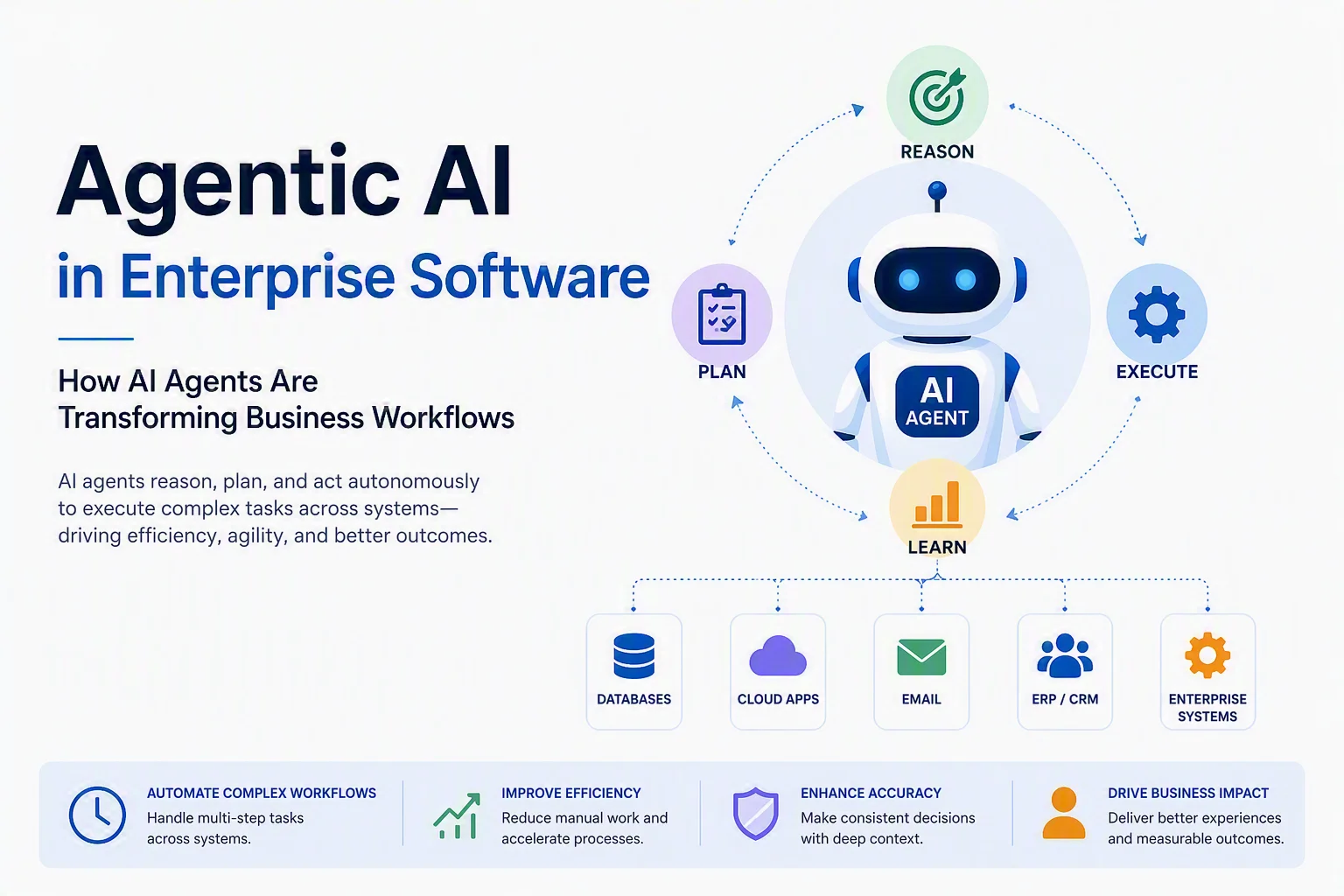
The future of financial advisory models will include more autonomous systems and a human-in-the-loop philosophy. So, leaders must invest in technology platforms that go beyond immediate, broad AI uses by customizing AI agents. If in-house teams lack the necessary skills to get the most out of agentic AI workflows, it is time to form strategic partnerships.
Most finance industry players already depend on global and regional norms for reporting, forecasting, and portfolio diversification. However, helping clients grow their wealth with better returns looks different at each firm. Besides, broad AI-assisted output will undermine authoritativeness. Investors want experienced professionals’ honest work, not fully AI-powered advisory.
AI agents facilitate selective, autonomous activities. Therefore, the steering wheel stays in human hands, assuring investors that they get expert-vetted buy, hold, and sell recommendations.
A hybrid approach to addressing knowledge gaps when it comes to AI agents’ use cases comprises networking with tech teams that are passionate about experimentation. Testing AI agents, optimizing predictive models, and preventing poorly timed market entries or exits are some processes where starting adoption early on under expert oversight is highly rewarding.
Conclusion
New financial advisory models in 2026 will make it non-negotiable to replace current risk-reward analytics methods with better strategies. Although AI will accelerate changes, its adoption does not progress in isolation. Data unification and continuous team upskilling are two essentials of preparing for tomorrow’s advisory workflows.
Given the complex need for compliance and insight extraction, financial leaders must team up with independent CFOs and agentic AI providers to overcome talent shortage issues on a project basis.
However, these measures can alienate clients if human involvement is extremely minimal. Investors, bankers, insurance firms, accountants, and portfolio managers recognize that AI agents must be used responsibly. So, leaders in the finance space must push for selective AI-assisted workflows and foster strategic partnerships with proactive experts when preparing for the future.
-