Sign up with Google
 Sign in with Zoho

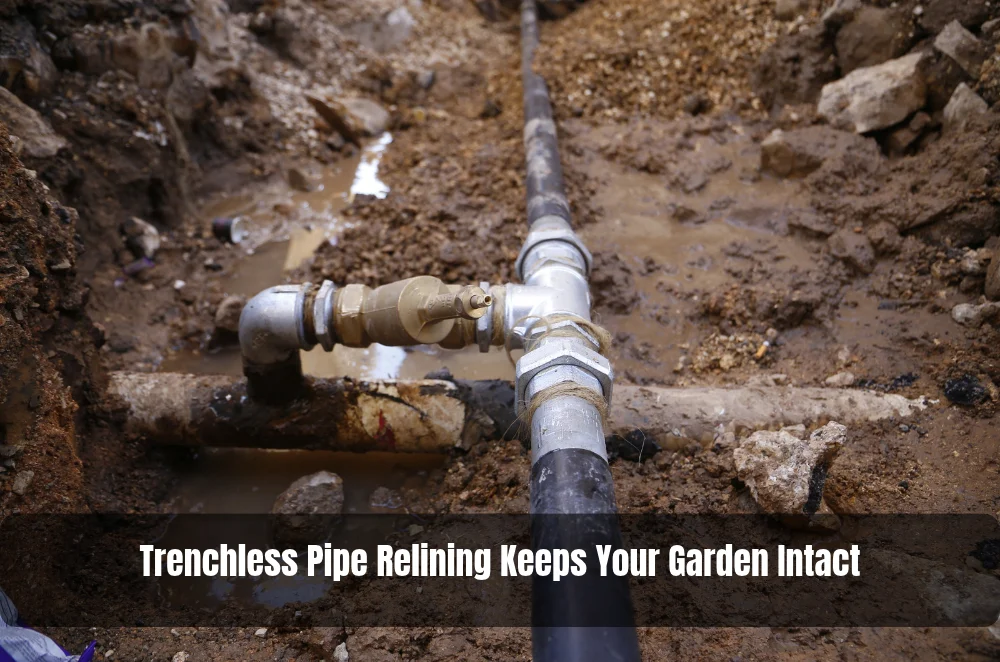
Sydney’s older clay and earthenware sewer lines are finally reaching retirement age. Root invasion, soil movement after long wet periods, and decades of everyday wear can leave pipes cracked or misaligned. Until recently, the go-to fix was to dig a trench, swap out the damaged section, then hope the landscaping recovered.
That still works, but it is hardly the only option. Trenchless pipe relining allows a new, seamless liner to be cured inside the existing run—often in a single day—so lawns, driveways, and patios stay where they are. For many households the saving is not only money; it is also the relief of seeing life return to normal that evening instead of weeks later.
Why Digging Isn’t Automatically Better
Excavating and replacing an old sewer line feels decisive: old out, new in. Yet there are downsides that often tip the balance toward relining instead.
- Excavators can leave a scar across turf, pavers, or even the neighbour’s verge if the line runs close to the fence.
- Hiring machinery and disposing of spoil add costs that rarely show on the first quote.
- Crossing other services—gas, NBN, irrigation—slows the job and introduces extra risk.
- Where pipes track under concrete, a driveway pour or slab cut becomes part of the budget.
- Council approval is normally needed when works extend into the footpath or roadway.
If the problem pipe is shallow, easily reached, or already exposed for other works, open trenching can still make sense. In most inner-city and established suburban blocks, however, obstacles and tight access tilt the decision toward a trenchless cure.
How Trenchless Relining Works
A licensed crew starts by sending a CCTV camera the full length of the pipe to map joints, diameter changes, and the exact location of damage. After the line is pressure-jetted clean, a felt or fibreglass sleeve impregnated with epoxy resin is inverted or winched into place. The liner is then inflated and cured—either with hot water or UV light—to form a hard, joint-free pipe within the original host.
Once cured, the liner:
- Resists future root invasion because there are no joints to exploit.
- Restores structural strength without noticeably reducing flow capacity.
- Adds several decades of service life under normal household loads.
If only a single joint or bend is failing, a shorter “patch” liner can be installed to treat just that section, keeping budgets tight. Either way, talking to a licensed Sydney pipe relining team early clarifies whether a full-length or sectional approach is smarter for your exact layout.
Telltale Signs It’s Time for More Than a Plunger
Most households experience the odd slow drain, yet repeat blockages often hint at damage deeper in the system. Look out for combinations of:
- Toilet water levels rising and falling for no clear reason.
- Gurgling in the basin when the bath empties.
- Patches of lawn that stay greener or damper than the rest of the yard.
- A blockage that reappears in the same stretch weeks after jetting.
Homeowners weighing up the next step might also find value in this broader look at pipe relining versus traditional dig-and-replace for context on costs and disruption.
Choosing the Right Specialist
Relining equipment is only half the story; the installer’s experience and licensing matter just as much. In NSW, plumbers must hold a drainage endorsement before tackling pipe work. A quick search of the NSW Fair Trading plumbing and drainage register confirms whether a contractor is properly accredited.
Beyond the paperwork, you can:
- Ask to see before-and-after CCTV footage—reputable crews provide it as part of hand-over.
- Confirm the liner and resin system has been independently tested to meet AS 3500.
- Clarify warranty terms in writing; a ten-year materials and workmanship promise is common.
- Check how many metres of liner the company installs each month. A busy team has curing times and resin ratios dialled in, reducing the risk of soft spots that could snag debris later.
Open Trench, Full-Length Reline, or Spot Patch? A Quick Comparison
When deciding which method suits your property, consider how each option stacks up on the practical issues that matter day-to-day.
- Extent of digging required
- Open trench replacement usually involves a trench the length of the pipe.
- Full-length relining needs only two small entry pits.
- Spot patch relining relies on a single access point.
- Time on site for a typical suburban home
- Dig-and-replace can take two to four days, especially if concrete must be reinstated.
- Full-length relining often wraps up in one day.
- A patch liner is usually complete within a half-day window.
- Impact on surfaces above the pipe
- Excavation means turf, pathways, or even driveways must be reinstated.
- Relining leaves minimal surface disturbance, limited to the entry pits.
- Patch relining disturbs even less ground than a full-length liner.
- Expected service life extension
- New PVC in an open trench should last fifty years or more.
- A properly cured liner is comparable, with an expected four- to five-decade lifespan.
- A single patch extends life at that point for around fifteen to twenty years.
- Resistance to future root invasion
- All methods resist roots when done correctly, but relining removes joints entirely, eliminating the common entry point.
These points explain why trenchless methods have become the default recommendation in many Sydney backyards: similar durability with far less upheaval.
Final Word
When the next blockage has you reaching for the plunger yet again, pause before committing to heavy machinery. Advances in trenchless lining allow many ageing sewers to be renewed from the inside out, protecting gardens, driveways, and household routines. Pair the technique with a licensed, well-documented installer and you gain a repair that quietly does its job for decades—no trenches, no drama, and no afternoon spent apologising to the neighbours for the noise.