Sign up with Google
 Sign in with Zoho
.webp)
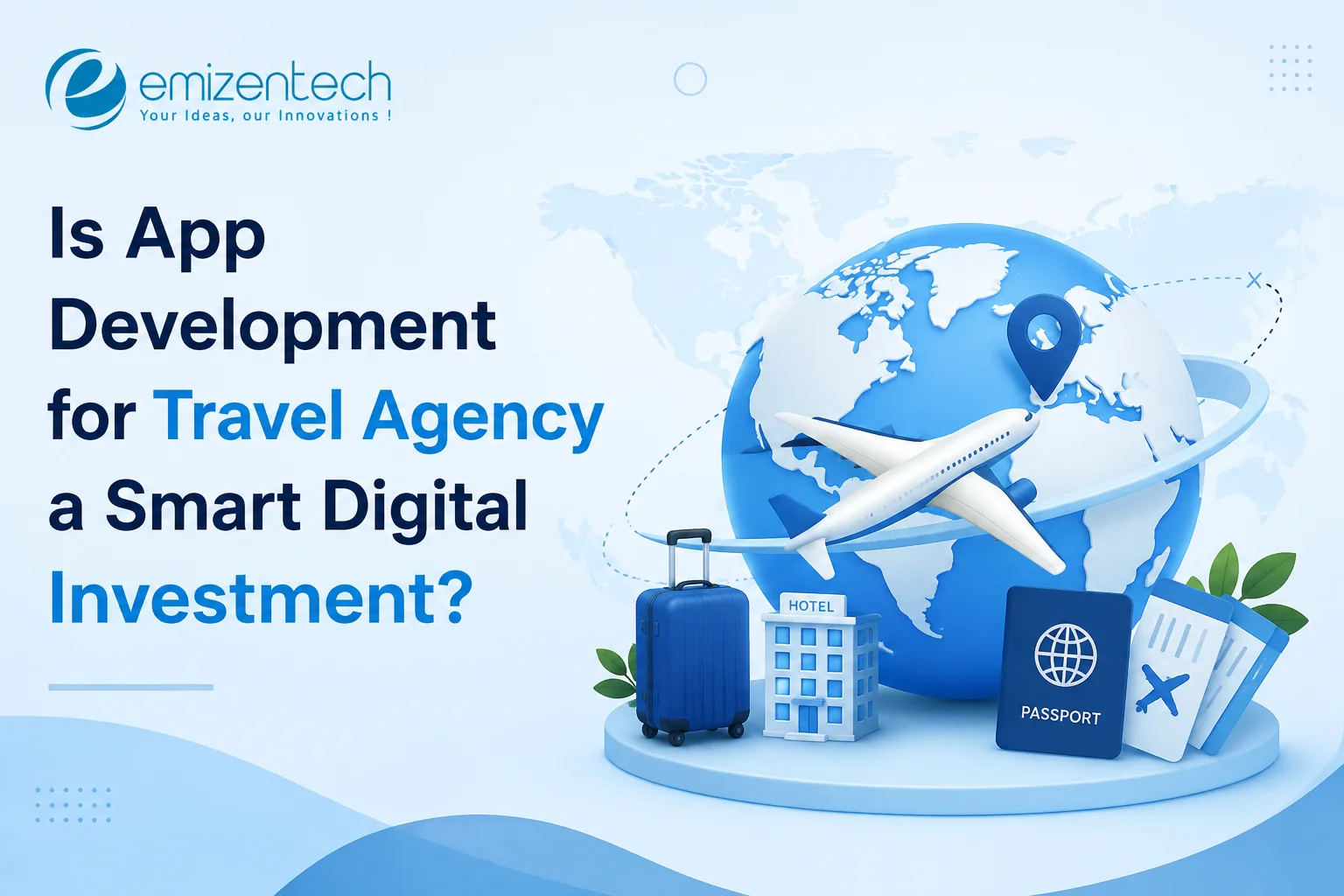
The travel industry has changed more in the last decade than in the previous fifty years combined. Travelers no longer walk into an agency office, flip through brochures, and wait for a callback. They open their phones, compare prices, read reviews, book flights, reserve hotels, and plan entire itineraries — all before their morning coffee gets cold. This shift has left travel agencies with a critical question: should we invest in travel app development, or is it just another expensive trend?
The short answer is yes, it is a smart digital investment. But the real value lies in understanding why and how a well-built app can transform a traditional travel agency into a modern, scalable, and highly competitive business. This blog breaks down the practical reasons behind this shift, the benefits agencies can expect, and what to consider before taking the plunge.
The Changing Face of the Travel Industry
Not long ago, travel agencies thrived on personal relationships, local expertise, and trust built over years of face-to-face interaction. That foundation still matters, but the way customers access it has changed completely. Today, a traveler researching a vacation is far more likely to search on a smartphone than to call an agent directly. They expect instant answers, transparent pricing, and the ability to book on their own schedule — at midnight, during a lunch break, or while sitting in traffic.
This behavioral shift means agencies that rely solely on phone calls, walk-ins, or static websites are quietly losing relevance. A mobile app bridges that gap by putting the agency's services directly into the customer's pocket, available anytime, anywhere.
Why Travel Agencies Are Turning to Mobile Apps
1. Customers Expect Convenience
Modern travelers want everything in one place — flight search, hotel booking, itinerary planning, local recommendations, and customer support. An app consolidates these services into a single, seamless experience, removing the friction of switching between multiple websites or apps.
2. Personalization Drives Loyalty
A well-designed travel app can track user preferences, past bookings, and browsing behavior to offer personalized recommendations. When a returning customer sees suggestions tailored to their travel style, they feel understood — and that emotional connection translates into repeat business.
3. Real-Time Updates Build Trust
Flight delays, gate changes, weather disruptions — travel is unpredictable. An app that pushes real-time notifications keeps travelers informed and reduces anxiety, positioning the agency as a reliable partner rather than just a booking platform.
4. Direct Access to Revenue Channels
Every booking made through the app is a booking that doesn't rely on a third-party aggregator taking a cut. Over time, this direct channel can significantly improve profit margins compared to depending entirely on OTAs (Online Travel Agencies) or affiliate platforms.
5. Competitive Necessity
Major players like Expedia, Booking.com, and MakeMyTrip have already conditioned users to expect app-based convenience. Smaller and mid-sized agencies that don't offer a comparable digital experience risk being seen as outdated, regardless of how good their actual travel packages are.
Core Benefits of Investing in Travel App Development
Enhanced Customer Experience
An app allows for smooth navigation, quick search filters, secure payment gateways, and instant confirmations. This reduces booking friction and increases the likelihood of conversion, especially among younger, mobile-first travelers.
Stronger Brand Visibility
Every time a user opens the app icon on their home screen, it's a subtle brand reminder. This kind of repeated visibility is difficult to achieve through traditional advertising alone.
Data-Driven Decision Making
Apps generate valuable data — what destinations are trending, which packages convert best, where users drop off during booking. Agencies can use these insights to refine marketing strategies, adjust pricing, and improve overall service offerings.
Scalability
As the agency grows, the app can scale with it. New features like AI-based itinerary planning, multilingual support, loyalty programs, or integration with local transport and dining services can be added incrementally without overhauling the entire system.
Improved Customer Support
In-app chat support, chatbots, and FAQ sections reduce the burden on human agents while still providing quick answers to common queries, improving customer satisfaction without increasing staffing costs.
Key Features to Consider in a Travel App
When planning travel app development, agencies should think beyond just booking functionality. Some features that significantly enhance user experience include:
- Smart Search and Filters – Allowing users to filter by budget, dates, destination type, and travel preferences.
- Secure Payment Integration – Supporting multiple payment methods with strong encryption for user trust.
- Itinerary Management – Letting users view, edit, and organize their entire trip in one place.
- Push Notifications – For deals, reminders, and real-time travel alerts.
- Reviews and Ratings – Building credibility through user-generated feedback.
- Offline Access – Especially useful for itineraries, tickets, and maps when traveling in areas with poor connectivity.
- AI-Powered Recommendations – Suggesting destinations or packages based on user history and behavior.
- Multi-language and Multi-currency Support – Essential for agencies targeting international travelers.
Addressing the Cost Concern
One of the biggest hesitations agencies have is cost. App development does require an upfront investment, and the exact figure depends on complexity, platform choice (iOS, Android, or both), and the features included. However, this should be viewed as a long-term asset rather than a one-time expense.
Compare it to the cost of losing potential customers to competitors who already offer app-based convenience, or the recurring commissions paid to third-party booking platforms. Over a few years, a well-utilized app often pays for itself through increased direct bookings, better customer retention, and reduced dependency on external platforms.
Agencies can also start with a Minimum Viable Product (MVP) — a simplified version of the app with core features — and expand it gradually based on user feedback and business growth. This approach minimizes initial risk while still establishing a digital presence.
Common Mistakes to Avoid
- Overloading the app with unnecessary features – This increases development cost and can confuse users. Start focused, then expand.
- Ignoring user experience (UX) design – A cluttered or confusing interface drives users away, no matter how good the backend functionality is.
- Skipping thorough testing – Bugs and crashes during booking or payment can seriously damage trust.
- Not planning for scalability – Building an app that can't accommodate future features or growing user traffic leads to costly rebuilds later.
- Underestimating post-launch support – An app needs regular updates, security patches, and feature improvements to stay relevant.
Is It the Right Time to Invest?
Given how deeply mobile technology has embedded itself into travel planning, the question isn't really whether to invest in an app, but when and how. Agencies that delay risk falling further behind competitors who are already capturing mobile-first customers. On the other hand, those that invest thoughtfully — with a clear understanding of their target audience, essential features, and long-term goals — position themselves for sustainable growth in an increasingly digital travel landscape.
Conclusion
Travel app development has moved from being a nice-to-have to a core business necessity. Agencies that embrace it position themselves to capture direct bookings, build lasting customer relationships, and compete confidently in a mobile-first market. The key is to start smart — with a clear MVP and a roadmap for growth. Emizentech specializes in helping travel businesses build exactly that kind of future-ready app, turning a smart idea into a working, revenue-generating product.
FAQs
1. Is app development really necessary for a small travel agency, or is it only useful for large companies?
App development benefits agencies of all sizes. Small and mid-sized agencies can actually gain a competitive edge by offering a smooth digital experience that larger, more bureaucratic companies sometimes lack. Starting with an MVP makes this accessible even on a smaller budget.
2. How long does it typically take to develop a travel app?
Depending on complexity, a basic travel app with core booking features can take around 3–5 months, while a more feature-rich app with AI recommendations, multi-currency support, and advanced integrations may take 6–9 months or longer.
3. What is the difference between a native app and a hybrid app for travel businesses?
Native apps are built specifically for one platform (iOS or Android) and generally offer better performance, while hybrid apps work across both platforms with a single codebase, often reducing development time and cost. The right choice depends on budget, target audience, and desired performance level.
4. Will a travel app really increase direct bookings?
Yes, in most cases. Apps reduce reliance on third-party platforms by giving customers a direct, convenient way to book through the agency itself, which also helps improve profit margins over time.