Sign up with Google
 Sign in with Zoho

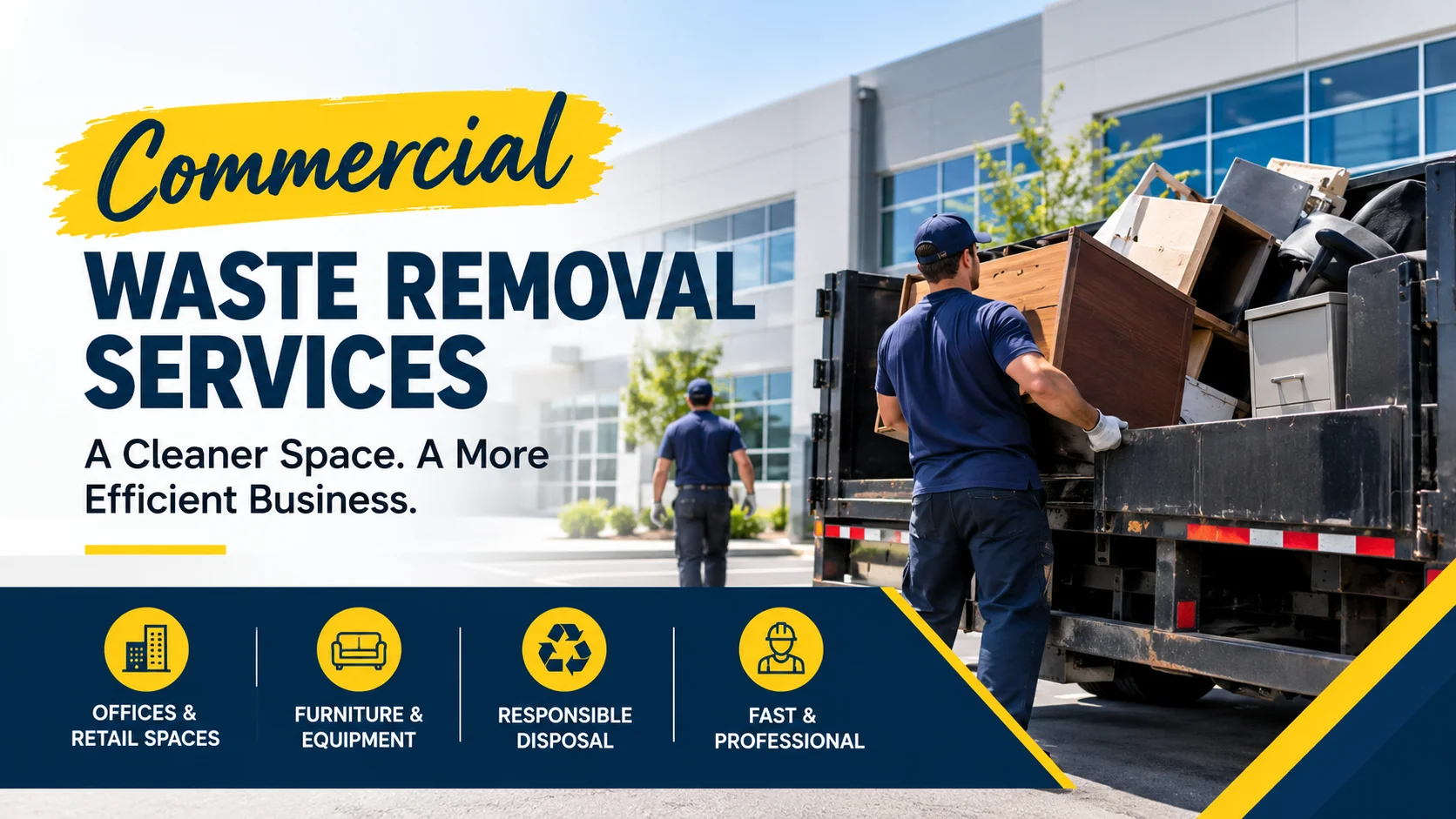
Managing waste is an everyday responsibility for businesses, but it can quickly become difficult when unwanted furniture, equipment, packaging, renovation debris, and general clutter begin taking over valuable space. A reliable commercial waste removal service can help businesses keep their properties organized while reducing the time employees spend dealing with unwanted materials.
Effective waste management is not simply about making waste disappear. The U.S. Environmental Protection Agency recommends considering waste prevention, reuse, recycling, and composting as part of a broader waste-management strategy.
What Are Commercial Waste Removal Services?
Commercial waste removal services are designed to help businesses collect, haul, and properly manage unwanted materials from commercial properties. Unlike routine trash collection, these services can be useful when a business has a large volume of items that need to be removed at once.
Depending on the property and project, commercial waste may include:
- Old office furniture
- Broken desks and shelving
- Outdated equipment
- Retail fixtures and displays
- Cardboard and packaging
- Unwanted inventory
- General business junk
- Materials left after renovations
- Non-hazardous construction debris
- Items accumulated during a relocation or closure
The exact materials accepted can vary by provider and local disposal requirements, so businesses should confirm what can be collected before scheduling service.
Why Businesses Need a Reliable Waste Removal Plan
Waste can become a bigger operational problem than many business owners expect. When unwanted items remain on-site, they can occupy storage areas, interfere with daily operations, and make workspaces harder to manage.
A planned removal service gives businesses a practical way to deal with accumulated materials without requiring employees to spend hours moving bulky items.
The EPA notes that tracking the type and amount of waste a business generates can help organizations identify opportunities to reduce waste and better understand their disposal needs.
This means commercial waste removal can be part of a larger property-management strategy rather than something businesses arrange only when a pile of junk becomes overwhelming.
Common Situations That Call for Commercial Waste Removal
Businesses can generate large amounts of unwanted material during periods of change. Some common situations include:
Office Relocations: Moving to a new office often reveals furniture, equipment, and supplies that are no longer needed.
Business Closures: Closing a location may require the removal of fixtures, furnishings, inventory, and miscellaneous materials.
Renovations: Remodeling projects can leave behind old fixtures, furniture, and non-hazardous debris that needs to be cleared before the space can be used.
Retail Updates: Stores frequently replace displays, shelving, furniture, and outdated fixtures during redesigns or seasonal changes.
Property Cleanouts: Commercial properties may require a complete cleanout after a tenant leaves or before a new business moves in.
Warehouse Organization: Old pallets, equipment, shelving, packaging, and unused materials can consume valuable storage space.
Recognizing these situations early allows business owners and property managers to plan removal before unwanted materials interfere with operations.
How Professional Waste Removal Can Save Your Team Time
One of the biggest challenges of commercial cleanup is labor. Employees may not have the equipment, transportation, or time necessary to move bulky items.
Trying to handle everything internally can also take workers away from their normal responsibilities.
Professional hauling services can handle the physical work involved in collecting and transporting eligible materials. This allows employees to focus on customers, operations, projects, and other responsibilities instead of spending an entire workday moving unwanted items.
For a business owner, the real benefit is not simply having fewer items on the property. It is having a cleaner and more manageable workspace without making waste removal another internal project.
What to Consider Before Scheduling a Service
Before hiring a commercial waste removal provider, take a few minutes to evaluate your project.
1. Identify What Needs to Go
Walk through the property and create a basic list of unwanted materials. Separate items that are staying from those that need removal.
2. Estimate the Volume
The amount of waste can influence the equipment, labor, and number of trips required. Knowing whether you have a few bulky items or a full property cleanout can make planning easier.
3. Check Material Restrictions
Not every waste removal provider accepts every type of material. Ask about prohibited or regulated items before booking.
4. Consider Access
Tell the provider about stairs, elevators, narrow hallways, loading areas, parking restrictions, or other access challenges. This information can help the crew prepare appropriately.
5. Ask About Disposal Practices
If responsible waste management matters to your business, ask how collected materials are handled. EPA guidance emphasizes waste prevention, reuse, recycling, and composting before disposal where practical.
Commercial Waste Removal and Sustainability
Removing waste efficiently does not mean every unwanted item should automatically go to a landfill.
Businesses can first determine whether materials can be reduced, reused, donated, recycled, or otherwise diverted from disposal. The EPA's waste-management hierarchy places source reduction and reuse above recycling, while disposal is lower in the hierarchy.
For example, usable office furniture may have another purpose, while cardboard, metal, or certain other materials may have recycling opportunities depending on local programs and markets.
A waste assessment can also reveal patterns. If a business repeatedly throws away large quantities of the same material, changing purchasing, storage, or operational practices could reduce future waste.
How to Choose Commercial Waste Removal Services
The right provider should fit the actual needs of your business rather than simply offering the lowest advertised price.
Look for a company that provides:
- Clear communication
- Straightforward service details
- Flexible scheduling
- Appropriate equipment and labor
- Experience with commercial properties
- Clear information about accepted materials
- Responsible handling practices
- Professional and dependable service
It is also worth asking how the provider handles materials after collection. Understanding the process can help you make a more informed decision about your property's waste-management needs.
Why Scheduling Matters
Commercial cleanup becomes much easier when removal is planned around business operations.
For example, a retail store may prefer service outside peak customer hours, while an office may coordinate removal with a relocation or renovation schedule. Property managers may need a cleanout completed before a new tenant arrives.
Planning ahead can help prevent unwanted materials from sitting around for weeks and gives everyone involved a clearer timeline.
Make Commercial Cleanup Easier
Your employees have better things to do than spend hours lifting, sorting, and hauling unwanted commercial materials. When junk and waste begin taking over valuable space, a professional removal service can provide a practical way to restore order.
Fly-By Junk Haulers provides commercial hauling solutions for businesses that need unwanted items and materials cleared from their properties. Whether you're preparing for a relocation, cleaning out a commercial space, or simply dealing with accumulated business junk, professional hauling can make the process more manageable.
Final Thoughts
Commercial waste management does not have to become a major disruption to your business. By identifying unwanted materials, planning removal around your operations, understanding disposal options, and choosing a service that matches your needs, you can keep your commercial property more organized and functional.
A thoughtful approach also goes beyond simply removing waste. Reducing unnecessary materials, reusing usable items, and recycling where practical can help businesses build a more efficient waste-management process over time.