Sign up with Google
 Sign in with Zoho

The printing and packaging industry is steadily moving toward solutions that balance print quality, production efficiency, and environmental responsibility. As businesses become more conscious of their impact on the environment, the demand for alternative ink technologies is increasing. In this changing landscape, water based gravure ink in India is gaining attention as an option for printing applications where reduced dependence on organic solvents is an important consideration.
Gravure printing is widely recognized for its ability to produce high-quality images, sharp details, consistent colors, and uniform results at high production speeds. The development of water-based ink technology brings new possibilities to this established printing process, particularly for packaging and other applications where eco-friendly printing practices are becoming increasingly relevant.
What Is Water-Based Gravure Ink?
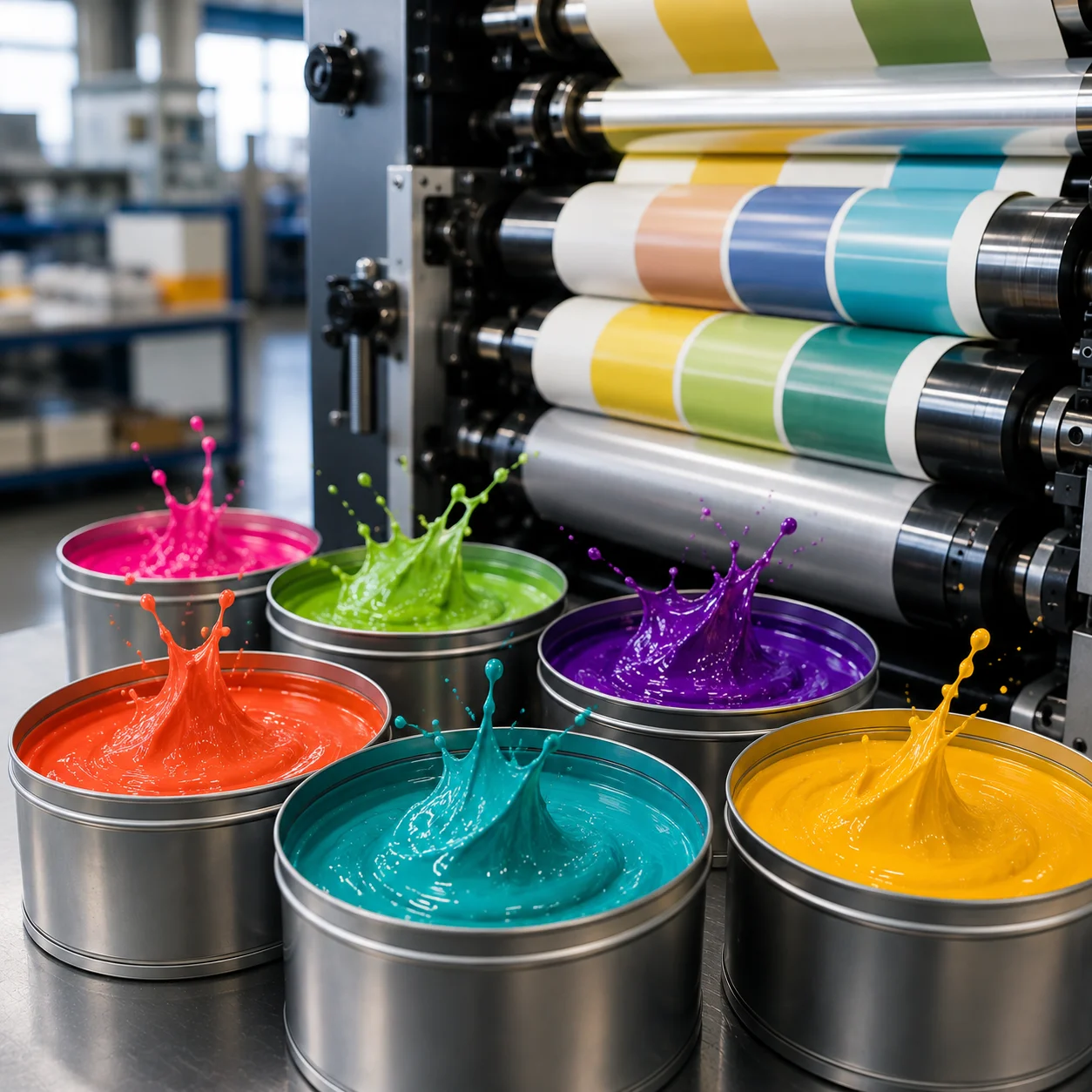
Water-based gravure ink is an ink system designed for gravure printing in which water serves as the primary carrier. Unlike conventional solvent-based systems that rely more heavily on organic solvents, water-based formulations are developed to reduce the use of such solvents while maintaining the properties required for effective printing.
Gravure printing uses engraved cylinders containing microscopic cells that hold and transfer ink to the substrate. For successful printing, the ink needs to have the appropriate viscosity, flow, surface tension, drying characteristics, adhesion, and color strength.
Modern formulation technologies allow water-based gravure inks to be developed for specific substrates and printing conditions. Their performance can vary depending on the material being printed, press speed, cylinder engraving, drying system, and other operating parameters.
Why Are Eco-Friendly Printing Solutions Important?
Environmental considerations have become an important part of decision-making across the printing industry. Printers and packaging manufacturers are increasingly evaluating processes that can help reduce emissions and improve resource efficiency.
Traditional solvent-based printing can involve the evaporation of volatile organic compounds during the printing and drying process. Reducing dependence on organic solvents can therefore be an important step for businesses looking to improve their environmental practices.
Water-based ink technology can support this transition when the appropriate formulation and production setup are used. This is one of the reasons water based gravure ink in India is becoming increasingly relevant to modern printers and packaging converters.
However, eco-friendly printing should not focus only on the ink itself. The entire printing process—including substrate selection, drying efficiency, press operation, waste management, and energy consumption—needs to be considered for meaningful environmental improvements.
Key Benefits of Water-Based Gravure Ink
1. Reduced Dependence on Organic Solvents
One of the main advantages of water-based ink systems is their reduced reliance on organic solvents. This can help printing facilities work toward lower solvent emissions and support cleaner production practices.
2. High-Quality Gravure Printing
Gravure printing is known for detailed image reproduction and consistent ink transfer. Properly formulated water-based inks can support strong colors, clean graphics, and uniform print results when the press and drying conditions are correctly optimized.
3. Suitable for Packaging Applications
Packaging is one of the major areas where gravure printing is used. Water-based formulations can be developed for suitable paper, film, and other substrates depending on the requirements of the final product.
Flexible packaging, labels, paper-based packaging, and selected specialty applications may benefit from water-based gravure technology when appropriate ink and substrate combinations are selected.
4. Supports Sustainability Goals
Companies are increasingly setting sustainability targets throughout their manufacturing operations. Water-based ink technology can contribute to these objectives by reducing the use of certain organic solvents in suitable printing applications.
It is important, however, to evaluate sustainability alongside practical requirements such as adhesion, drying, rub resistance, print consistency, and production speed.
Applications in the Printing Industry
Water-based gravure inks have potential applications across different areas of commercial and packaging printing. Flexible packaging is a particularly important segment because gravure printing is widely used for producing high-volume packaging graphics.
Other applications can include paper products, labels, decorative printing, and specific packaging materials where the ink formulation is compatible with the substrate and printing process.
The suitability of water based gravure ink in India depends on several factors. These include substrate properties, printing speed, cylinder specifications, drying capacity, required color strength, and the performance characteristics expected from the finished print.
Factors to Consider When Choosing Water-Based Gravure Ink
Choosing a water-based gravure ink requires more than simply selecting an environmentally oriented ink system. Printers should evaluate the complete application before making a decision.
Substrate compatibility: The ink should provide suitable adhesion to the material being printed.
Viscosity control: Maintaining the correct viscosity is essential for consistent ink transfer through engraved cylinder cells.
Drying performance: Water requires effective evaporation, so adequate airflow, temperature, and drying capacity are important.
Color consistency: Consistent color strength and shade reproduction are essential, particularly for long production runs.
Print durability: Depending on the application, resistance to rubbing, handling, moisture, and subsequent processing may be required.
Press compatibility: Cylinder engraving, doctor blade settings, press speed, and drying conditions can all influence final print performance.
Role of Spectra Inks & Coatings Pvt Ltd.
Ink manufacturers have an important role to play in the transition toward more responsible printing technologies. Developing effective water-based formulations requires knowledge of pigments, resins, additives, viscosity, adhesion, drying behavior, and substrate interaction.
Spectra Inks & Coatings Pvt Ltd. is involved in printing ink solutions and recognizes the importance of developing products around the technical requirements of modern printing applications. For printers considering water-based systems, selecting an appropriate formulation and optimizing press conditions are essential steps toward achieving consistent results.
Technical understanding is particularly important because ink performance is influenced by the complete printing system rather than the ink alone. Working with an experienced ink manufacturer can help printers assess application requirements and identify suitable solutions.
Future of Water-Based Gravure Printing in India
The Indian packaging and printing industry is experiencing continuous technological development. As environmental awareness increases, manufacturers and converters are expected to explore printing systems that can support both performance and sustainability objectives.
Advances in resin chemistry, pigments, additives, and ink formulation are helping improve the performance of water-based systems. At the same time, developments in printing presses and drying technology can make these inks more practical for demanding production environments.
The future growth of water based gravure ink in India will depend on its ability to meet real-world requirements for print quality, productivity, adhesion, drying, durability, and substrate compatibility while supporting efforts to reduce solvent usage.
Conclusion
Water-based gravure ink is becoming an important consideration for companies exploring more environmentally responsible printing solutions. By reducing reliance on organic solvents while working within the established gravure printing process, these ink systems can offer an interesting balance between sustainability and print performance.
Successful adoption depends on selecting the right formulation, substrate, press conditions, and drying setup. As printing technology continues to evolve, water-based gravure inks are likely to remain an important area of development for India's packaging and printing industry.