Sign up with Google
 Sign in with Zoho
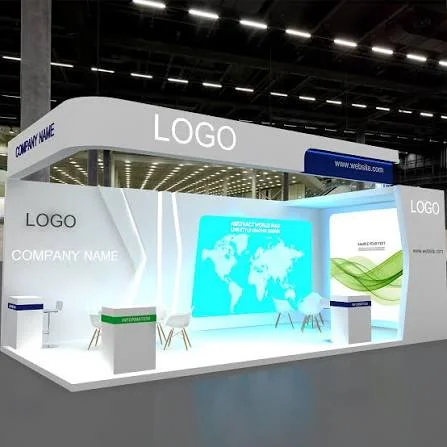
If you're stepping up from a smaller footprint into a 10x30 trade show booth, you've probably already noticed the pricing conversation gets a lot murkier. Quotes swing from $8,000 to $30,000+ for what looks like the same size space, and nobody seems to explain why. If you're the one signing off on the budget, that gap is more than a little unsettling.
So let's walk through it the way an exhibitor actually needs to what drives the price, what's typically included, and what a realistic number looks like heading into 2026.
Why a 10x30 Costs So Much More Than It Looks Like It Should
A 10x30 footprint is three times the space of a 10x10, but the cost isn't simply three times higher it's usually more, and here's why. At this size, you're not just renting more square footage. You're usually adding:
· Multiple functional zones (demo area, meeting space, product display)
· More structural complexity (larger walls, possibly a second level)
· More graphics real estate to design and print
· More logistics bigger crates, more drayage, sometimes union labor requirements
So, when you're comparing quotes for a 10x30 booth, the question isn't "why is this more expensive than a 10x10" it's "what exactly am I getting for this price."
2026 Price Ranges for a 10x30 Trade Show Booth Rental
Based on current market rates across U.S. booth rental providers, here's roughly where a 10x30 trade show booth rental lands:
· Basic/Semi-Custom Rental: $8,000–$14,000 Modular wall systems, standard graphics, simple lighting, and a small counter or reception area. A practical option if you're testing this size for the first time.
· Mid-Range Custom Rental: $15,000–$22,000 Multiple zones (demo + meeting + storage), upgraded graphics, structural elements like curved walls or hanging signage, furniture package included.
· Premium Custom Build: $23,000–$35,000+ Fully custom 10x30 trade show display with double-deck options, integrated AV/technology, private meeting rooms, branded flooring, and high-end finishes throughout.
These figures cover the booth structure itself. As with any size booth, the extras are where budgets tend to blow past expectations.
What's Usually Included and What Almost Never Is
Typically Included
· The booth structure (walls, framework, backdrop)
· Standard graphic printing
· Base-level setup and teardown labor
· Delivery to the show (with some vendors)
Almost Always Separate
· Furniture - seating, tables, product displays ($500–$2,500+ at this size)
· Flooring - carpet or padded flooring for a space this large ($800–$2,000)
· Electrical and internet - booked through the venue, often $500–$1,200
· Drayage - material handling fees scale with weight, and a 10x30 setup ships significantly more than a smaller booth ($1,500–$4,000+)
· Union labor - many convention centers require it for anything beyond simple setup
· Storage - for crates during the show
· AV equipment and technicians - if you're running live demos or presentations
If a quote for a 10x30 trade show display looks unusually low compared to others, this list is almost always where the difference hides.
What Actually Moves the Price
1. Number of Functional Zones
A booth that's just an open display space costs less than one split into a demo area, a private meeting room, and a lounge. Every added zone means more design, more materials, and more labor.
2. Double-Deck Structures
Adding a second level dramatically increases both rental cost and the engineering/permitting involved. It's a strong option if you need extra space for meetings or storage, but it's rarely a small add-on cost.
3. Technology Integration
Video walls, touchscreens, and live demo setups are increasingly standard in premium 10x30 trade show booth builds but they come with both rental and on-site support costs.
4. Graphics Scope
At 30 feet of frontage, graphics become a much bigger investment than at 10x10 or 10x20. Backlit and high-resolution large-format printing costs more but creates significantly more visual impact from a distance.
5. Reusability Across Shows
If you're exhibiting at multiple shows a year, ask about multi-show rental packages. Spreading design and fabrication costs across several events brings your effective per-show cost down considerably.
Questions Exhibitors Should Be Asking Before Signing
· Is drayage estimated based on actual booth weight, or is this a placeholder number?
· What's the rush fee if my show date is inside 4 weeks?
· Does this quote include a 3D rendering before production starts?
· What happens if a structural piece is damaged in transit?
· Is union labor required at this specific venue, and is it included in this quote?
Getting clear answers here avoids the most common source of "surprise" invoices after the show.
A Practical Way to Budget
Rather than starting with "how much should a booth cost," start with these three questions:
1. How many functional zones do I actually need? Not every 10x30 needs three separate areas sometimes one well-designed open space performs better.
2. How many shows will this design get used for? A one-off show favors a leaner build. A multi-show calendar justifies investing more upfront.
3. How far out am I booking? Anything inside 4–6 weeks will cost more no matter how simple the design is.
A reasonable guideline many exhibitors use: allocate roughly 12–18% of total show expenses toward the booth itself when working with a footprint this large, since the display becomes a bigger driver of overall event ROI at this scale.
Bottom Line
There's no single number that defines what a 10x30 trade show booth should cost it depends entirely on how much function, technology, and custom design you're building into that space. A modular semi-custom setup can run under $10,000, while a premium, tech-integrated build can climb well past $30,000.
The best move isn't chasing the cheapest quote it's getting a fully itemized breakdown, understanding what's excluded, and matching your investment to how often and how ambitiously you plan to use the booth. Do that, and the number you land on will actually make sense for your show strategy.


.webp)