Sign up with Google
 Sign in with Zoho


Engineering education in Madurai operates within a diverse academic environment. Colleges across the city offer different branches, programme structures, facilities, and academic approaches, while the wider education system continues to respond to developments in technology, industry, research, and professional requirements. Autonomous status gives eligible colleges greater academic flexibility to respond to these developments while remaining within recognised regulatory standards.
The value of this arrangement depends on how that freedom is used. Curriculum design, evaluation methods, academic planning, specialist input, and departmental development can all influence the quality of education delivered on campus.
What Really Changes When an Engineering College Gains Academic Independence?
An autonomous college receives authority over selected academic matters while continuing to follow applicable regulations and quality requirements.
This additional flexibility may cover areas such as:
- Curriculum preparation and revision
- Introduction of electives and specialised subjects
- Internal assessment methods
- Examination planning
- Academic scheduling
- Department-level programme development
As a result, academic decisions can involve the people who understand a particular programme and its changing requirements most closely.
How Can Greater Academic Freedom Keep an Engineering Curriculum Relevant?
Engineering education must keep pace with developments across computing, electronics, manufacturing, communication, energy, construction, and other disciplines. Subjects that were once specialised can become mainstream, while new areas can emerge quickly.
This framework gives colleges greater scope to review course content, introduce relevant subjects, modify laboratory components, create electives, and encourage interdisciplinary study.
Such flexibility is useful when supported by sound academic judgement. Core engineering principles should remain strong, while newer subjects should add genuine academic value rather than simply follow short-lived trends.
Who Helps Shape the Subjects Taught in an Engineering College?
Academic committees and Boards of Studies can contribute significantly to curriculum development. These groups may include faculty members, university representatives, industry professionals, subject specialists, and other external experts.
Their involvement brings different perspectives into the discussion. Faculty members understand academic progression, subject specialists contribute disciplinary knowledge, and industry representatives can offer insight into professional requirements.
Regular review can help departments identify subjects that need revision, areas requiring greater depth, and emerging topics that deserve attention.
Bringing Industry Perspective Into Engineering Education
Engineering education has a natural connection with professional practice. Industry interaction can help academic departments understand changing technologies, workplace expectations, and emerging areas of employment.
This academic framework can provide scope for incorporating outside expertise through:
- Value-added programmes
- Professional workshops
- Guest lectures
- Industry-supported activities
- Curriculum discussions
- Technical certification opportunities
The purpose is not to turn a degree into short-term job training. Strong fundamentals remain the base. Industry-oriented exposure works best when it adds context to academic study.
How Does This Academic Model Appear in a Madurai Engineering College?
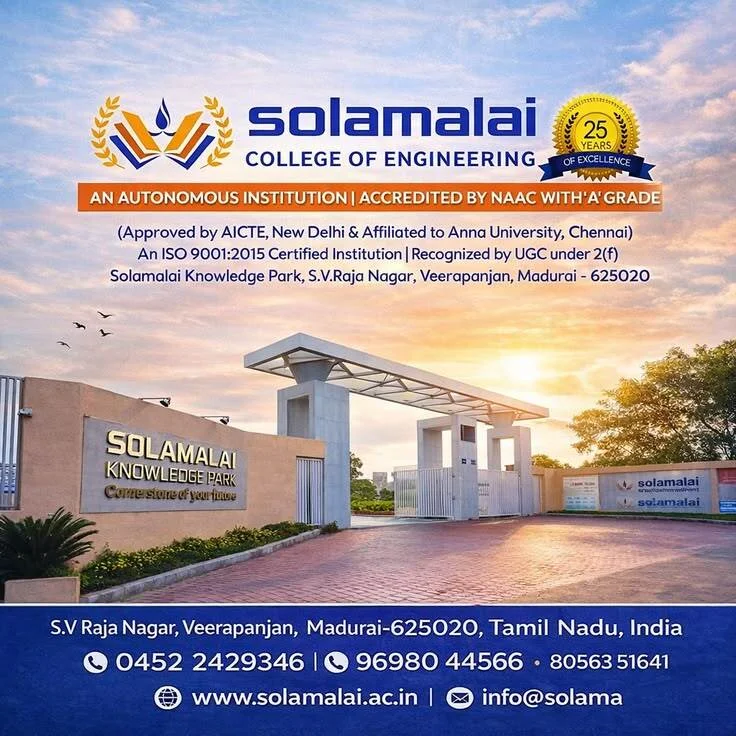
The role of this framework can be understood through colleges that have adopted it as part of their academic development. Solamalai College of Engineering is one such example, with its academic structure providing greater scope for curriculum planning, programme development, technical activities, and related initiatives.
Its experience reflects a wider principle: having greater academic freedom creates an opportunity, but institutional practices determine how effectively that opportunity is used.
Why Academic Independence Alone Cannot Define Educational Quality
A college should not be judged solely by its autonomous status. A meaningful evaluation needs to consider several connected areas.
This broader view gives a more reliable understanding of academic quality than a status label alone.
Why Strong Academic Governance Still Matters
Greater academic freedom also brings greater responsibility. Curriculum revisions require careful review. Examination systems need safeguards. Departments must have suitable faculty and facilities to support the programmes they offer.
Academic councils, Boards of Studies, examination committees, internal quality mechanisms, and periodic reviews can provide the checks needed to maintain standards.
A well-managed system allows departments to make timely academic decisions without losing accountability.
What Greater Academic Flexibility Can Contribute to Engineering Education in Madurai
Madurai has a varied engineering education landscape, with colleges serving different academic interests, professional fields, and programme requirements. Greater institutional flexibility allows eligible colleges to develop programmes that reflect their strengths while responding to developments in technology and industry.
This can encourage:
- More responsive course structures
- Specialised electives
- Updated laboratory work
- Increased expert participation
- Stronger project activity
- Greater academic experimentation
Such variety can contribute to a more dynamic engineering education environment when supported by effective governance.
Where Academic Freedom Creates Its Real Value in Madurai
Greater academic independence can give engineering colleges in Madurai room to update curricula, broaden assessment methods, involve specialist voices, strengthen industry engagement, and introduce relevant academic initiatives.
The status itself is not the final measure of quality. Its value depends on how responsibly that freedom is exercised.
When academic decisions are guided by qualified faculty, external expertise, transparent assessment, suitable infrastructure, and continuous review, greater independence can contribute meaningfully to engineering education.
The opportunity lies in balancing academic flexibility with accountability. That balance allows colleges to keep their programmes relevant, credible, and responsive while preserving the standards expected of professional engineering education.