Sign up with Google
 Sign in with Zoho

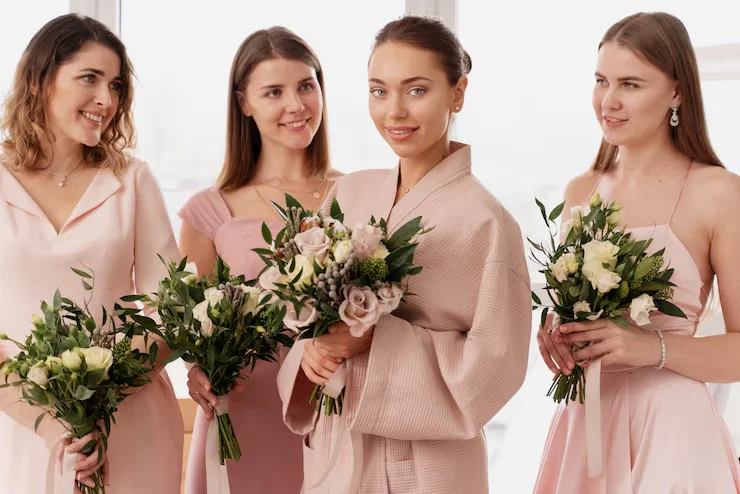
Attending a wedding as a guest carries its own dress code demands. You want to look polished and celebrate the occasion appropriately without drawing attention away from the couple. Getting the balance right — formal enough to honor the occasion, personal enough to reflect your own style, appropriate enough to avoid the common pitfalls — requires a little more thought than dressing for your own events.
Reading the Dress Code Before Anything Else
The invitation dress code is the starting point. Black-tie means floor-length gowns or formal cocktail dresses with elevated fabric and accessories. Cocktail attire means midi to knee-length in appropriate fabrics — no casual sundresses, no denim. Garden party or smart casual allows more creative flexibility but still excludes overly casual pieces. Beach formal requires the right balance between the relaxed setting and the formal occasion.
When no dress code is specified, use the venue as a guide. A hotel ballroom implies formal; a restaurant private dining room implies cocktail; a vineyard or garden implies semi-formal creative. When genuinely uncertain, err toward slightly more formal rather than less — it is easier to dress down subtly with accessories than to recover from being underdressed at a formal event.
Colors That Work and What to Avoid
The most important color rule for wedding guests is straightforward: avoid white, ivory, and cream. These are bridal colors and wearing them as a guest — even unintentionally — is genuinely disrespectful to the couple. Light champagne tones should also be approached carefully, as they can read as off-white in photographs depending on lighting.
Choosing a classy wedding guest dress in navy, dusty rose, forest green, burgundy, slate blue, or any of the deeper neutrals produces an elevated look that photographs well in a group setting. Prints — florals, abstract patterns, subtle geometrics — are entirely appropriate for wedding guest dressing and can create a distinctive look while staying within the occasion's expectations.
Silhouette and Length for Different Occasions
For black-tie and formal wedding occasions, floor-length is the appropriate choice and produces the most elegant photographs. For cocktail and semi-formal occasions, midi-length — falling between the knee and ankle — is the most versatile option, providing formality without the full commitment of a floor-length gown.
Knee-length dresses work for cocktail and casual-formal occasions but can feel underdressed at more elevated events. When selecting length, consider also the shoe and whether the overall proportion creates the intended elegant effect — a knee-length dress with simple flat sandals reads very differently from the same dress with heeled pointed-toe pumps.
Fabric and Formality Signals
Fabric communicates formality as clearly as silhouette. Chiffon, silk, crepe, satin, and lace are appropriate for formal and semi-formal wedding occasions. Jersey and ponte fabrics can work in elevated cuts but generally read as less formal. Cotton and linen are appropriate only for outdoor casual wedding celebrations in summer. The fabric of a classy wedding guest dress should signal that the wearer understands and respects the occasion.
Embellishment level should be calibrated to the occasion. Beaded details, sequin accents, and lace overlay are appropriate for formal and cocktail occasions. Very heavy embellishment — a fully sequined gown — can compete too aggressively with the wedding party in photographs and in person.
Practical Considerations for the Full Day
Wedding days are long. Guest attire needs to hold up across a ceremony, potentially outdoor cocktail hour, dinner, and dancing — often five to eight hours of wear. Shoes must be walkable for the full duration, and the dress must allow for comfortable seated dining and dancing without requiring constant adjustment. A dress that looks perfect standing still but becomes uncomfortable after two hours is the wrong choice for a wedding guest occasion.
For outdoor ceremonies, fabrics that handle wind and natural light well are practical considerations alongside aesthetics. Very lightweight chiffon can be beautiful but challenging in a breeze; structured crepe and satin hold their shape in variable conditions without becoming a distraction.
Conclusion
Dressing as a wedding guest is an opportunity to show the couple that their occasion matters to you. A classy wedding guest dress in an appropriate color, at the right formality level, and in quality fabric communicates that care without requiring a word. When the dress, the accessories, and the occasion align, the result is the best possible version of being dressed appropriately — elegantly present rather than distractingly conspicuous.



.webp)