Sign up with Google
 Sign in with Zoho

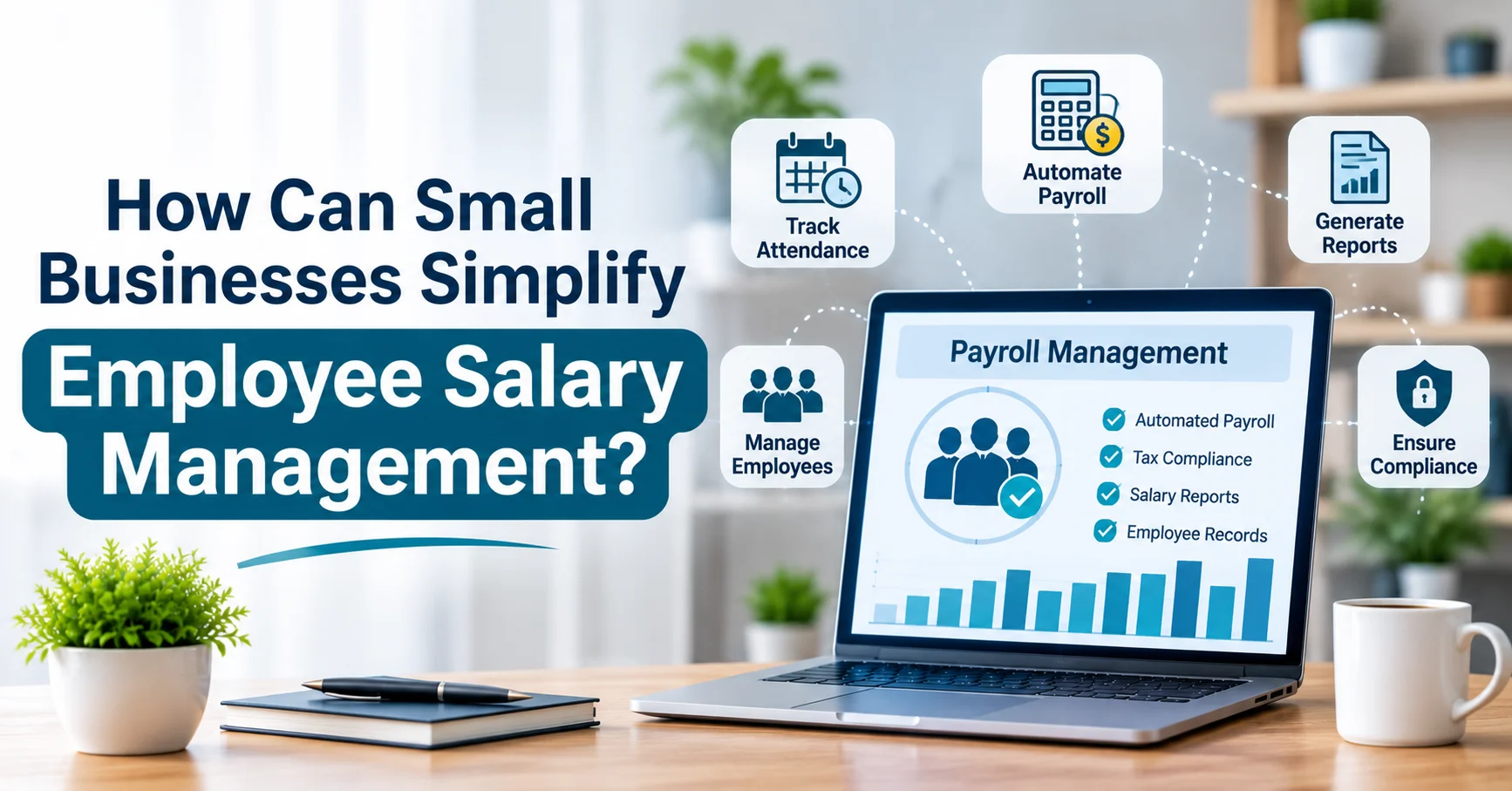
Managing employee salaries is an important responsibility for every small business. Payroll activities involve calculating monthly wages, tracking attendance, managing deductions, processing reimbursements, and generating payslips. When these tasks are handled manually, business owners and HR teams may face calculation errors, delayed payments, and unnecessary administrative work. As employee numbers increase, maintaining accurate salary records becomes even more challenging.
Adopting reliable payroll management systems can help small businesses automate salary calculations, organise employee information, and ensure timely payroll processing. With the right tools and practices, businesses can simplify salary management while focusing more on their daily operations and growth.
1. Maintain Accurate Employee Salary Records
To streamline your payroll processes, store relevant employee data. This includes name, position, start date, pay, bank details, bonuses/allowances and any deductions.
Having a centralised system to store employee data means you can easily find salary details for employees. Storing data in this way also avoids confusion that may occur with multiple documents/spreadsheets. In addition, regularly checking the data of your employees will mean that you are able to correctly calculate salaries with up-to-date employee data and changes to compensation.
2. Automate Calculations
If employees have varying pay structures, bonuses, overtime payments and deductions, it can take a long amount of time to calculate employee salaries manually each month.
Automating payroll calculations in your business will allow you to calculate salaries according to set rules. This can factor in base pay, bonuses, allowances, attendance, leave and deductions. As calculations are automated, less manual work is involved. This also reduces the chance of errors. In addition, this ensures consistency in salaries and means that payroll can be processed by business owners within set deadlines.
3. Combine Attendance with Payroll
In businesses, employee attendance can affect an individual’s pay, depending on the number of days worked, overtime or unpaid leave.
If employee attendance data and payroll data are separate, this can cause inconsistency in data and increase manual work. If attendance data is combined with your payroll, you can accurately reflect the number of hours employees have worked to calculate their pay.
Key features to look for in this system include:
Clock in and out times. Total hours and overtime. Leave taken. Late/early times. Summary of attendance.
Combining attendance data with payroll data means you can more accurately calculate employee pay and make monthly payroll processing easier.
4. Know and Comply with Statutory Requirements
Depending on eligibility criteria and requirements, small businesses may need to calculate statutory requirements in payroll. These can include PF (Provident Fund), ESI (Employee State Insurance), professional tax and tax deductions.
As a business owner, it is important to know what rules your business must comply to, and to correctly document payroll. Using software that factors in statutory requirements and provides relevant reports can reduce admin issues in payroll. It is important to regularly check that you are meeting compliance requirements, as they may change and contribution limits may change.
5. Create Digital Pay Slips
Creating pay slips manually can get very time consuming for businesses with many employees. However, using digital pay slips will allow you to quickly create pay slips for employees to show them their salary.
Pay slips should include:
Employee name/position. Breakdown of pay, allowances. Deductions. Gross pay. Net pay. Period of pay.
Digital pay slips make pay transparent so employees know how much money they are receiving. In addition, employees can easily view past pay slips.
6. Implement a Standard Payroll Timing
Implementing standard payroll timing in your business makes managing salaries easier. Business owners should give clear deadlines for checking attendances, approving leaves, calculating pay, checking payroll and making bank transfers.
By creating a checklist for monthly payroll, business owners can make sure all steps in payroll have been completed before a pay date. In addition, making employees aware of payroll time frames increases transparency and reduces repetitive questions.
7. Secure Payroll Data
As payroll data contains sensitive information such as an employee’s bank details, pay structure and personal information, it is extremely important to secure this data.
To secure this data, use secure systems with password, role restrictions, encrypted data and regular back-ups. Only allowed individuals should have access to payroll information. Having secure digital records means that unauthorised individuals cannot access payroll data. This means that payroll can be managed more effectively.
8. Use Scalable Systems
Small businesses should choose a scalable payroll system. This means that whilst meeting current needs, it can grow with the business. Some key features to look out for include: ease of navigation, automatic calculations, attendance, digital pay slips and reliable reporting.
Consider the cost of a subscription, features, support with implementing the software and scalability of the system. Choosing software that can integrate with other applications in your business (accounting and HR) will also help streamline processes.
Conclusion
Simplifying employee salary management requires accurate records, automated calculations, attendance integration, proper compliance practices, and consistent payroll schedules. These practices help small businesses reduce administrative workloads, minimise errors, and improve employee satisfaction.