Sign up with Google
 Sign in with Zoho

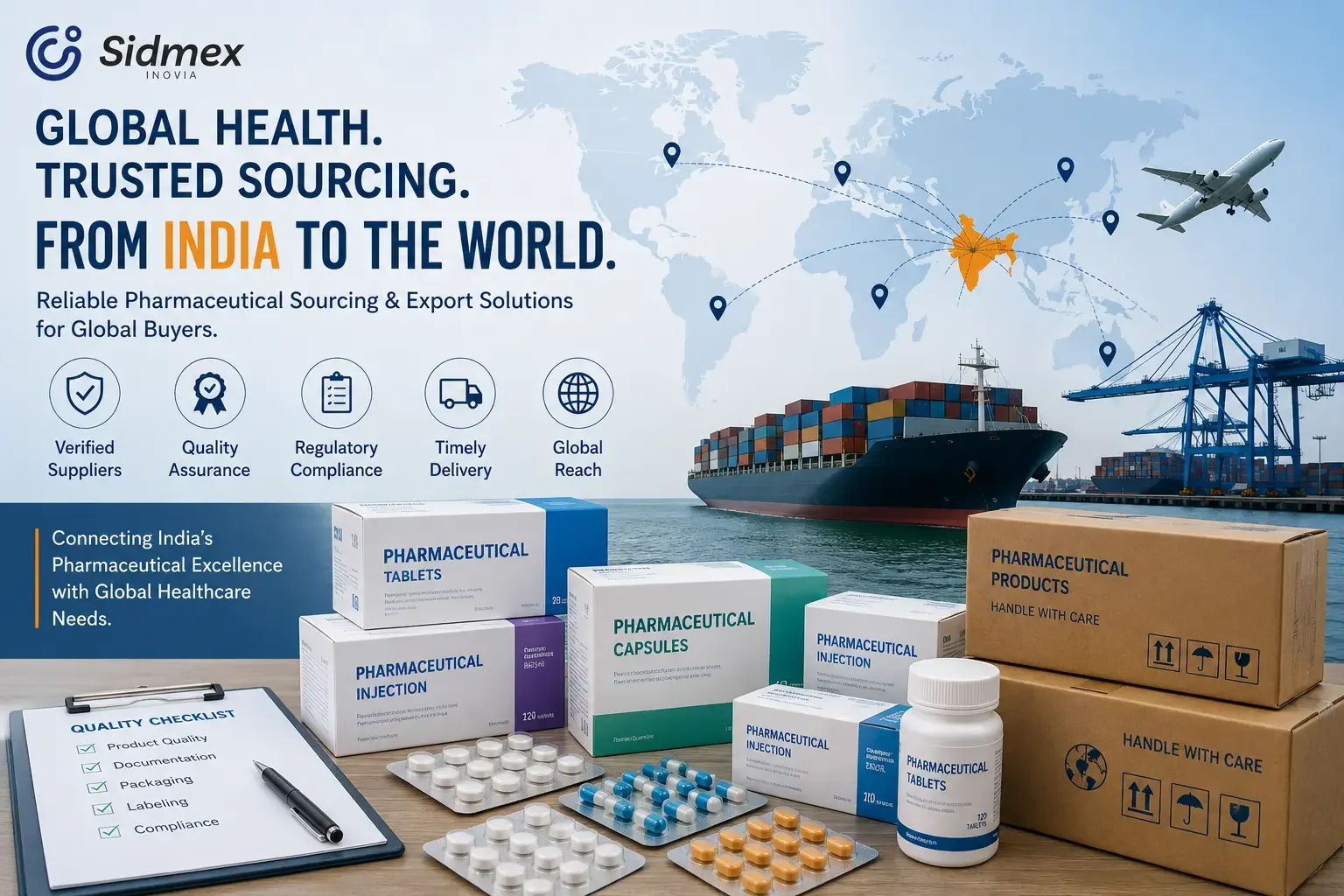
India has become an important source of medicines for healthcare markets around the world. Its pharmaceutical industry includes manufacturers, exporters, distributors, contract manufacturing organizations and specialized sourcing companies serving different types of international requirements.
For an international buyer, however, finding a supplier is only the beginning.
Sourcing medicines from India successfully requires attention to product specifications, supplier reliability, documentation, quality considerations, destination-country requirements and logistics. A low-priced quotation may look attractive at first, but a reliable pharmaceutical supply relationship depends on much more than price.
Here are some important factors global buyers should consider before starting a pharmaceutical sourcing relationship in India.
Start With a Clear Product Requirement
The first step in any pharmaceutical sourcing process is to define exactly what is required.
A buyer should ideally provide information such as:
- Generic name of the medicine
- Brand name, where relevant
- Strength
- Dosage form
- Required quantity
- Preferred manufacturer, if applicable
- Destination country
- Required delivery timeline
The more precise the requirement, the easier it is for a sourcing partner or exporter to identify suitable options.
This becomes especially important when dealing with specialty medicines, specific brands or products that are difficult to source through conventional channels.
Don't Select a Supplier Based Only on Price
Price is naturally important in international pharmaceutical procurement, but it should not be the only deciding factor.
Two suppliers may quote different prices for what appears to be the same medicine. Before selecting the cheaper option, buyers should understand differences in product source, documentation, packaging, availability, shipping arrangements and service.
A reliable supplier should be able to explain what is included in the quotation and communicate any limitations clearly.
The better question is not simply:
"Who offers the lowest price?"
It is:
"Which supplier can provide the right product with appropriate documentation and dependable execution?"
Verify the Supplier
Supplier verification is one of the most important parts of international pharmaceutical sourcing.
Before placing an order, buyers should evaluate the company's business information, product capabilities, export experience and ability to provide relevant documentation.
Depending on the product and transaction, buyers may need information concerning:
- Manufacturer details
- Product specifications
- Batch information
- Certificates and quality documents
- Commercial documentation
- Packaging and labeling
- Export documents
The exact requirements vary depending on the medicine and destination market.
A professional supplier should be comfortable discussing these requirements rather than avoiding questions about product origin or documentation.
Understand Destination-Country Requirements
One of the common mistakes in international pharmaceutical procurement is assuming that a medicine available for export from India automatically meets every requirement in the destination country.
Import regulations can differ considerably between markets.
Depending on the destination, requirements may relate to:
- Product registration
- Import permissions
- Labeling
- Packaging
- Product documentation
- Customs procedures
- Local regulatory requirements
The importer should therefore understand the applicable rules in the destination market before finalizing the transaction.
An experienced exporter can help coordinate the documentation and export process, but buyers should still verify the regulatory requirements that apply to their own market.
Product Availability Can Change
Pharmaceutical sourcing is not always a simple catalogue-based process.
A product may be available from one manufacturer but temporarily unavailable later. A particular brand may have different availability depending on the market. Some specialty or difficult-to-source medicines may also require additional supplier research.
This is why good communication matters.
Instead of simply asking whether a product exists, international buyers should establish:
Is it currently available?
What quantity can be supplied?
Who is the manufacturer?
What is the expected lead time?
What documentation is available?
These questions can make the sourcing process considerably more predictable.
Documentation Is Part of the Supply Chain
International pharmaceutical transactions involve several stages of documentation.
Depending on the order, this may include commercial invoices, packing information, product documentation, certificates, shipping documents and other records required by the relevant parties.
A documentation error can create unnecessary delays even when the medicine itself is available.
For this reason, buyers should work with suppliers that treat documentation as an integral part of the sourcing process rather than something handled at the last minute.
Consider the Logistics
The journey does not end when the medicine leaves the supplier.
International pharmaceutical shipments may involve multiple parties, including exporters, importers, freight providers, customs authorities and other logistics stakeholders.
Certain products may also require specific transportation or storage conditions.
Before confirming an order, buyers should understand:
- Shipping method
- Expected transit time
- Packaging requirements
- Storage considerations
- Customs documentation
- Delivery responsibilities
Clear communication at this stage can reduce avoidable problems later.
Specialty and Difficult-to-Source Medicines Require More Attention
Some pharmaceutical requirements are relatively straightforward because the products are widely available.
Others are much more challenging.
International buyers may need a particular brand, dosage, strength, manufacturer or specialty medicine that isn't readily available through their usual supply network.
In these situations, a specialized pharmaceutical sourcing partner can help identify potential supply channels and coordinate communication with suppliers. Sidmex Inovia works with international buyers on pharmaceutical sourcing and export requirements.
The value of a sourcing partner is therefore not simply finding a product. It can also involve helping the buyer navigate availability, supplier communication, documentation and international delivery.
Build a Long-Term Supplier Relationship
A reliable pharmaceutical supply chain is rarely built around one transaction.
Once a supplier demonstrates consistent communication, dependable sourcing, appropriate documentation and reliable order execution, the relationship can become an important part of a buyer's procurement network.
Long-term relationships can also make future sourcing more efficient because the supplier becomes familiar with the buyer's requirements, documentation expectations and preferred products.
For international healthcare organizations and distributors, that reliability can be more valuable than simply finding the lowest quotation for an individual order.
Questions Buyers Should Ask Before Placing an Order
Before proceeding with a pharmaceutical sourcing arrangement, international buyers can ask:
- Is the requested product currently available?
- Who is the manufacturer?
- What strength and dosage form are available?
- What documentation can be provided?
- What quantity can be supplied?
- What is the expected lead time?
- What shipping options are available?
- What destination-country requirements should be considered?
- How will product and shipment information be communicated?
- Who will coordinate the export documentation?
These questions don't eliminate every sourcing risk, but they create a much clearer basis for evaluating potential suppliers.
Conclusion
Sourcing medicines from India can give international buyers access to a broad pharmaceutical ecosystem, but successful procurement requires more than locating a supplier and comparing prices.
A reliable sourcing process combines clear product requirements, supplier verification, appropriate documentation, quality considerations, regulatory awareness and dependable logistics.
For global buyers, taking time to evaluate these factors before placing an order can help create a more predictable pharmaceutical supply chain and stronger long-term supplier relationships.