Sign up with Google
 Sign in with Zoho

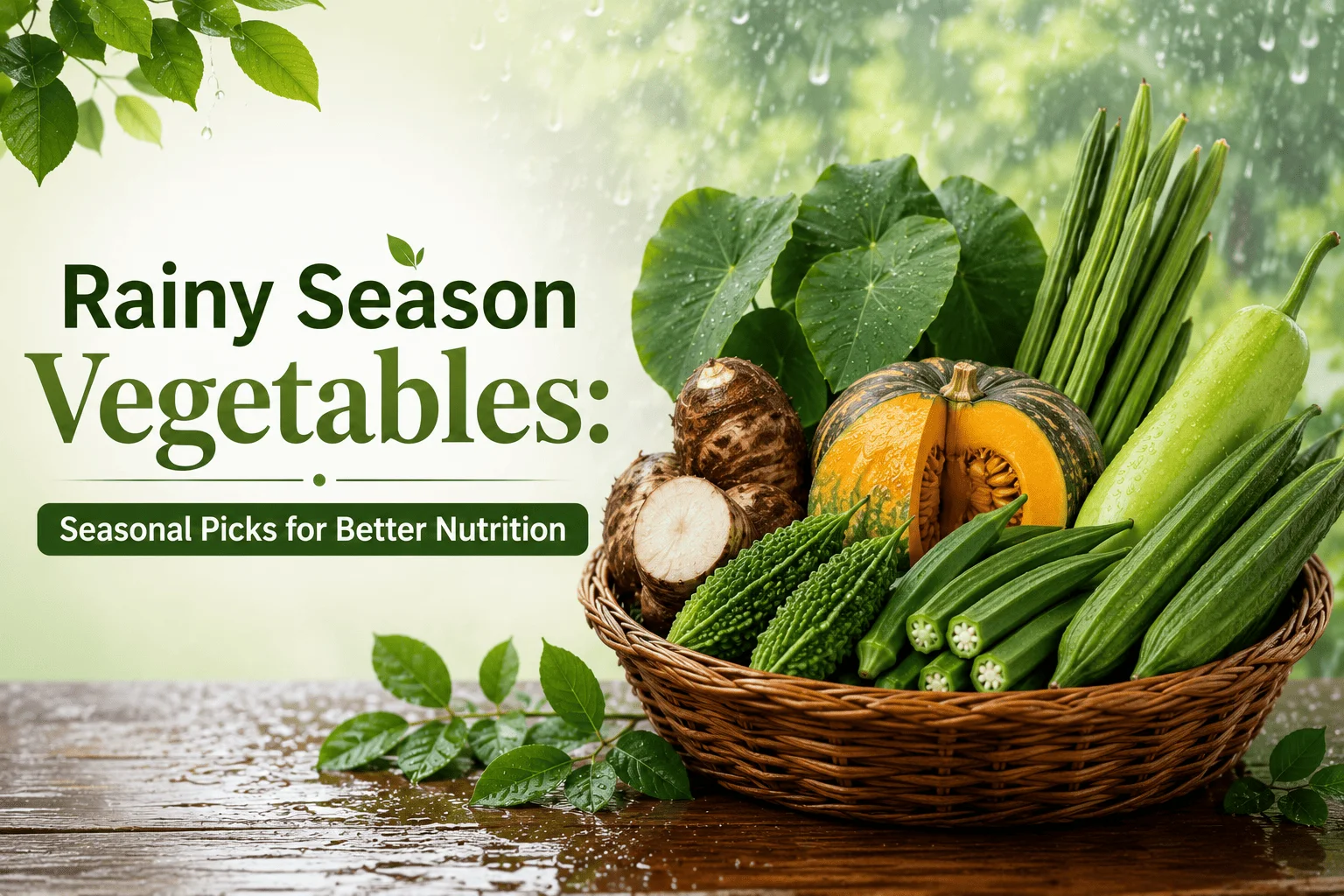
When the rainy season arrives, our food habits often change.
Hot soups suddenly feel comforting.
Fried snacks become tempting.
Tea seems to appear more often than usual.
There is nothing wrong with enjoying seasonal treats once in a while. But monsoon is also a good time to pay attention to the vegetables on your plate.
Seasonal vegetables are usually fresher, easier to find, and naturally suited to the weather. They also provide nutrients that help support overall health.
If you've been wondering which rainy season vegetables deserve a place in your kitchen, you're in the right place.
Why Seasonal Vegetables Matter During Monsoon
Every season brings different nutritional needs.
During the rainy season, many people experience:
- Digestive discomfort
- Reduced appetite
- Seasonal infections
- Low energy
A balanced diet cannot prevent illness completely.
Still, eating a variety of fresh seasonal vegetables can help provide vitamins, minerals, fiber, and antioxidants that support overall wellbeing.
Seasonal foods also tend to taste better because they are harvested at the right time.
1. Bottle Gourd (Lauki)
Bottle gourd is one of the easiest vegetables to digest.
It contains plenty of water and is relatively light on the stomach.
Some reasons to include it are:
- Supports hydration
- Provides dietary fiber
- Low in calories
- Easy to cook
You can prepare it as:
- Sabzi
- Soup
- Dal
- Curry
Simple dishes often work best during the monsoon.
2. Ridge Gourd (Turai)
Ridge gourd is another seasonal favourite.
It contains:
- Fiber
- Vitamin C
- Potassium
Many families prepare it with dal or simple Indian spices.
It is light, nutritious, and suitable for everyday meals.
3. Bitter Gourd (Karela)
Not everyone loves karela.
That is understandable.
Its bitter taste is difficult for some people.
Still, bitter gourd contains several beneficial plant compounds along with fiber and vitamin C.
It can be prepared as:
- Stir-fry
- Stuffed karela
- Curry
Adding it occasionally adds variety to your diet.
4. Okra (Bhindi)
Bhindi remains popular throughout much of the year, including the monsoon season.
It provides:
- Fiber
- Folate
- Vitamin C
It also works well in many recipes.
Some simple options include:
- Dry bhindi sabzi
- Bhindi masala
- Mixed vegetable curry
Cooking it well helps reduce excess stickiness.
5. Pumpkin (Kaddu)
Pumpkin is naturally rich in beta-carotene, which the body converts into vitamin A.
It also contains fiber and potassium.
Pumpkin can be used in:
- Soups
- Curries
- Mixed vegetables
Its mild flavour makes it suitable for both children and adults.
6. Drumstick (Moringa Pods)
Drumsticks are often added to sambhar.
They deserve attention beyond that.
They provide:
- Vitamin C
- Calcium
- Fiber
Many traditional recipes include drumsticks because they add both flavour and nutrition.
7. Colocasia Leaves and Roots (Arbi)
Arbi becomes available in many regions during the rainy season.
It provides carbohydrates, fiber, and several minerals.
Cook it thoroughly before eating.
Proper cooking improves both texture and digestibility.
Why Washing Vegetables Properly Is Important
The rainy season often brings extra moisture.
This can increase the chances of dirt, insects, and microorganisms being present on fresh produce.
A few simple habits help:
- Wash vegetables thoroughly under running water.
- Remove damaged portions.
- Store them in a cool, dry place.
- Cook vegetables properly before eating.
Good food hygiene matters just as much as food choice.
Pair Seasonal Vegetables with Protein
Vegetables are important.
Protein matters too.
Balanced meals often include both.
Simple combinations include:
- Lauki with dal
- Bhindi with roti and curd
- Pumpkin with lentils
- Ridge gourd with moong dal
Adding protein helps make meals more filling and nutritionally balanced.
Common Mistakes During the Rainy Season
Some eating habits become common during monsoon.
They may not always support good nutrition.
These include:
Eating Too Many Fried Foods
Pakoras and fried snacks taste great.
Eating them every day is a different story.
Balance is important.
Avoiding Vegetables
Some people worry about seasonal produce and end up eating fewer vegetables.
Instead, focus on proper washing and cooking.
Skipping Homemade Meals
Restaurant food can be enjoyable.
Home-cooked meals usually give you more control over ingredients and hygiene.
What Nutrition Experts Usually Recommend
Most nutrition professionals encourage eating foods that are fresh, seasonal, and varied.
According to the Best Nutritionist in Chennai, a healthy plate should include:
- Seasonal vegetables
- Whole grains
- Protein-rich foods
- Fruits
- Healthy fats
No single vegetable provides every nutrient.
A colourful plate often offers the greatest variety.
Simple Monsoon Meal Ideas
Looking for practical inspiration?
Try these:
Breakfast
- Vegetable upma
- Idli with sambhar and drumsticks
Lunch
- Lauki dal
- Brown rice
- Cucumber salad
Evening Snack
- Roasted chana
- Fresh fruit
Dinner
- Ridge gourd curry
- Whole wheat roti
- Curd
These meals are simple, balanced, and easy to prepare.
Final Thoughts
Rainy season vegetables offer more than freshness.
They bring variety, nutrition, and seasonal flavours to everyday meals.
Bottle gourd, ridge gourd, pumpkin, bhindi, bitter gourd, drumsticks, and arbi can all become part of a healthy monsoon diet.
Healthy eating during the rainy season doesn't have to be complicated.
Choose fresh produce.
Cook it well.
Eat balanced meals.
Sometimes those simple habits make the biggest difference.
FAQs
1. Which vegetables are best during the rainy season?
Bottle gourd, ridge gourd, pumpkin, bhindi, drumsticks, bitter gourd, and arbi are popular seasonal choices.
2. Why should you eat seasonal vegetables during monsoon?
Seasonal vegetables are often fresher and provide important vitamins, minerals, and fiber that support overall health.
3. Should vegetables be washed differently during the rainy season?
Yes. Wash vegetables thoroughly under running water and cook them properly before eating.
4. Are leafy vegetables safe during the monsoon?
Leafy vegetables can be eaten if they are washed carefully and cooked thoroughly.
5. How can I make my monsoon meals healthier?
Include seasonal vegetables, protein-rich foods, and whole grains, and stay hydrated while limiting fried and heavily processed foods.