Sign up with Google
 Sign in with Zoho


Just a few years ago, opening a bank account or applying for a loan meant having to take the time to go to a branch office. There you would give copies of your ID, fill out long forms, sign many more, and finally wait, perhaps very long, for your application to be processed. In some cases an official would even visit your house to confirm your address.
Today you can do all of the above from the comfort of your sofa and in just a few minutes using your phone. One major reason for this change has been Video KYC.
In this post we will explain what Video KYC is, how it is used and how it will shape customer onboarding in the future.
What is KYC?
KYC means ‘Know Your Customer’ and this is a process to verify the identity of a customer opening an account with a bank, NBFC, insurance company or a stock broker.
KYC is mandatory and is prescribed by regulators such as the RBI, SEBI and IRDA to name a few, to combat unlawful activities like fraud, terror funding and money laundering.
The objective of KYC has remained the same over the years. What has changed is the process of verifying KYC.
What is Video KYC?
Video KYC lets customers complete their identity check over a live video call as opposed to visiting a branch or meeting an agent in person. This is often used when in-person ID checks are mandated by the regulator.
2020 onwards, RBI allowed Banks in India to carry out customer identification process over video call and named it Video-based Customer Identification Process (V-CIP). Post this, many regulated entities in India adopted this method for customer onboarding.
Effectively, this means you can do your ID check over video call, similar to what you’d do in-person at a bank branch. The main difference is, of course, you don’t have to leave your house.
How does a Video KYC process work?
Depending on the company, there may be slight variations to the process explained below.
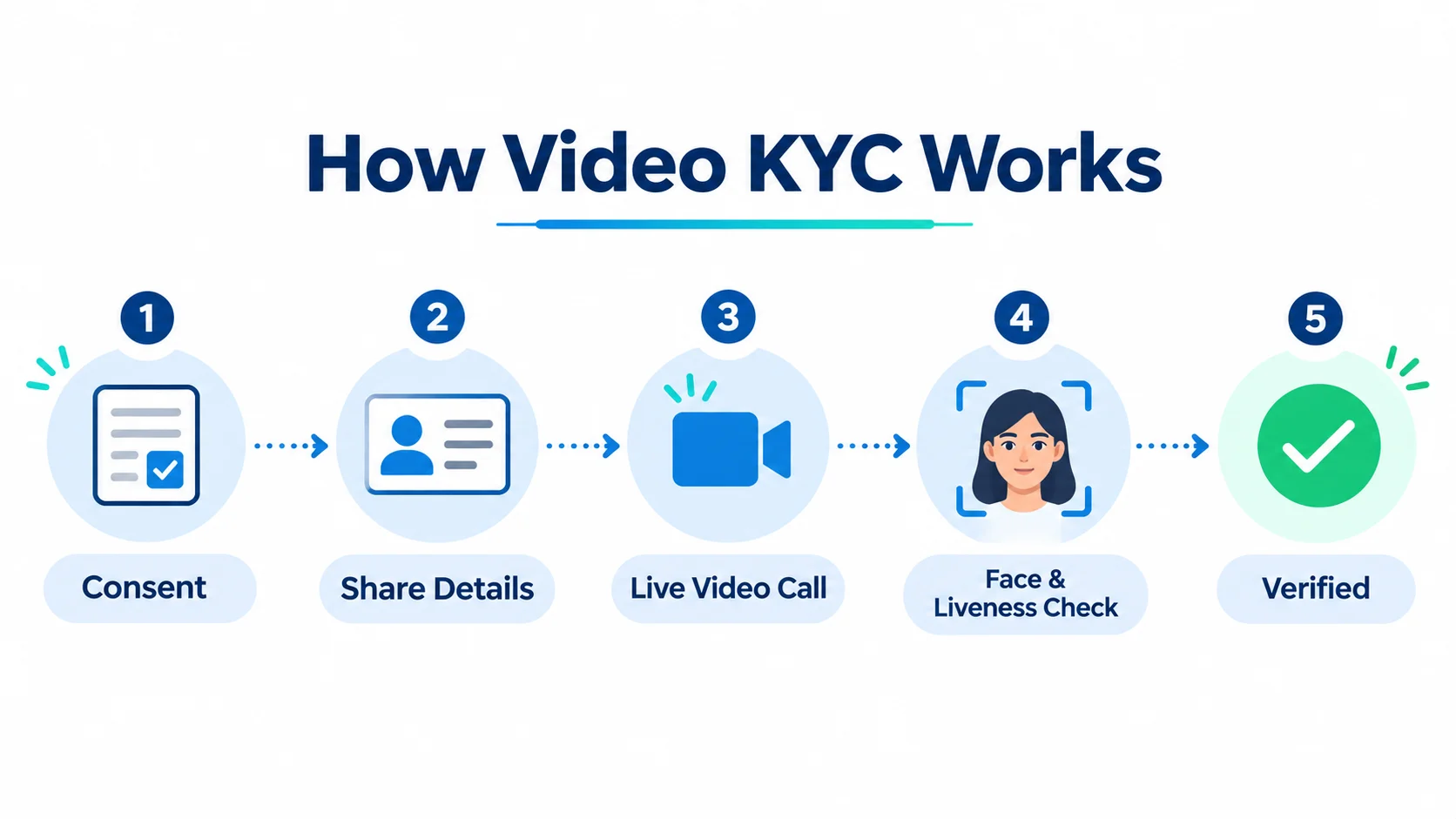
- To begin: The customer clicks a link/ opens an app/ website to begin the process.
- Customer information: The customer enters information like their Aadhaar or PAN number.
- Video call: A company representative joins the video call. The customer may be required to show their original PAN card to the camera.
- Checks: The system performs face comparison with the ID document, as well as check the person’s presence and location.
- Questions: The representative may ask simple verification questions.
- Once everything checks out, the process is complete and the customer’s account or application is approved. Each video process is recorded and stored for audit.
The whole process takes just a few minutes for most customers.
Why Businesses Are Moving to Video KYC
Here are a few advantages of switching to a video-based customer identification process.
Faster onboarding: Traditionally it could take days for a customer to get onboarded with your service. Now, with the help of video KYC this time has been reduced to just a few minutes.
Lower costs: Less staff is needed to travel to verify customers and handle documents. These costs are significantly reduced if the process is done online.
Increased conversion rate: Long and complicated processes often results in customers giving up in the middle of the process.
Wider Reach: With an internet connection and a phone people from rural and remote areas can now be verified, eliminating the need for them to go to a city branch.
Easier audits: Each session is recorded along with verification data and time stamps. This is a lot easier to use for compliance and audit purposes as compared to physically looking through paper files.
What Customers Gain From It
- Faster access to financial products: Accounts, loans and insurance policies can now be activated a lot faster for customers.
- Convenience: Customers need not take time off work to go to a branch to verify their identity and submit paperwork.
- It is now easier for customers to give video identification in their preferred language, since most platforms now provide services in multiple languages.
Is Video KYC Safe?
People are understandably concerned about the safety of their information when using Video KYC. Here’s why: you’re sharing your information over a video call.
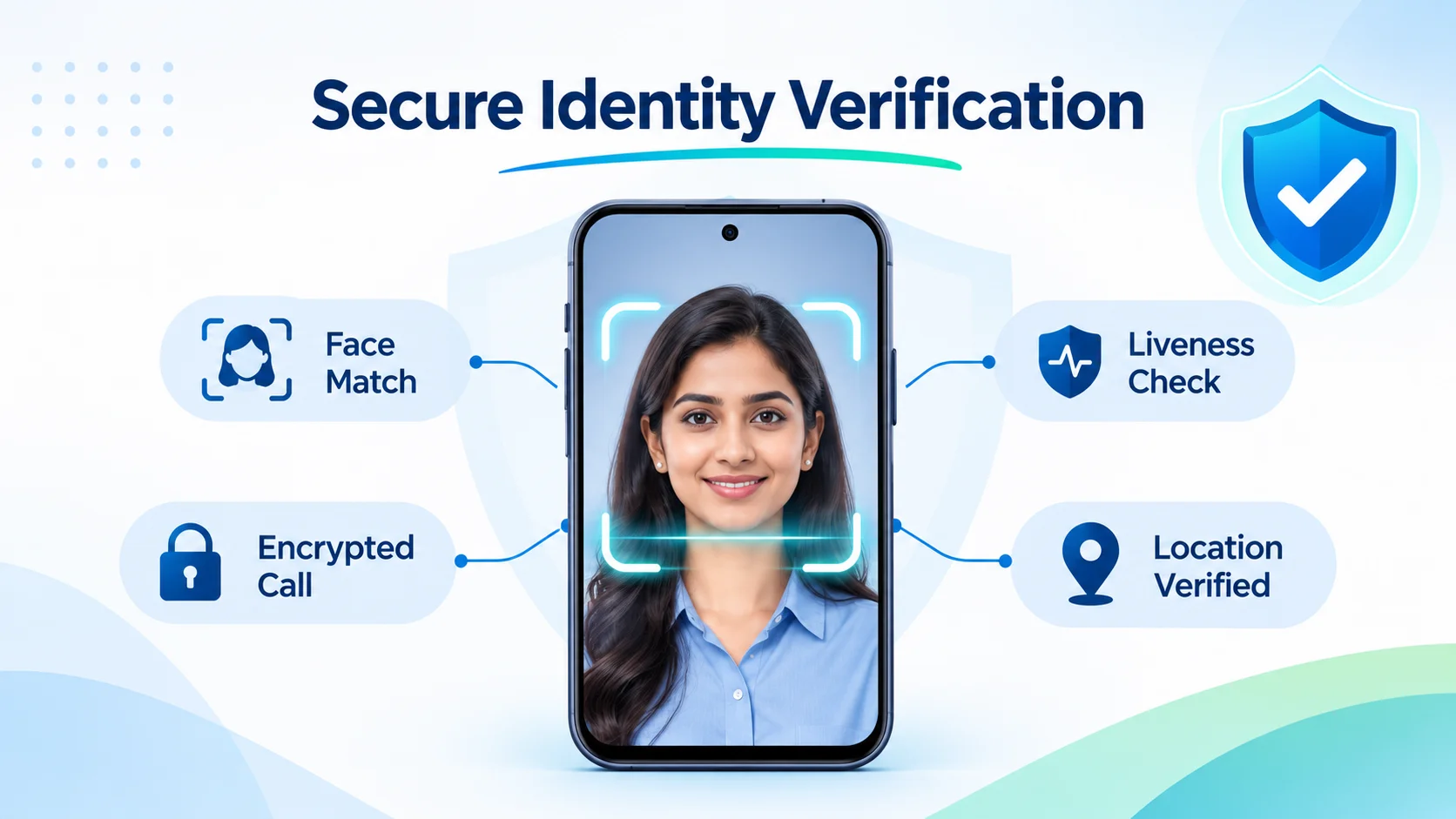
Video KYC systems use a variety of security methods to protect the information, including end-to-end encryption for video calls, face recognition, liveness checks to verify the person is not using a photo or video, location checks, and secure storage of the information.
When it comes to fraud methods, the sky is the limit. Deepfakes are starting to gain popularity. Video verification systems have started implementing means to detect manipulated or fake videos to combat this.
Here’s what you can do to stay safe:
- Only perform a KYC verification through the official website or app of your bank.
- Never give out your OTP to someone who claims to be from your bank.
- Make sure the area is well lit and reasonably quiet to help the verification process along.
Other Challenges
Video KYC is an improvement from traditional KYC methods, however, there are still some issues, including:
- Customers who are less technologically savvy. A large portion of the population will need additional support to perform a Video KYC verification.
- Video KYC can also be impractical due to high latency or unstable internet connections in rural areas.
- Additionally, privacy of customers must also be taken into consideration with the recent enactment of the DPDP Act of 2023.
- Wait times during busy hours are sometimes caused by a lack of available agents. However many of these issues have begun to be resolved with more advanced technology.
Better technology will help improve customer service and decrease wait times. In the meantime, constant improvement in technology such as screens that help guide users through the service process, and resumable sessions will make the experience less frustrating.
The Future of Customer Onboarding
Video KYC is just the start of the fully digital customer onboarding process. We are likely to see more of the following changes in the near future:
More advanced AI to help verify identities, read documents and flag suspicious activity, thus allowing human officers to concentrate on more complicated cases.
Use of other already existing applications for customer verification. Verification processes will also likely be embedded within existing customer messaging applications.
Better and more advanced technology to differentiate between authentic and deepfake identities.
Onboarding in the customer’s preferred language will become the standard.
Digital onboarding for other industries, such as insurance and lending. As with digital payments, there is potential for video-based digital onboarding to replace traditional onboarding for a wide range of industries.
A greater emphasis on customer data protection and privacy will be incorporated into standard business practice.
Final Thoughts
Customer onboarding has certainly evolved from the paper form and branch visit days. Video KYC has improved customer onboarding and is particularly convenient for customers living in more remote locations. More importantly, Video KYC assists financial services businesses to meet compliance obligations.
Technology has enabled new ways of verifying a customer’s identity. However, Video KYC should always be used in conjunction with trust and human judgement to ensure that a customer is who they claim to be.
As technology and the internet continue to expand to new areas, Video KYC has the potential to become the primary method for opening financial services accounts and granting loans.
For more information on Video KYC, see how VideoKYC.ai helps banks, NBFCs, and other financial services companies and fintech companies.