Sign up with Google
 Sign in with Zoho

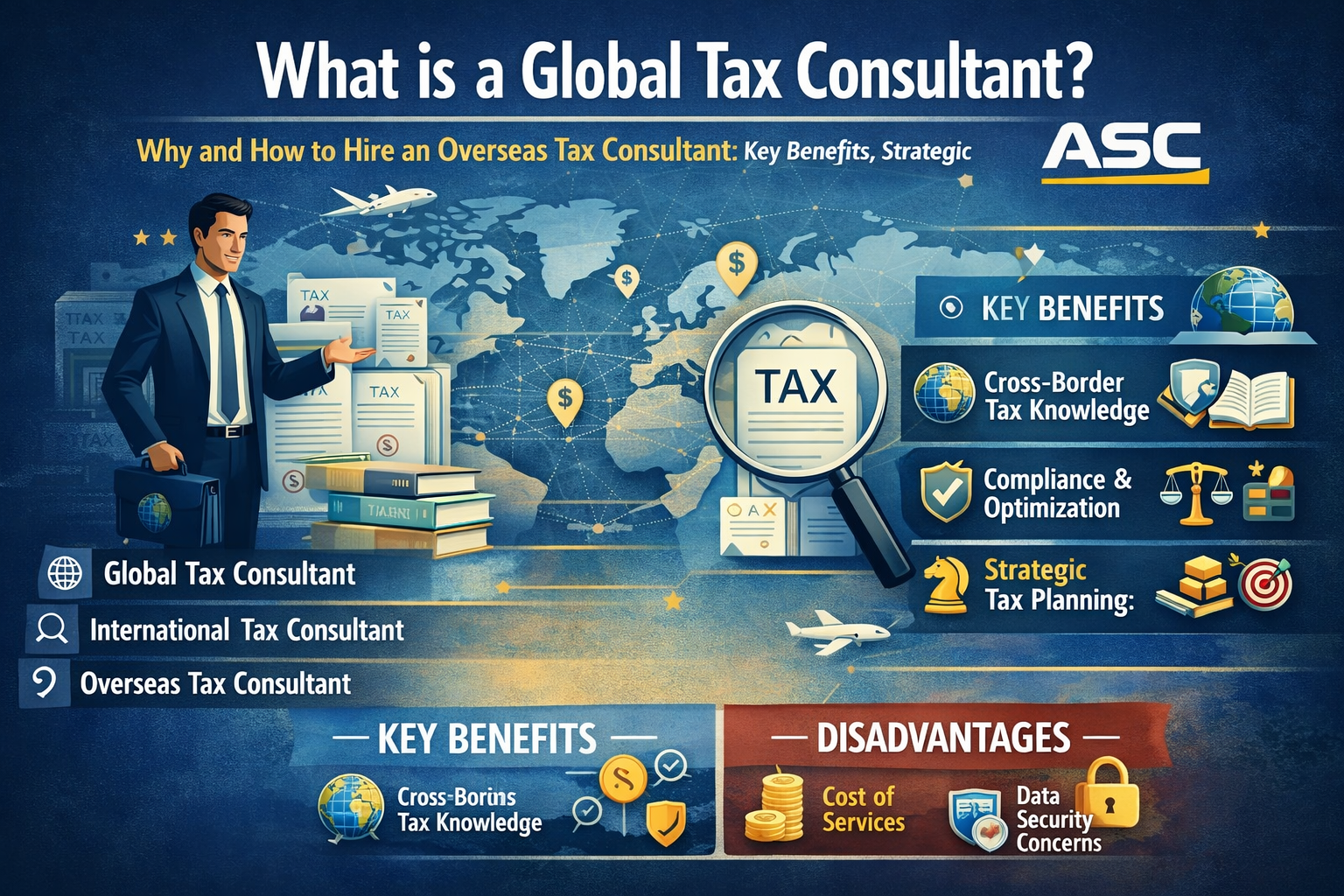
Introduction: Expanding a business across borders introduces massive revenue potential, but it also triggers highly complex, multi-jurisdictional tax liabilities. A dedicated international tax consultant provides the strategic architecture needed to navigate Double Taxation Avoidance Agreements (DTAA), manage transfer pricing, and structure foreign income. By partnering with specialized advisory experts, enterprises can legally minimize their global tax burden, prevent aggressive audits, and scale operations seamlessly across international markets.
What Exactly Does an International Tax Consultant Do?
What is the day-to-day value of hiring an expert for cross-border taxation?
When an enterprise moves money, goods, or services across international borders, the tax rules change drastically. You are no longer just dealing with the domestic Income Tax Act; you are navigating the tax codes of the US, UAE, or Singapore simultaneously. A dedicated international tax consultant ensures you do not pay taxes twice on the same revenue. They analyze your foreign income, royalties, and dividends, applying specific Double Taxation Avoidance Agreements (DTAA) to protect your profit margins. For example, if your software company exports services to Europe, the consultant structures the invoicing to minimize withholding taxes legally, directly increasing your bottom line.
Why Can't a Domestic Accountant Handle Global Tax Compliance?
Why do ambitious enterprises need specialized overseas tax advisors instead of standard internal teams?
Your internal accounting team is built to handle domestic GST, payroll, and local tax filings perfectly. However, global tax law requires a completely different, highly specialized skill set. If an internal team incorrectly defines a "Permanent Establishment" (PE) in a foreign country, your business could suddenly be hit with massive, unexpected tax liabilities and penalties by foreign regulators. An overseas tax consultant maps out these international risks before you even open a foreign office or sign a cross-border joint venture. They ensure your inter-company transactions meet strict global transfer pricing regulations, keeping your business fully compliant and safe from aggressive international tax audits.
How Do the Best Global Tax Consultants Execute a Strategy?
How does an advisory team actually structure a tax-efficient international expansion?
Top-tier consultants do not rely on guesswork; they use highly data-driven, legally sound methodologies. First, they conduct a comprehensive review of your entire corporate structure and cross-border cash flow. Then, they design tax-efficient holding structures tailored to your specific industry. For instance, if you are setting up a subsidiary abroad, a global tax consultant will determine the most profitable corporate entity type to use, ensuring seamless repatriation of profits back to your home country. They also handle the rigorous documentation required for transfer pricing, creating benchmarking studies that prove your inter-company pricing is at an "arm's length," satisfying both domestic and foreign tax authorities.
What Are the Tangible Benefits of Global Tax Planning?
How does investing in cross-border tax advisory actually improve a company's financial health?
Proper international tax structuring acts as a powerful financial shield and a massive growth accelerator for your enterprise.
- Optimized Tax Liability: By legally leveraging international tax treaties and DTAAs, consultants significantly reduce your overall global tax burden, keeping more working capital within your business.
- Audit Prevention: Flawless transfer pricing documentation and accurate foreign income reporting drastically reduce the chances of facing severe penalties and scrutiny from global tax authorities.
- Seamless Market Entry: Knowing the exact tax implications of a new region allows your executive board to price products competitively and forecast international profits with absolute accuracy.
Advantages and Disadvantages of Outsourcing International Tax Management
Is it a better strategy to build an internal global tax department or outsource to expert consultants?
Corporate boards must evaluate the financial and operational realities of managing multi-jurisdictional compliance.
The Advantages of Outsourcing:
- Instant Access to Elite Expertise: You gain immediate access to seasoned professionals who deeply understand the complex, constantly changing tax treaties between your home country and foreign nations.
- High Cost-Efficiency: Paying for targeted, high-level advisory when structuring a foreign deal or filing annual compliance is far more cost-effective than keeping a full-time, highly paid international tax lawyer on your permanent payroll.
The Disadvantages (and How to Mitigate Them):
- Data Integration Challenges: External consultants require access to highly sensitive financial data, global revenue numbers, and corporate agreements. (Mitigation: Partner exclusively with highly reputable, data-secure advisory firms under strict, ironclad non-disclosure agreements.)
How ASC Group Helps
How does ASC Group secure your cross-border transactions and global expansion?
Expanding globally should not mean losing your hard-earned profits to complex foreign tax systems. ASC Group operates as your premier international tax consultant, delivering a highly structured, multidisciplinary approach to cross-border compliance.
Our experts specialize in navigating Double Taxation Avoidance Agreements (DTAA), transfer pricing compliance, and optimal foreign income structuring. We do not just file paperwork; we engineer tax-efficient strategies that allow your business to scale internationally with absolute legal certainty. Whether you are entering the North American market, setting up operations in Europe, or expanding into the UAE, ASC Group ensures your global tax strategy is optimized, compliant, and built for resilient, long-term profitability.
Conclusion: The Strategic Future of Cross-Border Commerce
What is the core takeaway for business leaders expanding internationally?
The global marketplace is more accessible than ever before, but international tax authorities are also becoming significantly more aggressive and sophisticated in tracking cross-border revenue. Companies that treat international taxation as an afterthought will inevitably face operational roadblocks, frozen assets, and massive profit erosion. Forward-thinking enterprises use advanced global tax planning not merely as a compliance tool, but as a strategic growth engine. By embedding specialized tax advisory into their expansion blueprints from day one, market leaders ensure they can rapidly penetrate new territories while maximizing their global revenue retention.
Frequently Asked Questions (FAQs)
1. What is a Double Taxation Avoidance Agreement (DTAA)?
A DTAA is a bilateral treaty signed between two countries to ensure that a taxpayer is not forced to pay taxes on the exact same income in both jurisdictions. It provides financial relief through tax credits or complete exemptions, depending on the specific treaty terms.
2. Why is Transfer Pricing so critical for multinational businesses?
Transfer pricing rules ensure that commercial transactions between related companies (like a parent company and its foreign subsidiary) are priced fairly, exactly as they would be between two completely independent businesses. This prevents companies from artificially shifting their profits to low-tax countries to avoid paying their fair share.
3. When does a business legally create a Permanent Establishment (PE) abroad?
A PE is generally triggered when a company maintains a fixed place of business, such as an office, factory, or a dependent agent, in a foreign country. Once a PE is legally established, the business profits tied to that specific location become fully taxable in that foreign jurisdiction.
4. Can an overseas tax consultant help with foreign employee payroll?
Yes. When sending key executives abroad or hiring foreign nationals, a tax consultant helps structure their compensation packages to ensure strict compliance with local tax withholding rules and international social security agreements.
5. What are the tax implications of earning royalties from a foreign client? Royalties earned internationally are almost always subject to a withholding tax in the source country where the client is located. An expert consultant will utilize the relevant DTAA to legally lower this withholding tax rate, allowing you to bring significantly more of that revenue back home.