Sign up with Google
 Sign in with Zoho
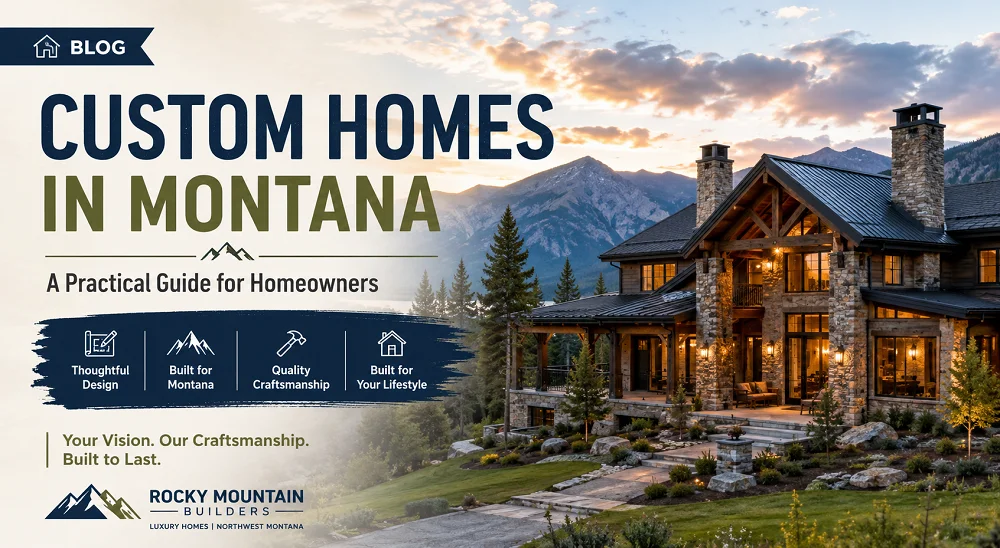
Montana sells itself on wide-open land, mountain views, and a slower pace of life. For a lot of people, building a home here isn't just about having a roof over their heads — it's about creating a space that actually fits the way they want to live, in a setting that most people only dream about. Whether you're looking at a quiet rural lot or a property closer to Whitefish, Kalispell, Bigfork, or Columbia Falls, the land itself shapes what's possible.
A custom home hands you the wheel. You're not squeezing your life into someone else's floor plan — you're building rooms around your actual routine. Better storage, an open layout for get-togethers, more natural light, finishes that feel like you instead of whatever was on sale. That's the whole point.
But when you're planning a custom home in Montana, looks are only part of the equation. The design needs to hold up against the climate, the land, the seasons, and years of wear and tear. Get that right, and the house stays comfortable, efficient, and low-maintenance long after the new-home smell fades.
Why Build Custom in the First Place?
The biggest draw is flexibility. No two families live the same way, and a cookie-cutter house rarely nails the right mix of space, privacy, and function.
Love to cook? Build a kitchen with a real walk-in pantry and counter space to spare. Tuck a quiet office away from the noise. Spend your weekends hiking, fishing, or skiing? A mudroom built for gear — boots, poles, packs, winter layers — will save you from tracking Montana all over the house.
It's also worth building for the future, not just right now. Wider doorways, a bedroom on the main floor, a bathroom that's easy to navigate, a room that can flex as your needs change — planning for that early is a lot cheaper than remodeling for it later.
Start With the Land, Not the House
The site you build on will shape almost everything else — the design, the cost, how smoothly construction goes. Before you buy, it pays to dig into the details.
Look at the slope, drainage, soil, road access, utilities, water and septic situation, views, privacy, and sun exposure. A dramatic, steep lot might come with jaw-dropping mountain views, but it can also mean more excavation, engineering, retaining walls, and foundation work than you bargained for.
Where the house sits on the lot matters just as much. Smart placement can pull in more natural light, carve out privacy, shield your outdoor space from harsh weather, and frame the views you actually want to see — all while cutting down on unnecessary site work.
Before you commit to a piece of land, talk to builders who know the local terrain. A site evaluation early on can flag problems before they turn into surprise expenses.
Designing Around Montana Weather
Cold winters, heavy snow, wind, and swinging temperatures are just part of life here. A home needs to handle all of it without missing a beat.
Insulation is where this starts. Good insulation keeps the heat in during winter and helps the house stay steady when temperatures climb in summer. Quality windows and doors do their part too, cutting drafts and heat loss.
The roof deserves real thought — its shape, slope, drainage, and materials all affect how it sheds snow and moisture. Entryways, decks, walkways, and garages should be positioned with snow buildup and ice in mind, not as an afterthought.
Heating systems need to match the size and layout of the house, and some homeowners like having a backup option for the worst winter days. Montana also has its own set of adopted building, electrical, plumbing, mechanical, and energy codes, and they vary by location — so it's worth working with people who actually know the local rules inside and out.
A Floor Plan That Fits Real Life
A good floor plan should feel effortless to live in. Before you lock anything in, think through your current home — where you get frustrated, where traffic jams up, what just doesn't work.
Open-concept kitchen, dining, and living spaces have become the norm in newer custom homes, and for good reason — they make entertaining easier and let people hang out together even while doing different things.
Private areas deserve just as much attention. Keep bedrooms away from noisy common spaces where you can. Make bathrooms convenient without sacrificing privacy. Put laundry rooms, closets, and storage where they'll actually get used, not just where they fit on paper.
Traffic flow can make or break a room. Even a gorgeous space feels off if furniture blocks the path through it or a door swings into a crowded corner. Thinking through furniture placement during design — not after move-in — helps confirm each room has room to breathe.
Let the Views In
Big windows tie the inside of a house to the landscape outside it, and in Montana, that landscape is doing a lot of the design work for you — mountains, forest, lake, valley, take your pick.
That said, windows shouldn't go in just because they'll look nice. Their size and orientation affect indoor temperature, privacy, glare, and energy bills. A well-thought-out window plan gives you natural light without turning your living room into a greenhouse.
Covered patios, porches, balconies, and outdoor seating stretch your living space further, giving you a front-row seat to the scenery with a little shelter from sun, rain, or snow.
The best homes take their cues from the property itself, rather than forcing a style that fights the land.
Choosing Materials That Actually Last
What you build with affects how the house looks, how much upkeep it needs, and how long it lasts — and in Montana, exterior materials have to earn their keep against the weather.
Roofing, siding, windows, doors, decks, and exterior finishes should be chosen for durability first, style second. Cheaper materials might look fine on day one, but frequent repairs and early replacements add up fast.
Interior choices matter too, and should match how the space actually gets used. Tougher flooring near entries, mudrooms, and kitchens holds up better. Easy-to-clean surfaces are worth their weight in gold for households with kids, pets, or a genuinely active outdoor lifestyle.
Wood, stone, metal, and neutral tones are popular for a reason — they play well with Montana's surroundings. Still, go with what you actually like, not whatever's trending this year and forgotten the next.
Budgeting With Your Eyes Open
A realistic budget covers a lot more than the visible structure. Land prep, design fees, engineering, permits, utility hookups, excavation, landscaping, appliances, fixtures, finishes, and the inevitable mid-project changes all add up — and don't forget furniture and window treatments.
One approach that helps: split everything into three buckets.
- Must-haves the home can't do without
- Upgrades that meaningfully improve comfort or function
- Nice-to-haves that can flex if the budget gets tight
This makes decisions easier down the line and protects the parts of the project that matter most if costs need trimming.
A solid, detailed construction agreement matters just as much — one that spells out the scope, payment schedule, allowances, responsibilities, and how changes get handled.
Permits and Local Rules
What you need to build depends heavily on where the property sits and who has jurisdiction over it. Montana's Building Codes Program handles permits and inspections where the state has authority, but cities and counties often layer on their own zoning and permitting requirements.
Start the permit conversation early. Depending on the site, you might need approvals for building, electrical, plumbing, mechanical, septic, well, driveway access, and more. Nothing should break ground until every required approval is locked in.
A builder with local experience can juggle the paperwork, inspections, subcontractors, and scheduling — which takes a lot of the stress off your plate.
Finding the Right Builder
The builder you choose will shape the quality of your home and how the whole experience feels. Look for local experience, clear communication, solid project management, and a portfolio that matches the style you're after.
Ask how they handle budgets, timelines, subcontractors, material selections, inspections, and change orders. Find out how often you'll get updates and who you'll actually talk to when questions come up.
Rocky Mountain Builders builds luxury custom homes in Whitefish and across Northwest Montana, with more than 25 years of residential experience behind craftsmanship-focused, collaborative projects. Their service area covers Whitefish, Kalispell, Columbia Falls, Bigfork, Lakeside, and Eureka.
Their process starts with collaboration — owner, builder, architect, and other project pros at the table together from the beginning. Getting the right people involved early helps keep the design, budget, property, and construction requirements all pointed in the same direction.
Communication Is What Holds It Together
Building a custom home means making a lot of decisions, one after another. Clear communication is what keeps homeowners from feeling lost in the process.
Before construction starts, figure out how updates will happen — regular check-ins, written progress reports, photos, updated schedules. Whatever keeps everyone on the same page.
Decisions on finishes, fixtures, appliances, and materials need to happen on schedule. Wait too long, and you'll feel it in ordering delays, installation hiccups, and a pushed-back move-in date.
Whenever a change comes up, ask how it affects cost and timeline before you sign off. Getting it in writing protects everyone and keeps expectations honest.
Building for the Long Haul
The best custom home isn't the biggest or the most expensive one. It's the one that fits the land, supports how you actually live, stands up to Montana weather, and stays comfortable for decades.
A successful custom home starts with the right site, a practical design, materials that last, an honest budget, and a builder who knows what they're doing. Every decision along the way shapes how the house looks, feels, and functions.
Working with an experienced local builder like Rocky Mountain Builders can turn a rough idea into a home that's genuinely well thought out — one that offers privacy, comfort, and function, along with a real connection to the Montana landscape you chose it for.




.webp)