Sign up with Google
 Sign in with Zoho

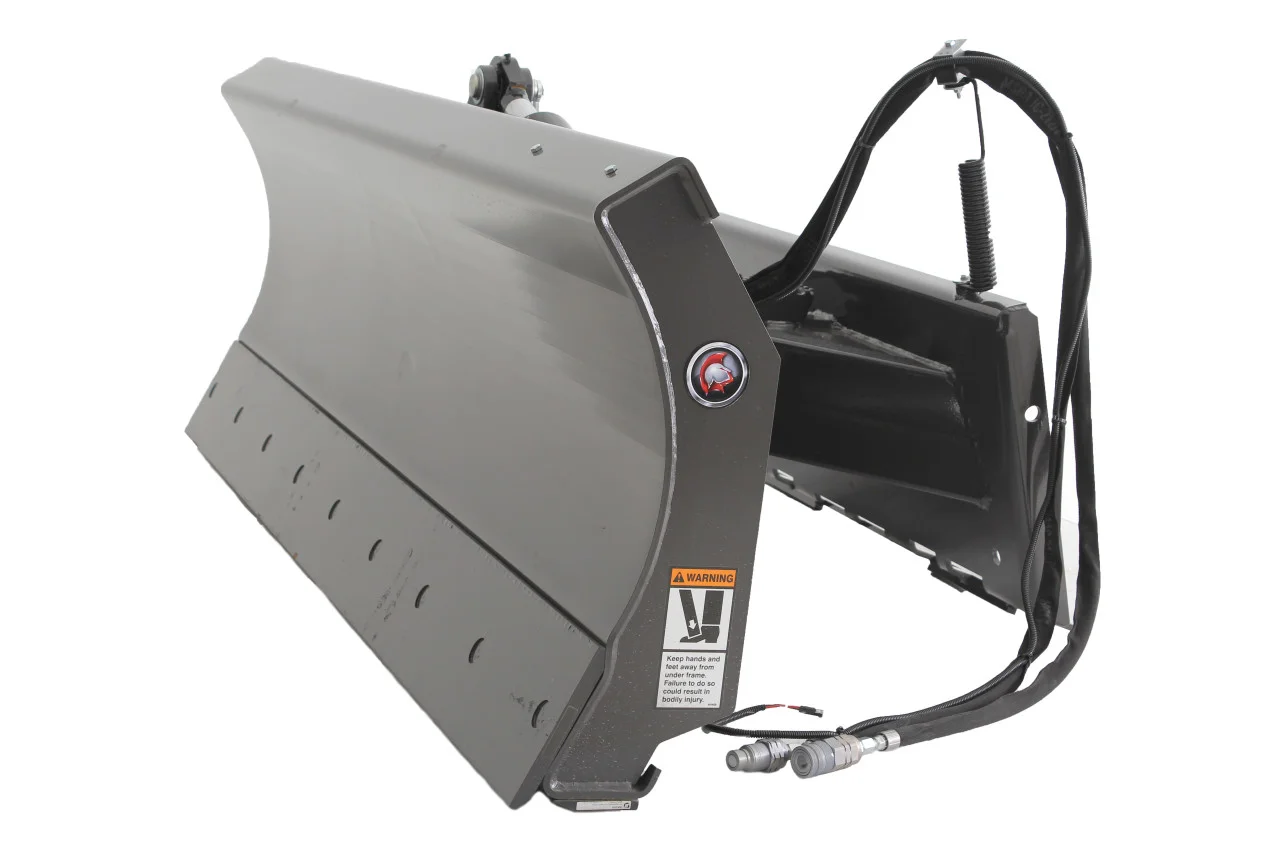
Anyone who has cleared a long gravel lane in January or shaped a hillside access road knows how quickly that runs out of options. You end up repositioning the whole machine again and again, burning fuel and time on moves the blade should have handled.
A skid steer blade attachment with six-way movement takes care of a lot of that. Instead of steering the machine into every adjustment, you change the blade from the cab. Here is what that means in practice, where it pays off, and where it doesn't.
The Short Version
- Six-way means the blade raises and lowers, tilts left or right, and angles left or right, all from the cab.
- Angle moves snow or material off to one side. Tilt matches slopes and builds cross-slope. Lift and float follow uneven ground.
- Not every six-way blade is built for snow. Check for trip springs before you buy.
- Confirm your machine's hydraulic setup and control requirements first.
What Six-Way Movement Actually Means
Three pairs of movement make up the six. Depending on the design, the up and down comes from your loader arms, while the attachment's own hydraulic cylinders handle angle and tilt. Together they let you point the blade where the work is instead of pointing the machine there.
Angle
Angling swings the blade left or right of center. This is the one that moves material sideways as you drive, which is the whole idea behind pushing a windrow of snow or gravel off a lane instead of pushing it straight ahead into a pile you then have to deal with.
Tilt
Tilting drops one end of the blade lower than the other. That sounds minor, but it is what lets you cut a swale, slope a pad for drainage, or crown a road so water runs off the sides instead of down the middle.
Snow: Angle Does the Heavy Lifting
For snow, angle is the feature you will use most. Set the blade, drive, and the snow rolls off to one side. Change direction on the next pass without leaving the seat. On lanes, lots and farm roads, that saves a surprising number of machine movements.
One detail is easy to miss. Snow work puts the cutting edge into hidden stuff like curbs, manhole covers and frozen ruts, so snow blades usually have trip springs that let the edge give way instead of stopping the machine cold. Spartan Equipment notes that its mini skid steer six-way blades do not have trip springs and are made for dirt work, not snow. Its 84-inch Professional Series blade is listed as a snow and dozer unit. Same six-way idea, different intended jobs. Read the description before you assume.
Slopes: Using Tilt to Cut the Grade You Want
Slopes are where tilt earns its place. Instead of fighting to hold a line with the machine itself, you set the tilt and let the blade cut the cross-slope for you. That is useful for access roads on a hillside, drainage swales along a field edge, or building up a pad that sheds water properly.
Take light passes. Trying to cut a full grade in one heavy pass just stalls the machine and leaves a rough surface. Also remember that skid steers have limits on side slopes, so follow your manufacturer's slope guidance and don't push it because the blade can reach.
Uneven Surfaces: Float, Carry and Fill
Rough ground is mostly about technique. Cut the high spots on the first pass, carry that material forward, and drop it in the low ones. With the blade able to tilt, you can correct as you go instead of stopping to reset. Letting the blade float on the finishing passes helps it follow the surface rather than gouging it.
Where This Shows Up Beyond Standard Construction
Contractors and landscapers are the obvious users, but the same movements apply elsewhere. Farm operators keep lanes and yard pads passable. Municipal crews maintain gravel shoulders, lots and drainage ditches. Smaller mining and exploration sites also tend to have access roads and working pads that need regular grading, and a machine they already own can handle some of that. I would not pitch it as a replacement for dedicated road-building equipment on a big site, but for site upkeep it makes sense.
What to Check Before You Buy
Start with hydraulics and controls. A six-way blade needs auxiliary hydraulics and a way to operate the functions from the cab. Spartan lists an in-cab electrical control kit as standard on its six-way dozer blades. Then look at width against your machine's size and capacity, replaceable cutting edges so you are not replacing the whole blade when the edge wears, and the mounting system. If you are building a short list of the best skid steer attachments for grading and winter work, a six-way blade belongs on it for most owners who do both.
FAQs
What is a six-way blade on a skid steer? It is a blade that raises, lowers, tilts and angles in both directions, controlled from the cab. That lets you adjust the blade without repositioning the machine.
Can I use a six-way blade for snow removal? Yes, but check that it is designed for it. Snow blades typically have trip springs, and some six-way blades are made for dirt work only.
Does a six-way blade work on mini skid steers? Yes. Spartan Equipment lists mini skid steer versions in 46-inch and 67-inch widths, though those are described as dirt-work blades.
Is it better than a bucket for grading? For finish grading and moving material sideways, usually yes. A bucket is still better for carrying and loading.
Conclusion
Six-way movement is really about where the adjustment happens. Instead of moving the machine to suit the blade, you move the blade to suit the job. That helps in snow, on slopes and on rough ground, as long as the blade matches the work. Check the intended use, the controls and the hydraulics, and a skid steer blade attachment like this can cover a lot of ground with one tool.